.jpg "Kinh Mon river bridge nears completion")


Gửi bình luận
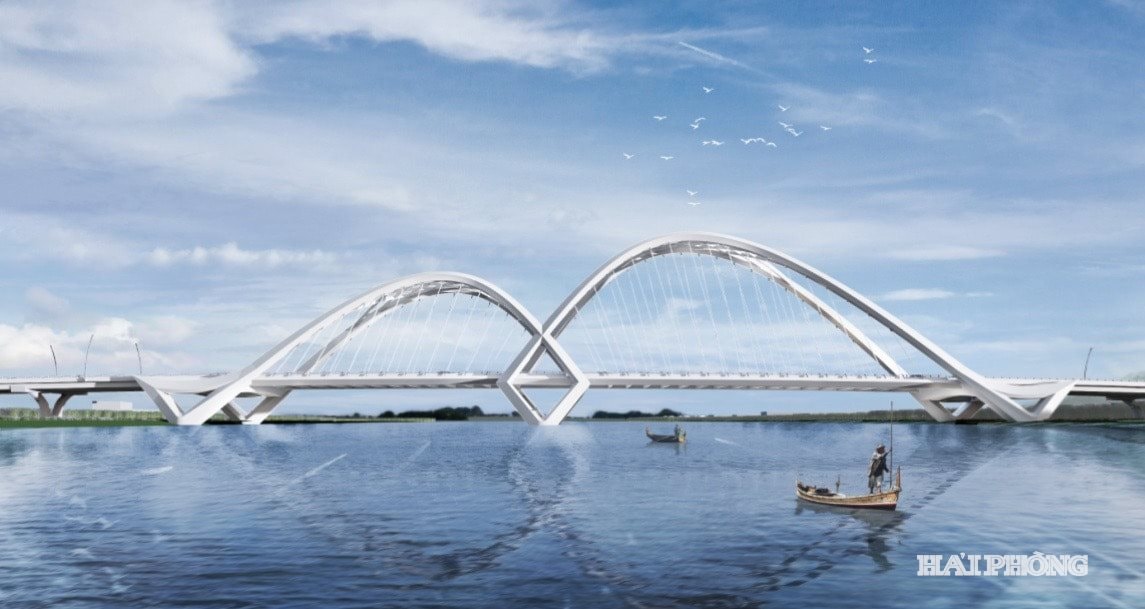
A new bridge over the Thai Binh river, featuring a striking architectural design, is set to become a new symbol and a key transport project in western Hai Phong.
Crucial link
In the overall plan for developing the transport network and urban space in western Hai Phong, ring road 1 in the former Hai Duong city is identified as a strategic connector linking industrial, urban and logistics zones.
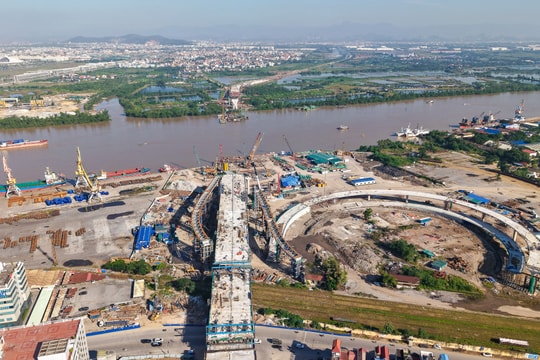
Along this vital route, the project to build a bridge over the Thai Binh river and its approach roads, running from provincial road 391 to provincial road 390C, plays a pivotal role in creating a seamless infrastructure system and shortening travel time between the two riverbanks.
The project has a total length of 2.47 km and an investment of more than 1.228 trillion VND. The bridge section over the Thai Binh river is about 663 m long and is designed with reinforced concrete and permanent prestressed reinforced concrete. Its navigational clearance of 50 by 7 m meets requirements for level-3 inland waterway operations on the Thai Binh river.
Once completed, the bridge will link Tan Hung ward with Nam Dong ward, directly connecting provincial road 391 with provincial road 390C. It will open an entirely new transport corridor, easing the load on Phu Luong bridge, shortening the distance from Nam Dong to the former central Hai Duong area and improving access to industrial parks and clusters in the western part of the city.
Nam Dong, traditionally a mixed agricultural-urban area, is expected to become a gateway to attract businesses once the large-scale bridge is in place. With shorter travel distances, residents of Nam Dong and communes of the former Thanh Ha district will benefit from more convenient trade, daily travel, and access to medical, educational and other essential urban services in the western metropolitan area.
Accelerating construction to stay on schedule
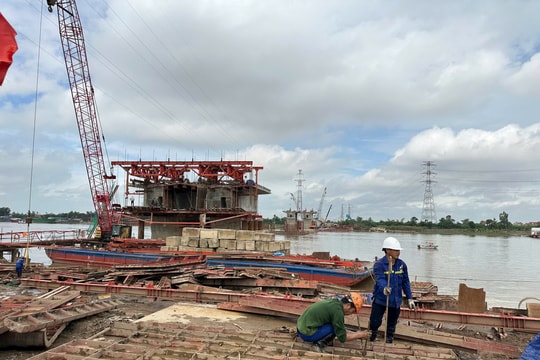
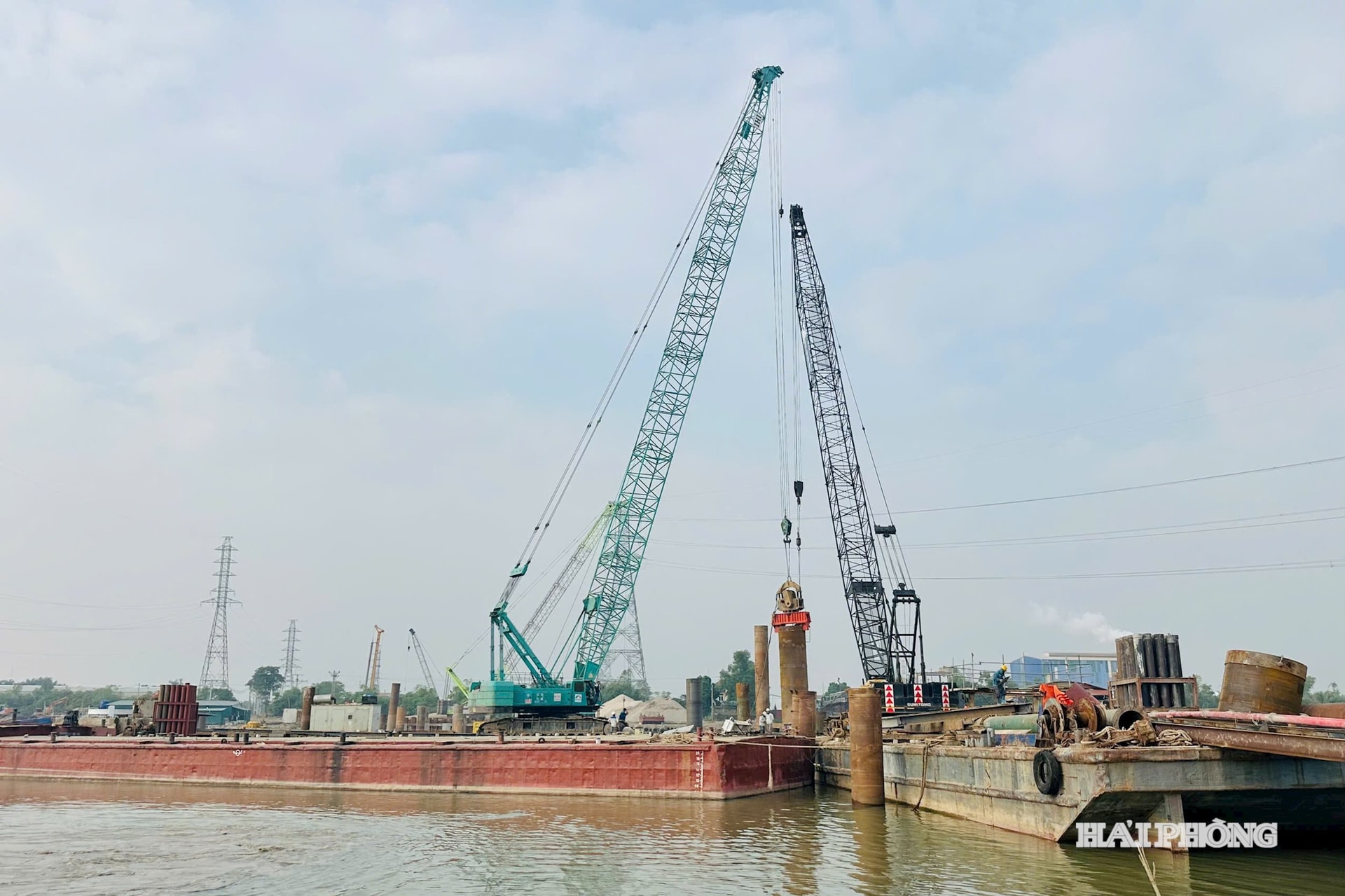
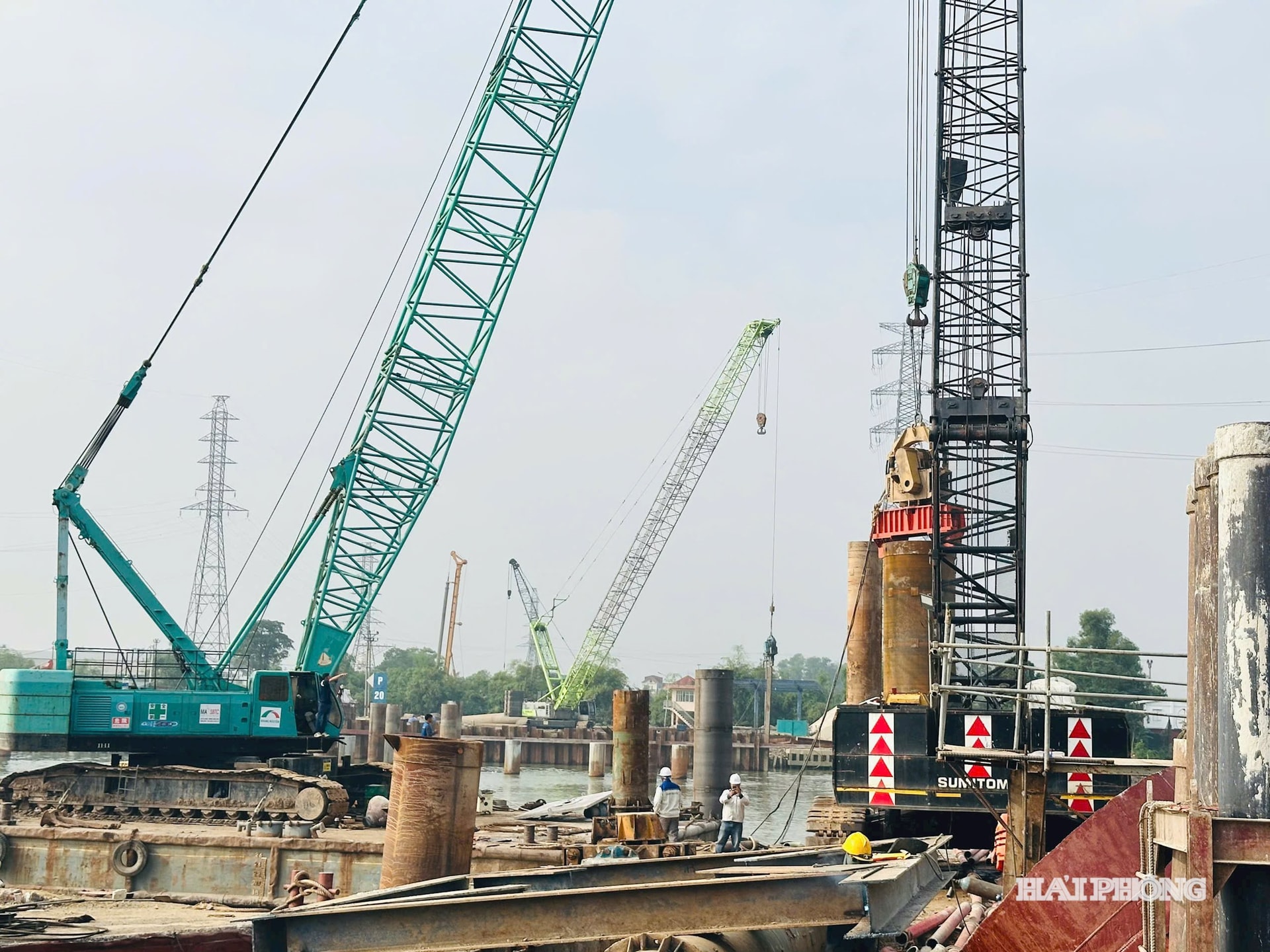
According to the West Hai Phong Construction Investment Project Management Board, the construction of the bridge over the Thai Binh river began on August 19, 2025. By early December, worker housing, storage yards, access roads, cantilever platforms, temporary bridges and transformer stations had been built. Contractors are now building the platforms for piers T5 and T6 and carrying out bored pile drilling.
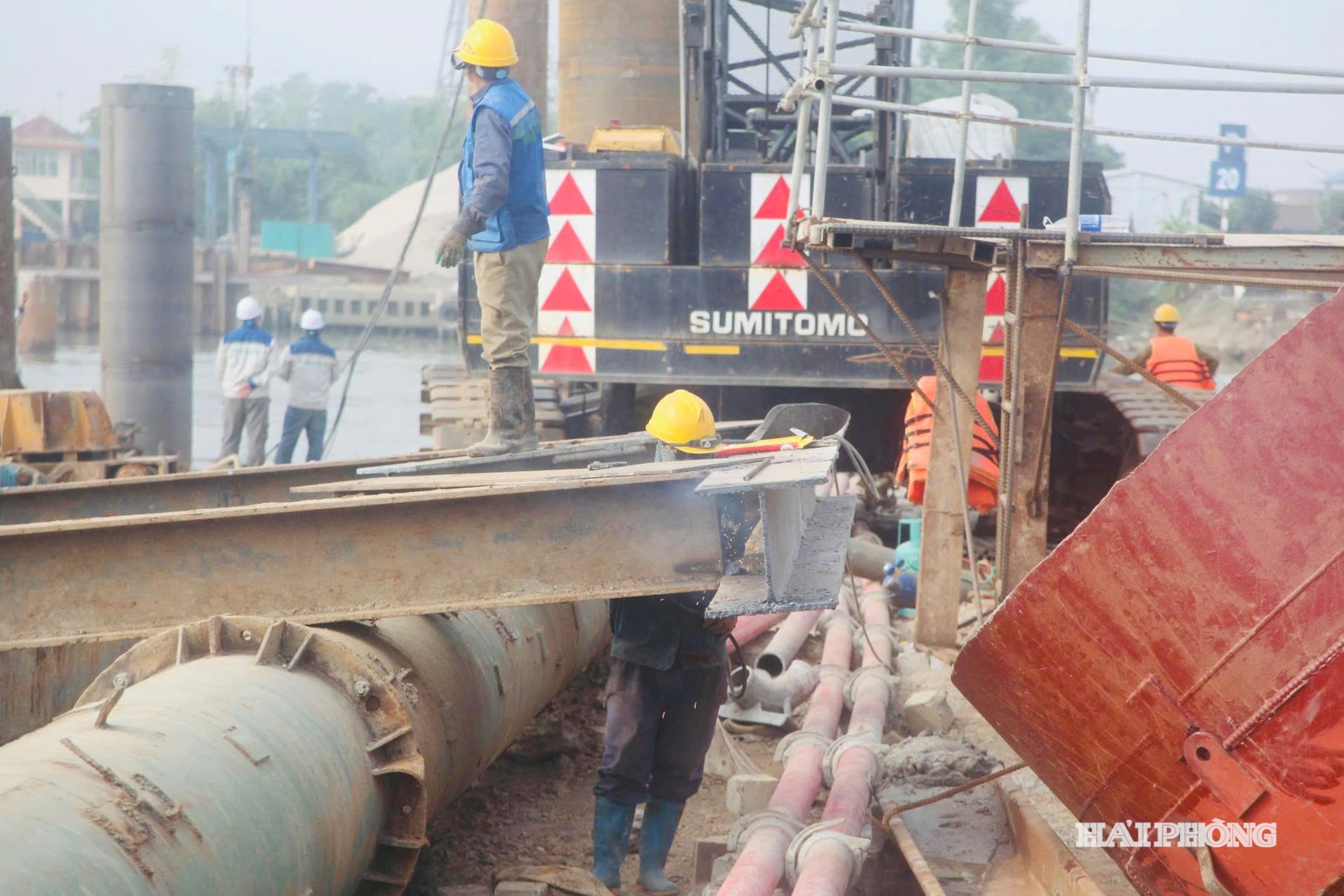
To ensure progress, nearly 200 staff, engineers and workers, along with machinery and equipment, have been mobilized to accelerate construction. Work is organized in three shifts and four crews to maximize productive time, especially during favorable weather conditions.
“Quality is strictly controlled through an independent monitoring system and cross-checking among units. Safety is the top priority, particularly given the challenges of working on water,” said Nguyen Duy Long, chief of the construction site.

All personnel receive occupational safety training and are equipped with life jackets, safety harnesses, helmets and specialized protective gear. Detailed plans are also in place to respond to adverse weather, rising water levels and strong currents.
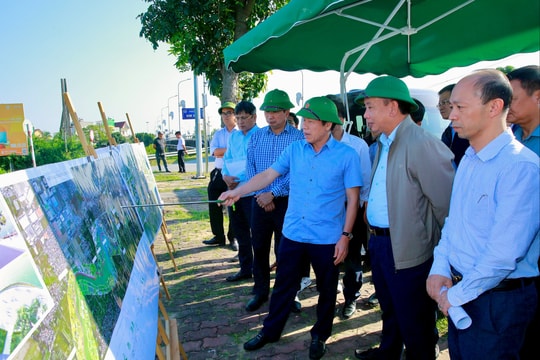
The project is scheduled for completion and operation in April 2027. During an on-site inspection in November, Chairman of the Hai Phong People’s Committee Le Ngoc Chau required the investor and contractors to calculate ways to shorten the timeline, striving to complete the project before the 2027 Lunar New Year.
HA NGA