.jpg "Enterprises offer over 16,000 vacancies at Hai Phong Job Fair")



Gửi bình luận
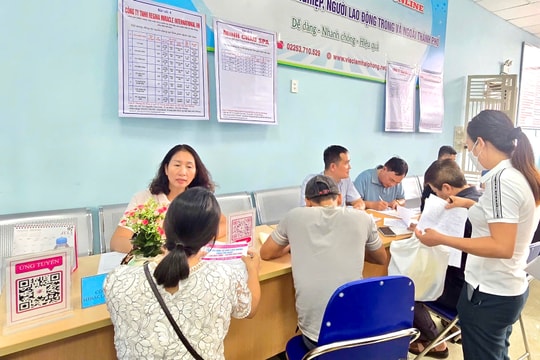
Hai Phong is focusing on updating and collecting digital labor data.
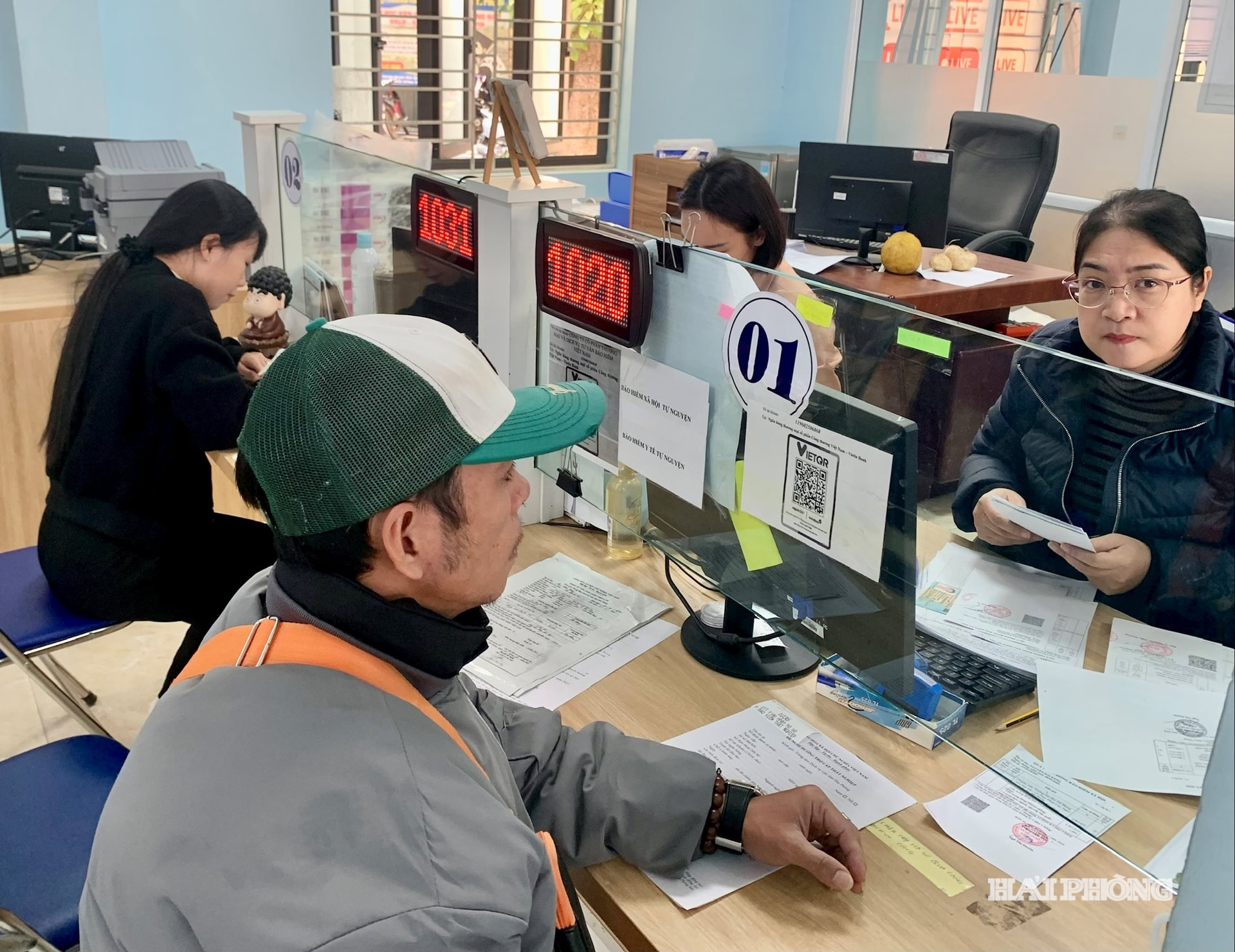
The data will contribute to manpower policy formulation, promote labor supply–demand matching, and provide better support for workers.
The Hai Phong Department of Home Affairs, the Hai Phong Economic Zone Authority, the Hai Phong Employment Service Center, and other agencies are intensifying the updating and collection of digital data on professional qualifications, employment status, insurance coverage, and labor demand of people aged 15 and above.
According to statistics from the Hai Phong Statistics Office, the city’s labor force aged 15 and above stands at approximately 2.02 million people. Of these, about 1.96 million are employed, accounting for 47.78% of the total population and 95.86% of the city’s labor force. About 51% of workers are employed in the formal sector (with labor relations), while the remainder work in the informal sector.
The development of a labor database connected with national databases on population, social insurance, education and training, and others is expected to create a comprehensive breakthrough in the administrative procedure system, fostering transparency and openness in state management.
Ms. Nguyen Thi Thoa, Head of the Human Resources Department of Global Material Handling Co., Ltd. (DeepC 2A Industrial Park), said that the company officially began stable operations in March 2025 and currently employs more than 500 workers, of whom Vietnamese workers account for about 93%. However, as a newly established enterprise operating in the mechanical processing sector, the company faces considerable difficulties in recruiting skilled workers and is under significant pressure from competition for human resources.
“The company hopes to be provided with information on suitable vocational training institutions, enabling early connection and cooperation to meet recruitment needs and ensure a stable, long-term workforce for production and business activities,” Ms. Thoa said.
According to Mr. Vu Xuan Kien, Vice Principal of Hai Duong College of Tourism and Industry, in addition to existing training partners, the school hopes that competent authorities will publicly release specific labor data on a shared software platform, while enterprises will disclose their orientations and labor demand in the coming period. On that basis, the school can promptly add appropriate majors and fields, determine enrollment scope, and conduct training to supply a young workforce closely aligned with employers’ needs.
Many universities and colleges in the city have proposed that relevant departments and agencies study and develop a digital map of industrial parks, displaying the number of enterprises, production and business sectors, labor demand by phase, and specific requirements for qualifications and expertise for each job position. This would provide vocational education institutions with a basis to develop medium- and long-term training plans and timely adjust training programs in line with the actual needs of the labor market.

According to statistics from the Hai Phong Department of Home Affairs, there are nearly 60,000 registered enterprises operating in the city, of which more than 37,600 are currently active. Relevant departments, sectors, and units have made strong efforts in collecting labor data and promptly carrying out data entry.
In 2025, the Hai Phong Employment Service Center (under the Department of Home Affairs) expanded its multi-platform communication approach and put into operation the TikTok channel “ttdvvieclamhaiphong,” helping bring job-related information closer to workers, especially young people.
The Center has effectively operated platforms providing labor market information and managed the website vieclamhaiduong.vn, with nearly 1,200 enterprises registered. It has provided employment information to more than 47,800 job seekers, with around 8,700 job vacancies available, and more than 2,300 people registered for job search services.
At the same time, nearly 1.89 million participants in social insurance and health insurance under the Hai Phong Social Security agency have installed the VssID application, accounting for 51% of the total number of participants.
In industrial parks, labor data collection has also been carried out in a scientific, systematic, and urgent manner. Mr. Nguyen Hong Quang, Deputy Head of the Trade Union Division of Hai Phong Industrial Parks, said that over the past year, the unit has implemented an innovative solution titled “developing a set of sample dialogue scenarios” and a data repository to support negotiations. This initiative aims to enhance the effectiveness of representation and protection of the legitimate rights and interests of workers through grassroots trade unions in the city’s industrial parks.
The data repository contains important information such as the number of workers, their qualifications, average monthly income by job position, and future training needs. This data not only contributes to transforming trade union activities from experience-based practices to data-driven management and digitalizing dialogue and collective bargaining, but also serves as a basis for enterprise human resources staff to propose and advise on more appropriate recruitment and incentive policies for experienced and highly skilled workers.
The Department of Home Affairs is also taking the lead, in coordination with relevant agencies and units, in studying and organizing the implementation of Government Decree No. 337/2025 on electronic labor contracts. The Department has notified agencies and units that the conclusion of electronic labor contracts via eContract must meet the following conditions: the use of digital signature software; verification of digital signatures in compliance with regulations on electronic transactions; security measures to ensure the safety of customer information and electronic labor contract data; technical solutions to maintain and restore electronic contract authentication in case of incidents; data storage solutions ensuring data integrity of electronic records; and the ability to search and retrieve electronic labor contracts concluded via eContract.
However, according to many experts and managers, alongside the efforts of individual departments and units, it is necessary to avoid a fragmented, uncoordinated approach. Software-based technological solutions for workforce management, comprehensive human resource management, and personnel and document management should be applied, ensuring the principles of being “accurate, sufficient, clean, up-to-date, unified, and shared.”
Beyond data collection, it is essential to establish a registration system linked to the direct declaration and participation of each worker, combined with multi-dimensional comparison, analysis, and cross-checking. This would ensure objectivity, accuracy, and close alignment with labor market developments, thereby effectively improving the evaluation and forecasting of the city’s human resource development policies in the coming period.
Mai Le