
Gửi bình luận
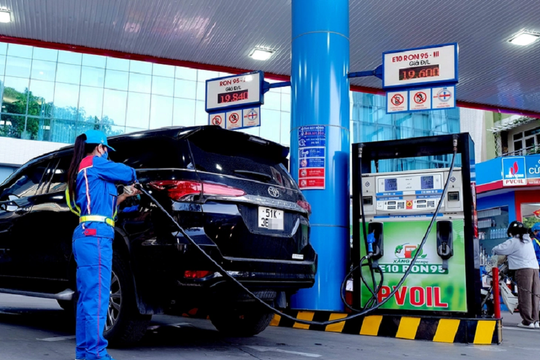
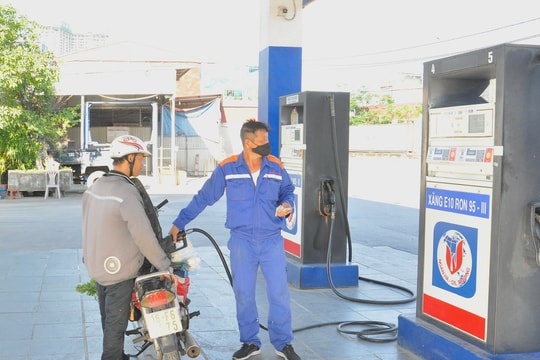
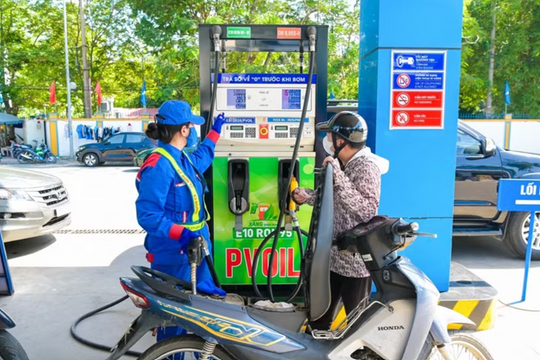
The Government has issued Resolution No. 29/2026, introducing a pilot framework for several policies supporting the implementation of the roadmap for the use of E10 gasoline.
The Resolution introduces several pilot policies to support the implementation of the E10 gasoline roadmap, including: allowing the outsourcing of testing services for gasoline quality inspections; designating E10RON95 Grade III (E10RON95-III) as a commonly consumed biofuel product with a state-announced reference price; defining the components used to calculate the E10RON95-III base price; handling remaining inventories of unleaded gasoline; and specifying the responsibilities of relevant agencies, organizations, and individuals.
The Resolution takes effect from June 16, 2026, through June 15, 2028.
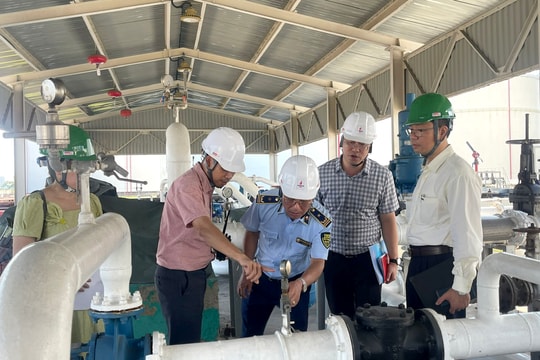
Under the Resolution, petroleum producers and petroleum wholesalers that blend gasoline products may hire testing services from laboratories officially designated in accordance with applicable laws to verify gasoline quality against national technical standards.
A service contract with a designated testing organization may be used in place of documentation demonstrating the existing testing laboratory capacity at the blending facility.
From the effective date of the Resolution until June 15, 2028, E10RON95-III will be piloted as a commonly consumed commodity for which the State announces a base price, replacing RON95-III gasoline.
The Ministry of Industry and Trade and the Ministry of Finance will determine the cost components included in the gasoline base-price formula and publish the reference price for the pilot administration of E10RON95-III pricing in accordance with current regulations.
The E10RON95-III base price consists of: International gasoline prices determined by the Ministry of Industry and Trade; fuel ethanol prices determined and announced by the Ministry of Finance; costs of importing gasoline into Vietnamese ports; Premium costs for domestically produced gasoline; transportation costs from domestic refineries to ports; standard profit margins; and standard business operating costs as prescribed by regulations.
Once sufficient cost data become available, the Ministry of Finance, in coordination with the Ministry of Industry and Trade, will review, consolidate, and determine the applicable cost levels for inclusion in the base-price formula.
The Resolution requires petroleum wholesalers to provide complete, timely, truthful, and accurate reports and data used to determine the components of the E10RON95-III pricing formula and to bear legal responsibility for the accuracy of their submissions.
The Ministry of Industry and Trade, in coordination with the Ministry of Finance, will begin administering E10RON95-III prices in place of RON95-III from the first pricing period following the Resolution's effective date.
For inventories of finished unleaded gasoline remaining before June 1, 2026, the Resolution encourages petroleum traders to buy, sell, and transfer these volumes among themselves for gasoline blending activities. Such transfers must be completed by July 31, 2026.
Petroleum wholesalers are legally responsible for the quantities of unleaded gasoline bought, sold, and transferred and must report to the Ministry of Industry and Trade by August 15, 2026.
Petroleum distributors, retail franchise holders, and gasoline retail agents must report to the local Department of Industry and Trade where their headquarters are located by August 15, 2026, for monitoring purposes.
The Government assigns the Ministry of Industry and Trade to oversee the implementation of the E10 gasoline roadmap and coordinate with relevant ministries and agencies in reporting to the Government on any necessary adjustments to the Resolution to ensure energy security, environmental protection, and consumer interests.
The Ministry of Industry and Trade is also responsible for coordinating supplies of ethanol and gasoline base stock for E10 blending; working with the Ministry of Science and Technology to inspect and supervise blending, distribution, and quality-control activities; and implementing the nationwide E10 gasoline program from June 1, 2026.
The Ministry of Science and Technology will strengthen inspections and enforcement of regulations concerning measurement standards and E10 gasoline quality in production, blending, importation, and market distribution.
The Ministry of Finance will study and propose adjustments to special consumption taxes and environmental protection taxes on biofuels when necessary to encourage their use.
The Ministry of Construction will coordinate with the Ministry of Industry and Trade to review and provide guidance on standards and technical regulations for constructing and upgrading storage facilities and biofuel blending stations.
The Ministry of Agriculture and Environment will research and propose mechanisms for developing feedstock production areas for biofuel manufacturing and will assess and publish emissions-reduction indicators associated with biofuel use for public communication purposes.
The Government requires provincial and municipal People's Committees to direct specialized agencies to support businesses in building, upgrading, and renovating storage and distribution infrastructure for E10 gasoline, while strengthening inspections and monitoring of E5 and E10 fuel quality in their jurisdictions.
Petroleum traders must comply with the transition roadmap to E10 gasoline, proactively secure supplies of gasoline base stock and biofuels, invest in and upgrade blending facilities, storage systems, and distribution networks, and ensure product quality before products reach the market.
Petroleum traders and testing organizations are responsible for ensuring the completeness, accuracy, authenticity, and legality of all related documents and records and are legally accountable for product quality and testing results in accordance with applicable regulations.
Hai Phong News