

Gửi bình luận
Ranked third nationwide in innovation, Hai Phong needs to capitalize on its advantages to improve productivity and growth quality.
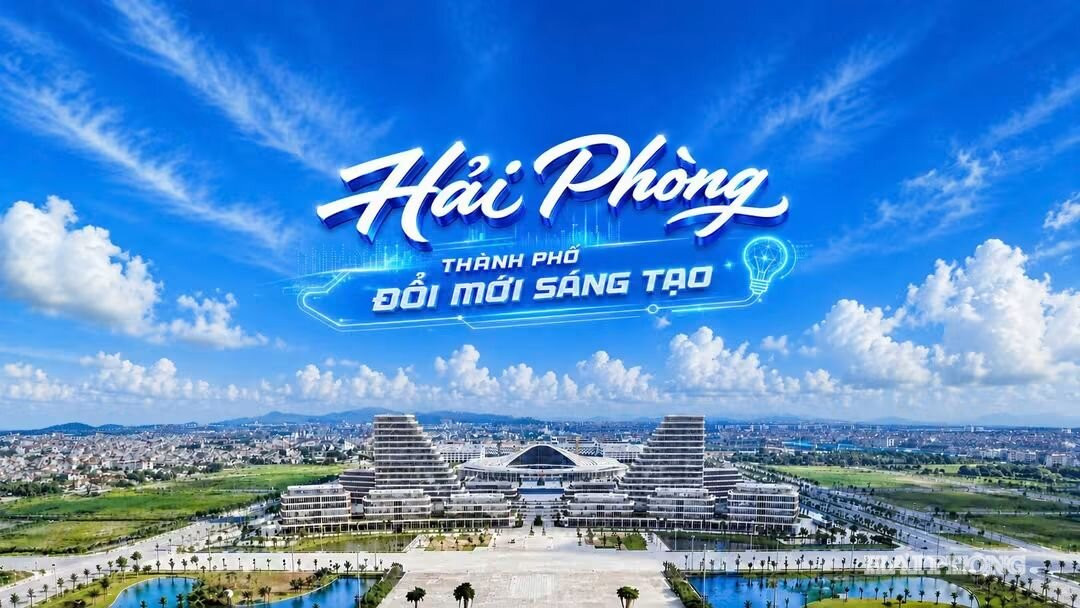
The Ministry of Science and Technology has recently announced the 2026 Provincial Innovation Index (PII) rankings. Hai Phong came third nationwide with a score of 56.33%, up one place from 2025.
The result confirms the city's dynamic development, while highlighting the need to translate its economic and industrial strengths into research capacity, technological innovation and higher productivity.
In the overall PII rankings, Hai Phong was placed third nationwide in institutions and market development, first in business environment and administrative reform index, second in overall infrastructure, and third in digital infrastructure.
With its 2025 gross regional domestic product (GRDP) reaching approximately VND 734.421 trillion, accounting for 5.74% of national GDP, and its industrial production index ranking third nationwide, the city has a broad market and a strong manufacturing base.
Following directions of the City People's Committee, the Department of Science and Technology has jointly developed and announced a list of major challenges in science, technology, innovation and digital transformation in 2026 for submission to the City People's Committee for official announcement. This presents an opportunity to address bottlenecks in port data, logistics, electronic supply chains, semiconductors, shipbuilding, flood warning, environmental management, and circular agriculture grounded in practical realities.
To effectively mobilize brainpower, technology and resources, each challenge needs objectives, an accountable organization and evaluation criteria. For port and logistics data, effectiveness should be reflected in the ability to connect information among seaports, customs authorities, shipping lines and warehouses, thereby reducing processing time and costs. Scientific research should focus on developing products with practical applications and commercialization potential.
Businesses must play a central role in the innovation ecosystem. The city should continue encouraging enterprises to commission research, strengthen cooperation with institutes and universities, and support technology testing, refinement and product commercialization.
Funding should focus on priority areas, with allocations tied to measurable outcomes and the ability to mobilize private investment. Training technical personnel, attracting experts and strengthening technological self-reliance are long-term priorities.
Innovation must also be linked to green and sustainable development. In 2026, the city's environmental governance indicator scored just 30.03 points, ranking 33rd out of 34 localities. The proportion of industrial land with developed infrastructure ranked 16th nationwide. Prioritizing energy-efficient technologies, pollution control, waste management and circular economy is therefore a practical necessity.
Ranking third nationwide in the PII is an advantage, but it also raises expectations. The city needs to identify the causes of low-performing indicators, assign clear responsibilities and assess progress using criteria verified against real-world results. More importantly, it must accelerate technology adoption, improve productivity, reduce costs and create new value, turning existing advantages into genuine innovation capacity.
THANH VAN