.jpg "Techfest HaiPhong 2026 - A gathering of technology")

Gửi bình luận
The “three-way partnership” model promotes the application, transfer, and commercialization of research outcomes, while enhancing innovation, productivity, and the competitiveness of businesses.
Resolution No. 57 issued by the Politburo on breakthroughs in science and technology, innovation, and national digital transformation calls for accelerating the practical application of research outcomes to create new drivers of economic growth.
Against this backdrop, the three-way partnership involving government, researchers, and businesses is emerging as a key mechanism for developing the science and technology market and narrowing the gap between research and industrial application. In Hai Phong, technology matchmaking activities connecting research institutes, universities, and enterprises have become a central element of the city's science and technology development strategy.
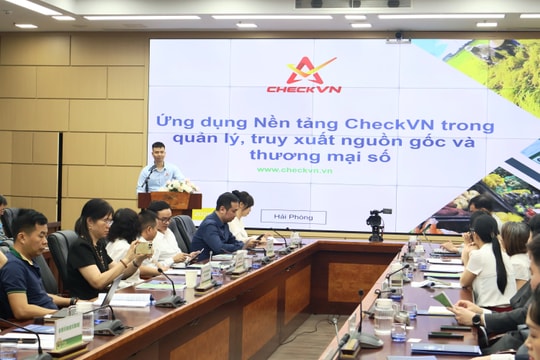
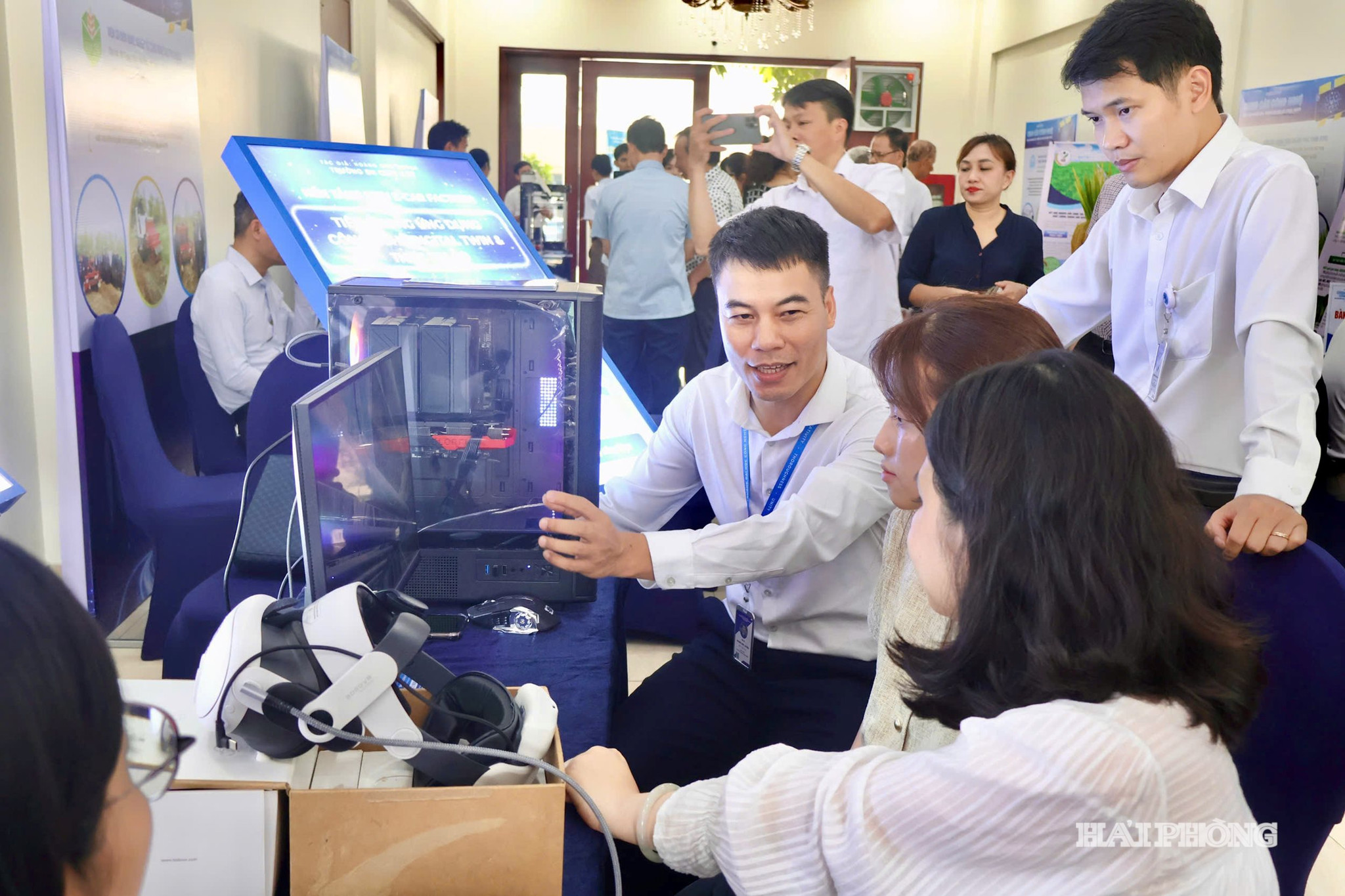
In June, the Hai Phong Department of Science and Technology co-organised two technology supply-and-demand matching sessions. The second session attracted eight research institutes and universities, facilitating more than 30 one-on-one meetings between research organisations and businesses. The discussions focused on two priority sectors: the marine economy and digital agriculture.
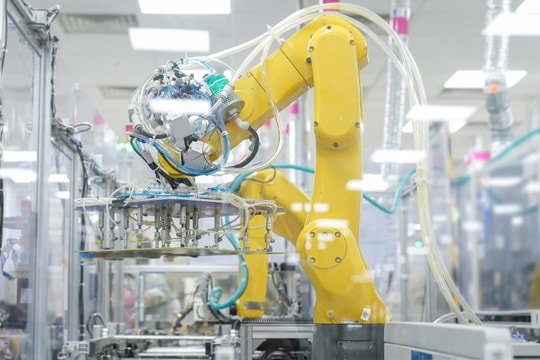
A wide range of technologies ready for commercial transfer were showcased, including climate-resilient crop varieties developed by the Field Crops and Food Crops Research Institute; resistant starch production technology from Sao Do University; IoT 4.0-based smart farming solutions from the Fruit and Vegetable Research Institute; Digital Twin platforms and virtual reality technologies for factory management from Thai Nguyen University; and dual-purpose robotic systems developed by the University of Technology and Industrial Management.
Mr Nguyen Van Tuan, Director of The He Moi Joint Stock Company in Hai Phong, said that the matchmaking sessions enabled businesses to gain direct access to the latest research results while discussing real-world technological challenges with scientists. Following the event, several research institutes visited local enterprises and cooperatives to explore solutions for processing and preserving ruoi (ragworm) after harvest.
According to Associate Professor Dr Dang Van Dong, Deputy Director of the Fruit and Vegetable Research Institute, the sessions have helped research organisations better understand the practical needs of businesses and local communities in HaiPhong. This enables researchers to align their work more closely with market demand and accelerate the adoption of new technologies, particularly in digital agriculture.
To maximise the effectiveness of these activities, the Hai Phong Department of Science and Technology conducted surveys to identify businesses' technological needs and proactively matched them with suitable research providers from universities and institutes.
Mr. Nguyen Cao Thang, Director of the department, said that beyond serving as a facilitator, the department has assigned the Centre for Innovation and Science and Technology Application to monitor collaboration between stakeholders while providing financial support for technology transfer, legal advisory services, and intellectual property protection.
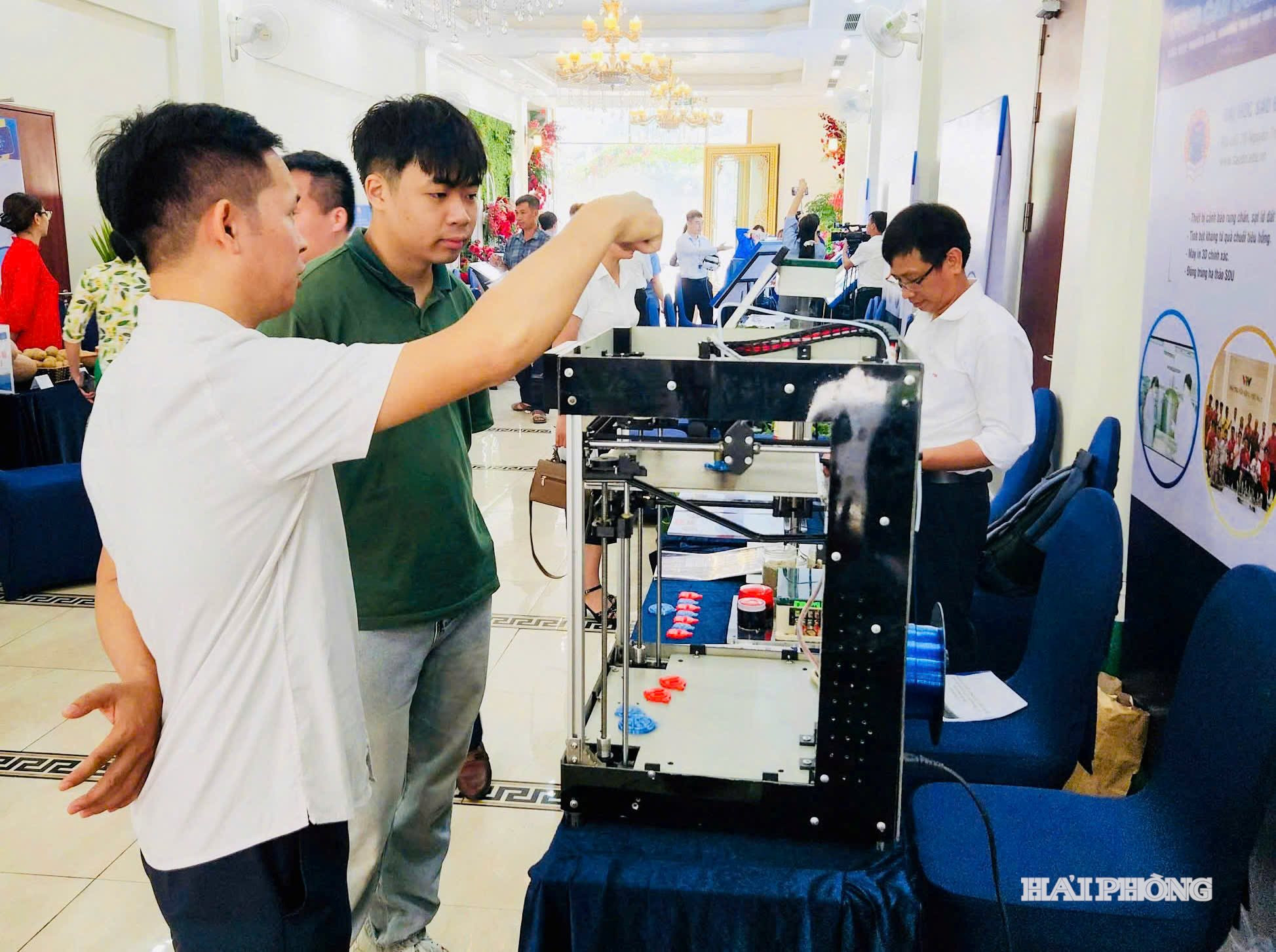
The three-way partnership is playing an increasingly important role in building a sustainable innovation ecosystem for the city.
Speaking at the scientific conference “Socio-Economic Development Based on Science, Technology and Innovation: Theory, Practice and Hai Phong’s Experience” on June 11, Mr. Vu Hai Quan, Minister of Science and Technology, emphasised that innovation can only achieve its full potential when it is embedded within a well-coordinated ecosystem capable of fostering collaboration and generating widespread impact. In this ecosystem, the government serves as the enabler, businesses act as the central driving force, while research institutes and universities provide knowledge and technological expertise.
Experts noted that for the three-party partnership model to deliver tangible results, research institutes and universities need to shift their focus from conducting research based on existing capabilities to addressing the practical needs of businesses. Research outcomes should be application-oriented, commercially viable, and supported by clear intellectual property protection.
Businesses, meanwhile, are encouraged to develop long-term technology innovation strategies, establish dedicated research and development (R&D) units, allocate resources to science and technology development funds, and regularly assess their technological capabilities to identify appropriate investment priorities.
The government's role has become increasingly prominent, extending beyond policy formulation to creating a favourable environment in which all stake holders can collaborate effectively. Recently, the Hai Phong People's Committee instructed local departments, agencies, and authorities to promptly implement the conclusions of the Government Steering Committee on science and technology development,innovation, digital transformation, and Project 06. One of the key priorities is to further strengthen the three-party partnership among government agencies, universities and research institutes, and businesses.
Strengthening these partnerships also enables Hai Phong to make better use of its concentration of universities and national research institutes. The city is currently home to 76 science and technology enterprises, 74 science and technology organisations, and 61 laboratories accredited under the national VILAS standard (ISO/IEC 17025), providing testing, product quality assessment, and technical support for state management.
The three-way partnership is not merely a short-term solution but a long-term foundation for sustainable development. When the government provides an enabling policy framework, researchers generate knowledge and technological innovation, and businesses serve as the primary drivers of application and commercialisation, science and technology can truly become a key engine of the city's economic growth.
Hong Anh