.jpg "Hai Phong accelerates school modernization")
-77328c18877cf4d30b089eb5e09c5b80.jpg "Entrepreneurship guidance for Hai Phong high school students")

Gửi bình luận
With a high rate of schools meeting national standards, Hai Phong is prioritizing resources to upgrade facilities after reorganization, aiming for a synchronous and modern education system.
Excitement over new schools and classrooms
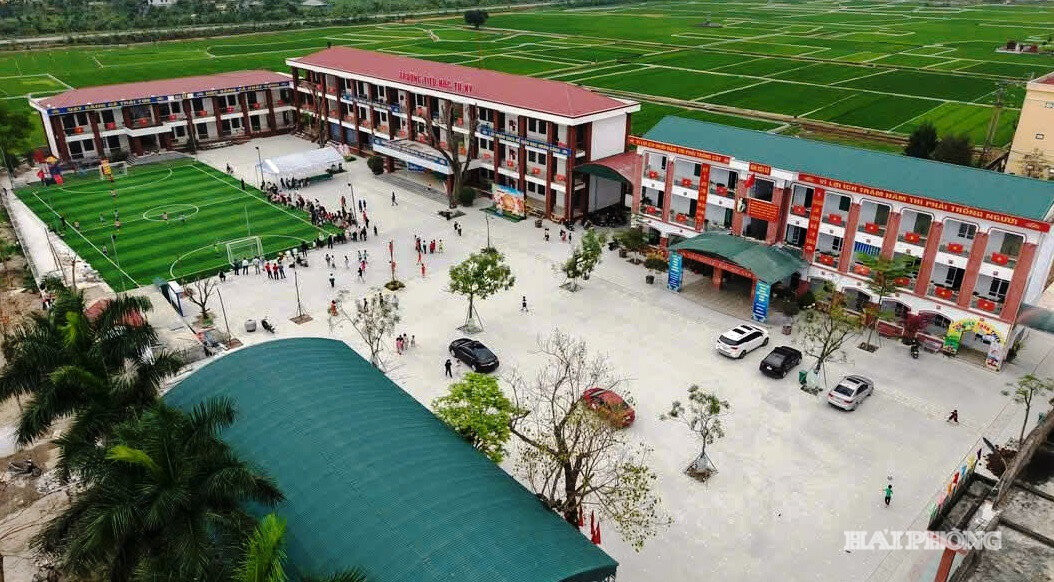
The joy of welcoming the new school year is evident in the eyes and smiles of teachers and students at Tu Ky Primary School in Tu Ky Commune, made even greater as they return to school this year to a more spacious, complete and modern campus than ever before.
In the 2025 - 2026 school year, the locality allocated more than VND 41 billion to prioritize the construction of two new buildings with 21 classrooms, along with a schoolyard, a school gate and a mini football pitch, while renovating the entire old classroom block. From the familiar school grounds, a fresh, bright learning environment is gradually taking shape, bringing excitement to teachers and students ahead of the new school year.
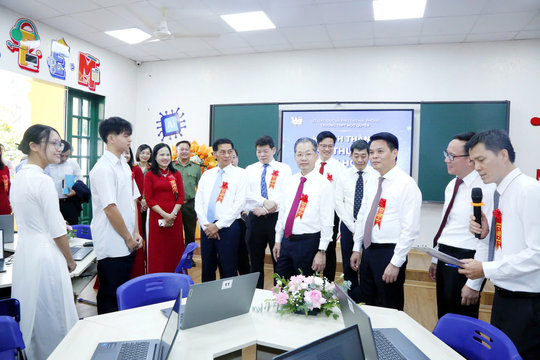
The joy has also spread to preschools following the reorganization. In Hong An Ward, after merging with An Hung Preschool, the main campus of An Hong Preschool became the main campus of Hong An Preschool. The former An Hong Preschool campus has just been renovated, with smart classrooms fully equipped for the first time, with the aim of achieving Level 2 national standards. Now, teachers and students of the school will begin their first lessons in a spacious, modern environment, where every corner of the classroom and every new piece of equipment will provide children with more engaging learning experiences.
According to Phung Thi Yen, Deputy Head in charge of the Division of Culture and Social Affairs under the Hong An Ward People's Committee, reducing the number of schools from 14 to nine has enabled the locality to concentrate resources and make more effective use of existing facilities. It also provides an opportunity for schools to gradually become more standardized and modern, better meeting teaching and learning requirements.
The transformation of schools into new, gradually upgraded national-standard facilities shows that reorganizing the education network is not simply about changing administrative units. It is also an opportunity to review, reorganize and reinvest in learning spaces, giving each school better conditions for development, each classroom more vitality, and teachers and students greater joy and excitement as they pass through the school gates at the start of a new school year.
Investing in a new look
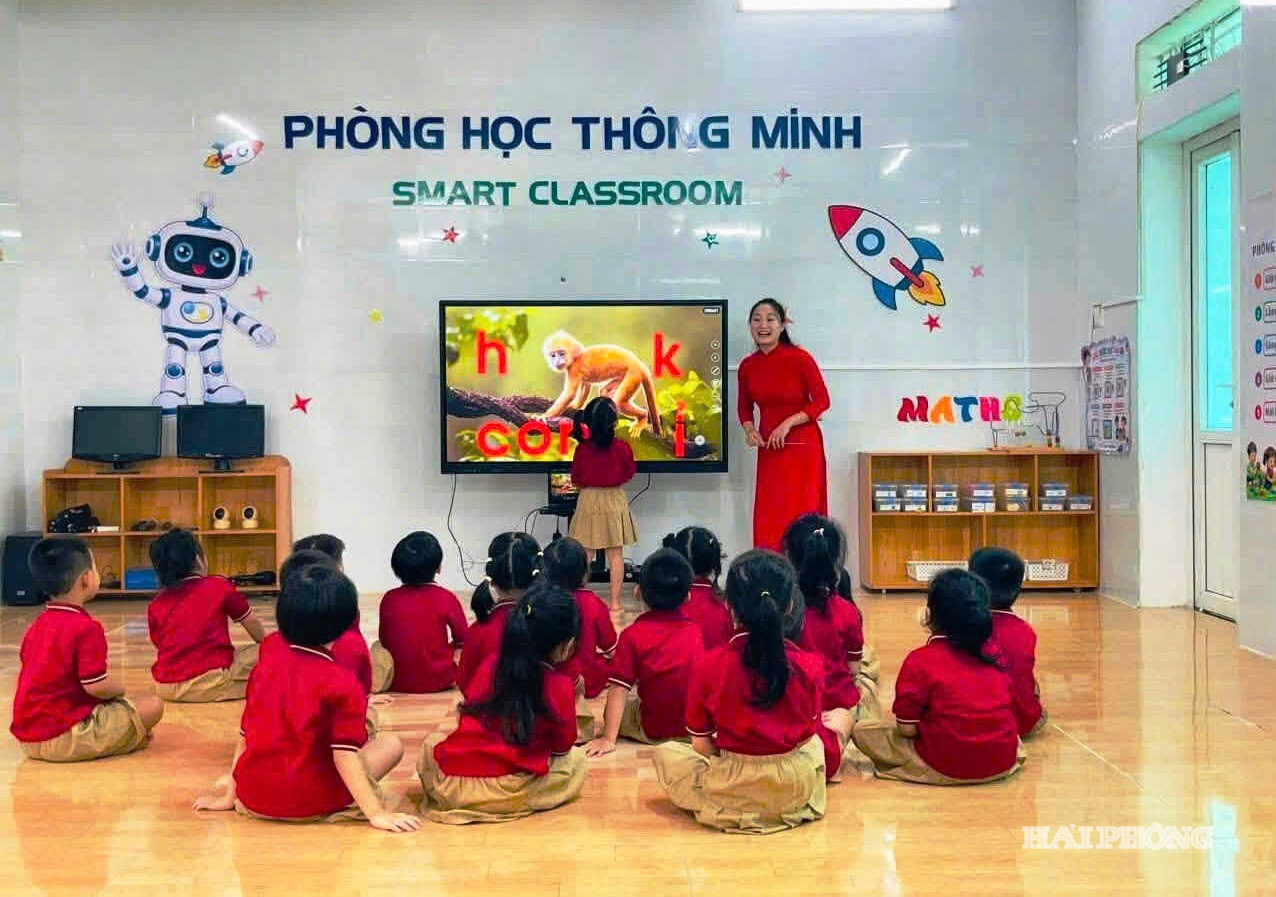
Following the reorganization, the network of public schools from preschool to junior high level has been reorganized in a more streamlined manner, better suited to population size and conditions in each area. Behind this organizational change, however, lies a broader shift: the city is gradually opening up new development space for schools, so that each school is not only reorganized but also given better conditions to advance.
The city has issued a plan to ensure facilities for public preschools and general education schools for the 2026 - 2030 period, clearly identifying the need to prioritize land funds and resources for education.
Uong Minh Long, Deputy Director of the Department of Education and Training, said that in the 2026 - 2027 school year, the sector will continue to focus on facilities, land funds and improving the efficiency of resources allocated to education.
Localities have been asked to specifically review their needs, prioritize cleared land, make effective use of surplus premises, and focus on repairing, renovating and adding essential facilities for teaching and learning.
Investment resources are also directed toward areas undergoing rapid urbanization, industrial parks, areas with large numbers of students, and schools whose facilities have not fully met teaching and learning requirements. This will gradually narrow the gap in learning conditions between schools, giving every student the opportunity to study in increasingly better learning environments.
Building on the foundation of the national-standard school system established so far, the city will continue to expand investment, gradually modernize schools and classrooms, and work toward a synchronous and modern public education system, gradually approaching advanced education models and international schools in the future.
BUI HUONG