-11fbd28b2ee8d07b76d083781fe7fafb.jpg "Hai Phong announces 73 administrative procedures in education and training related to businesses")

Gửi bình luận
Linking vocational training with businesses’ needs helps educational institutions improve training quality and expands opportunities for internships, recruitment and employment for learners.
.png)
Aligning training with business realities
The labor market is changing rapidly, particularly as technology and production methods are constantly updated, requiring educational institutions to align training more closely with reality.
Businesses are increasingly involved in the training process, from providing input on curricula and updating technology to organizing practical training, accepting students for internships and recruiting graduates.
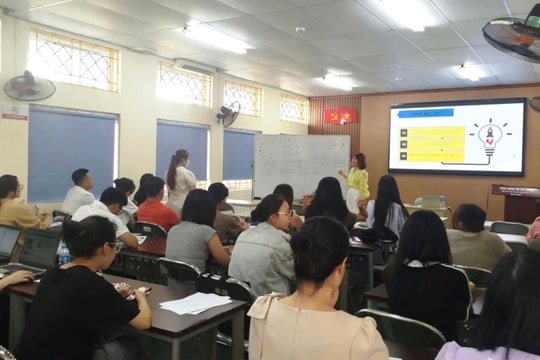
At the College of Tourism, Industry and Trade, surveys of businesses’ recruitment needs serve as a basis for adjusting training fields and content. Several fields, including e-commerce, Japanese, business administration, and petroleum and gas management, have been added in response to market demand.
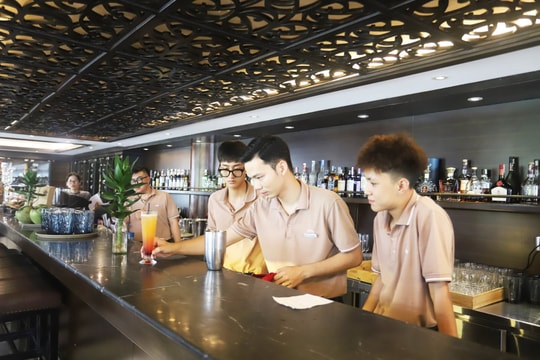
About 70% of training time is devoted to practical training. Many courses are held at enterprises, giving students access to factories, hotels, tourist areas and production facilities, while familiarizing them with equipment, processes and professional practices. This also gives lecturers opportunities to update their knowledge of technology and practical requirements and adjust teaching content accordingly.
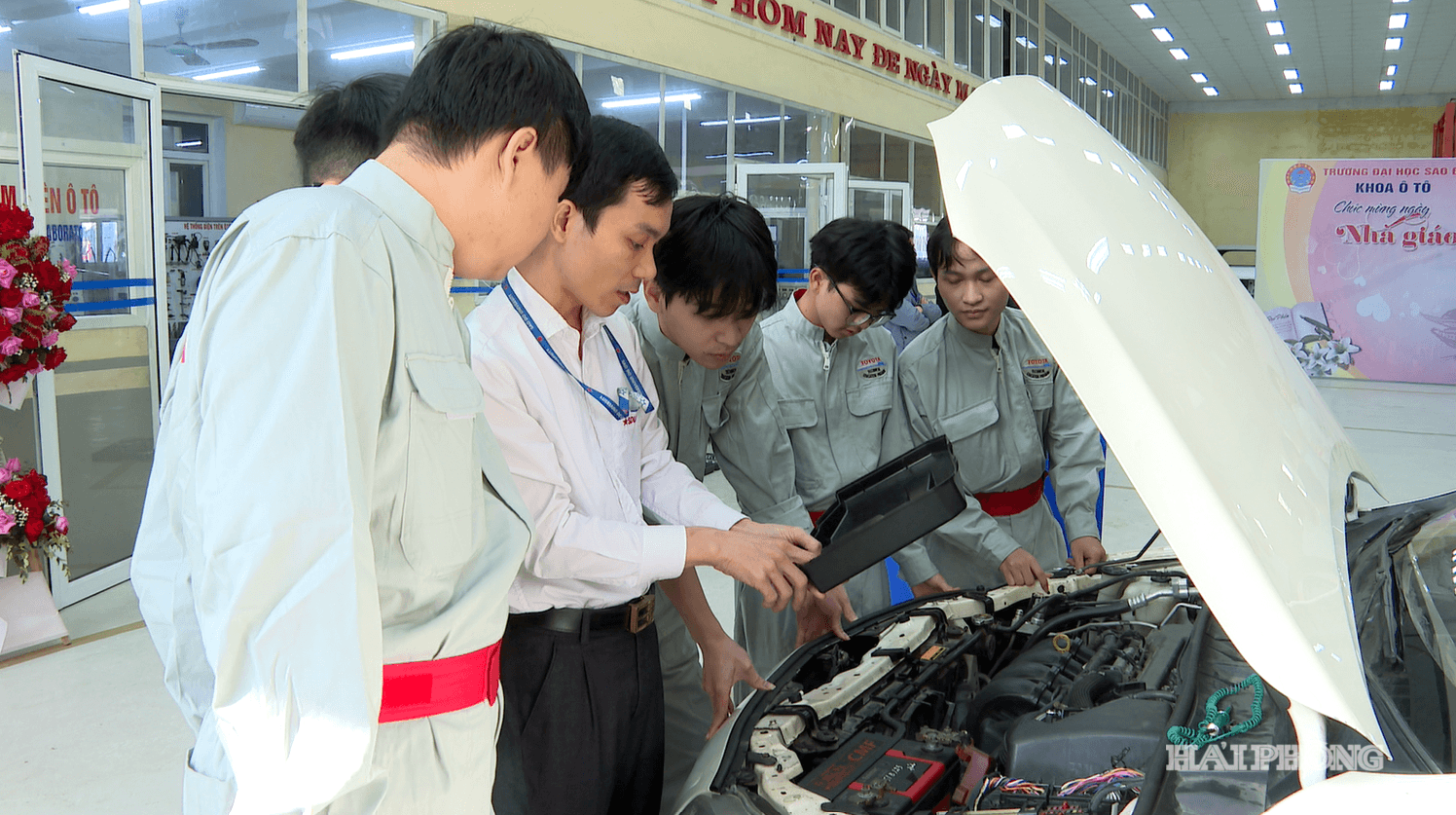
School-business partnerships are also being strengthened by Sao Do University, which works with more than 100 domestic and foreign enterprises and corporations. Businesses provide input on curricula, send experts to teach, assess students’ competencies, support equipment and recruit graduates.
According to Dr. Do Van Dinh, Vice Rector of Sao Do University, the university is implementing a dual “school-business” training model, helping students gain practical exposure at an early stage while creating conditions for enterprises to seek suitable human resources.
Expanding employment opportunities for learners
A clear benefit of linking training with businesses is that it expands employment opportunities for students while they are still studying.
More than 50 businesses inside and outside Hai Phong are partnering with the College of Tourism, Industry and Trade in training, internships and recruitment. Many participate in curriculum development, provide training based on orders and recruit students directly after graduation. More than 90% of the college’s students find jobs after graduation, with the rate in many fields being nearly 100%.
.jpg)
Vietnam Maritime University offers 55 training programs, focusing on fields with high demand for human resources, including maritime studies, logistics, port operations, waterborne transport, shipbuilding, mechanical engineering, automation and information technology. More than 98% of graduates find employment, while the rate in marine navigation and marine engineering is nearly 100%.
The university partners with a lot of enterprises, including VOSCO, LG Electronics Vietnam Hai Phong, Pegatron, Saigon Newport Corporation and Hai Phong Port, as well as Damen Song Cam. Students undertake internships, gain practical experience, attend job fairs and have direct access to employers during their studies.
From training and practical experience to recruitment, school-business partnerships are being implemented in a more substantive manner. Businesses are becoming involved earlier in the training process, while students have more opportunities to gain work experience and approach employers, thereby helping narrow the gap between knowledge acquired at school and the requirements of the labor market.
TRAN HIEN