


Gửi bình luận
Developing high-quality human resources for science and technology, innovation and digital transformation provides a solid foundation for smart government and digital economy building.
An essential requirement
Along with the development of industrial parks, economic zones and logistics services, as well as the digital transformation process, Hai Phong is facing an urgent need for high-quality technical and technological human resources. The city needs a workforce capable of mastering, creating and gradually developing technologies.
In reality, many major universities in the city, such as Vietnam Maritime University, Hai Phong University, Hai Phong University of Medicine and Pharmacy and Hai Duong Medical Technical University, are stepping up human resource training linked to market demand and new technology trends.
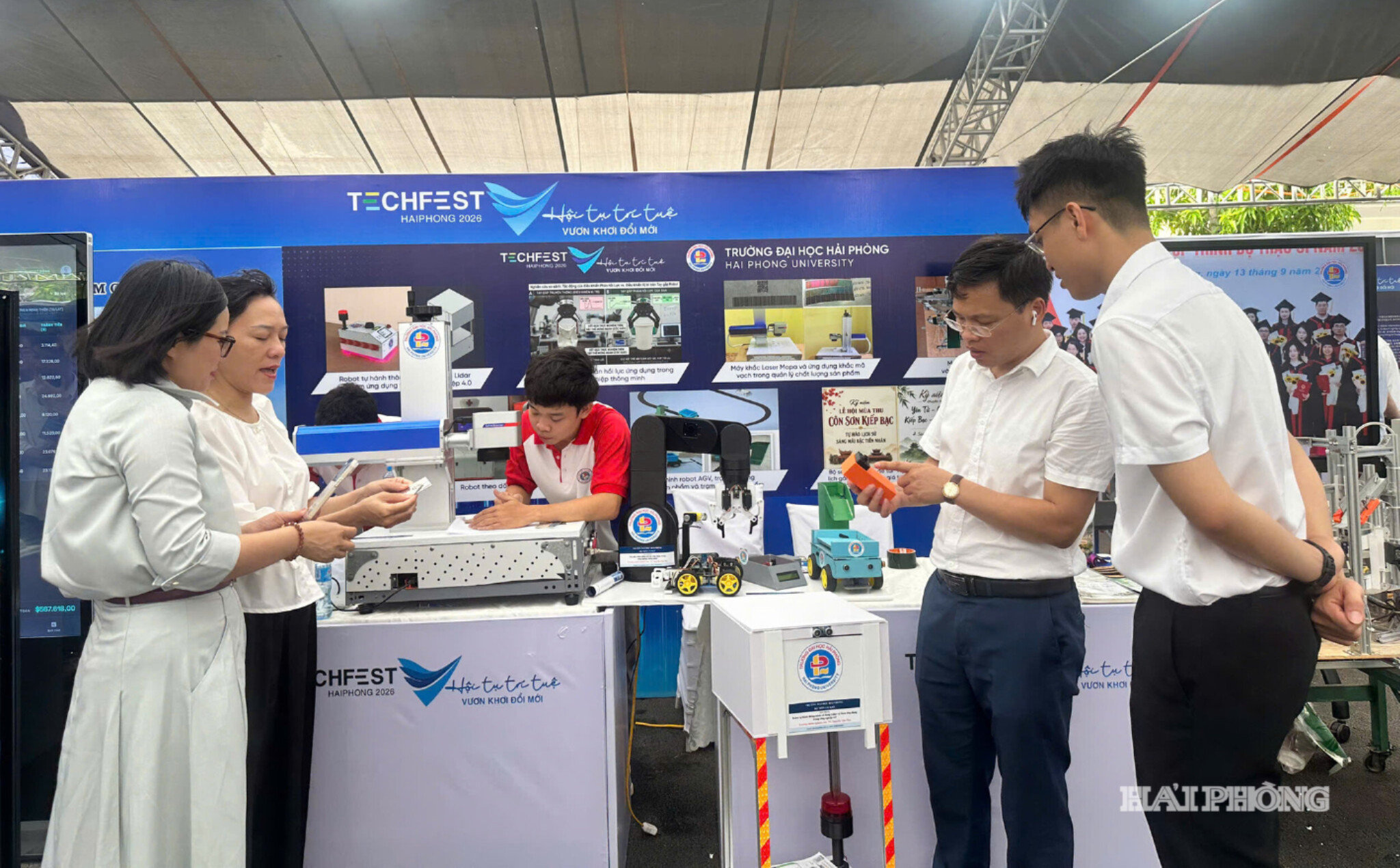
Notably, Hai Phong University has developed high-quality curricula in game design and multimedia, digital business and innovation, electronic engineering, microchips and semiconductors. Starting with the 2025 – 2026 enrollment period, the university has incorporated entrepreneurship and innovation courses into the curricula of its majors.
This year, Sao Do University added five new majors, focusing on fields with high demand for human resources, such as artificial intelligence, digital economy, e-commerce and logistics, helping the university diversify its training programs and better meet labor market demand.
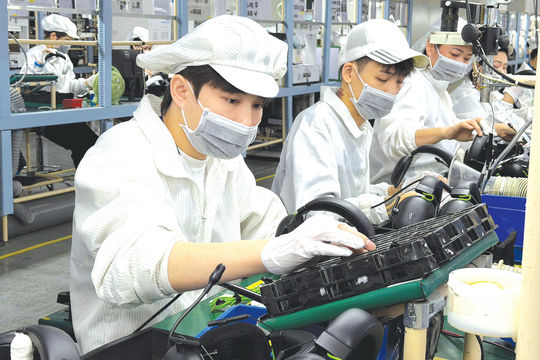
According to experts, the pace of FDI attraction is exceeding the local capacity to supply high-quality human resources. To shift from manufacturing to research, development and design, Hai Phong needs a workforce capable of mastering technology.
In this regard, the “three-house” linkage model, comprising the State, scientists and businesses, is considered an important solution for developing high-quality human resources, forming a science and technology market and narrowing the gap between research and production.
Conversely, businesses need to become more deeply involved in the training process. Enterprises should not only receive students after graduation but also become a “real-world classroom,” helping learners gain access to production lines, new technologies and specific practical problems.
Attracting talent, building a “digital talent triangle”
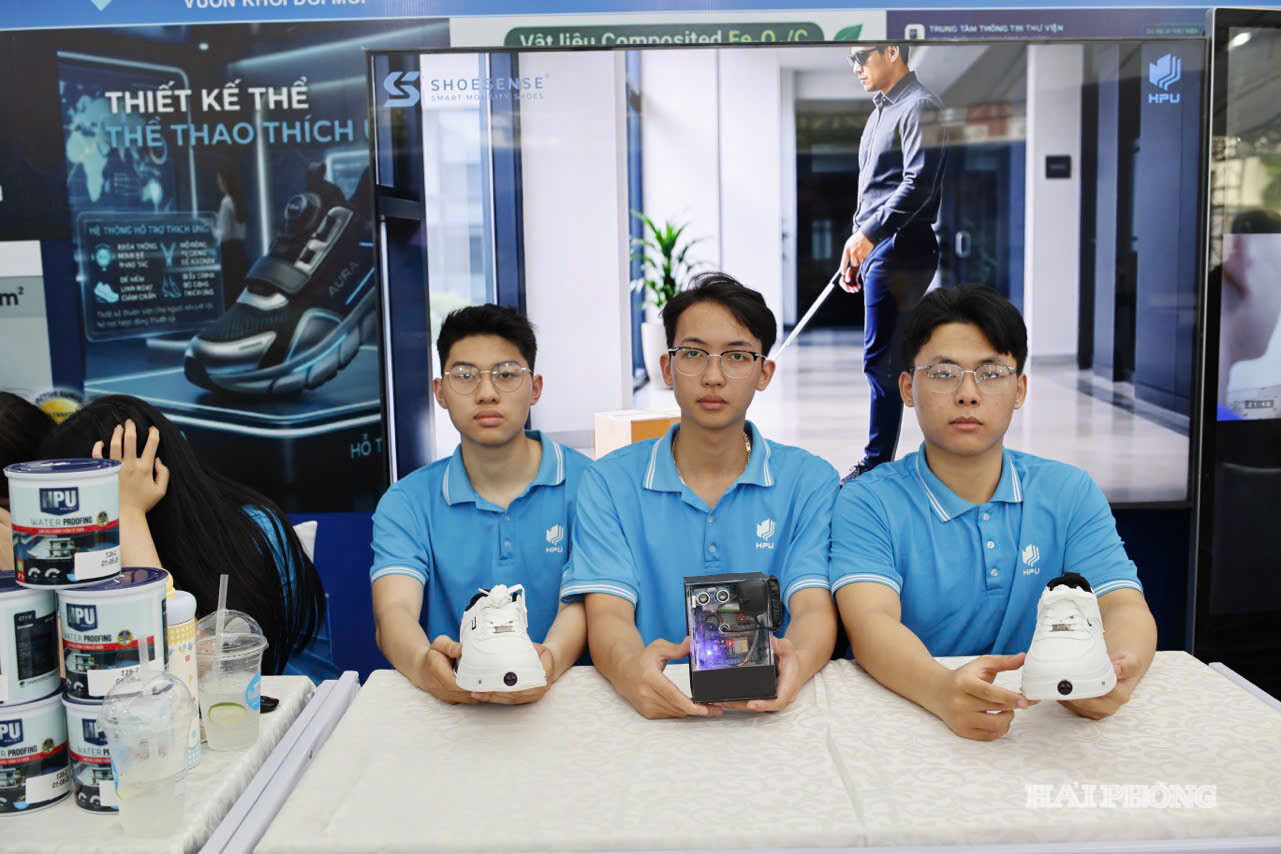
In the digital era, data and technology infrastructure plays an important role, but the decisive factor in a locality's competitiveness remains people, particularly knowledge-based and innovative human resources. With this orientation, Hai Phong is implementing a range of solutions in a coordinated manner to develop high-quality human resources serving science and technology, innovation and digital transformation.
Hai Phong has issued a policy on developing human resources in semiconductors and artificial intelligence for the 2025 – 2030 period.
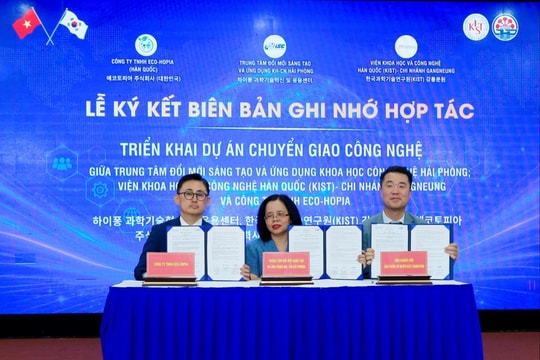
The city has also expanded cooperation and signed numerous agreements with domestic and foreign businesses, institutes and universities on training, research, application of new technologies, entrepreneurship and innovation, thereby gradually expanding cooperation and gaining access to advanced knowledge and technologies.
In particular, the city has implemented a plan for cooperation in science, technology and innovation with the Korea Institute of Science and Technology (KIST), focusing on training and developing science and technology human resources; established and operated the KIST-Hai Phong Technology Center and the KIST-HaiPhong Techhub Research and Development Center; promoted cooperation in research and technology transfer; and developed R&D centers.
The city is also stepping up surveys, networking, research cooperation, technology transfer and exchanges of scientific products between Hai Phong businesses and organizations and enterprises in Japan, South Korea and Taiwan (China) in AI, automation, digital transformation and renewable energy.
From training at universities to capacity building in the public sector and human resource development in businesses, Hai Phong is gradually building a systematic model for developing human resources in science and technology and digital transformation, with three interconnected tiers: the academic knowledge tier comprising universities and research institutes; the public administration tier comprising State agencies; and the business and social tier. Together, these three tiers form a “digital talent triangle,” in which universities provide the foundation, the government creates the environment, and enterprises provide the impetus for development.
HONG ANH