

Gửi bình luận
From the National Population Database of Vietnam to the VNeID application, along with flexible solutions in remote, mountainous, and island areas, technology has truly been directed toward voters, helping each citizen exercise their rights and civic responsibilities in the most convenient way.
The election of deputies to the 16th National Assembly and deputies to People’s Councils at all levels for the 2026–2031 term has been identified as a key political task of 2026. A notable feature of this election is the extensive application of technology in election governance.
According to a report from the Ministry of Public Security of Vietnam, the use of the National Population Database of Vietnam and the VNeID application has created a breakthrough in compiling voter lists. Currently, 3,320 out of 3,321 commune- and ward-level units nationwide have applied the software for this task, except for the Hoang Sa Special Zone.
Through the software system, local authorities have assigned more than 78.5 million eligible voters to polling stations, reaching 99.48% of the total. This figure reflects not only technical progress but also a high level of coordination and synchronization in organizing the election.
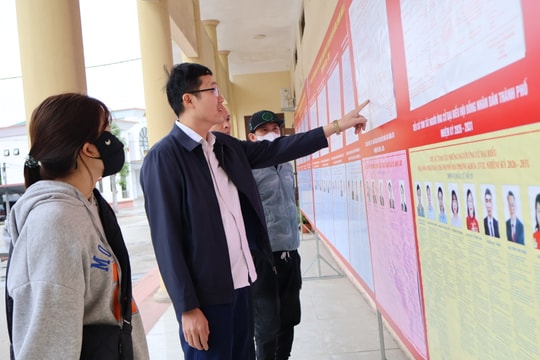
In Ba Dinh Ward, Hanoi, the review and verification of data have been carried out in coordination between the ward Election Committee and the ward police through the national population data system. As local governments operate under a two-tier administrative model after recent mergers, this approach has helped effectively address population fluctuations. The ward has 34,840 voters, divided into seven polling areas; voter lists have been publicly posted in accordance with regulations at 27 public locations, ensuring progress as scheduled.
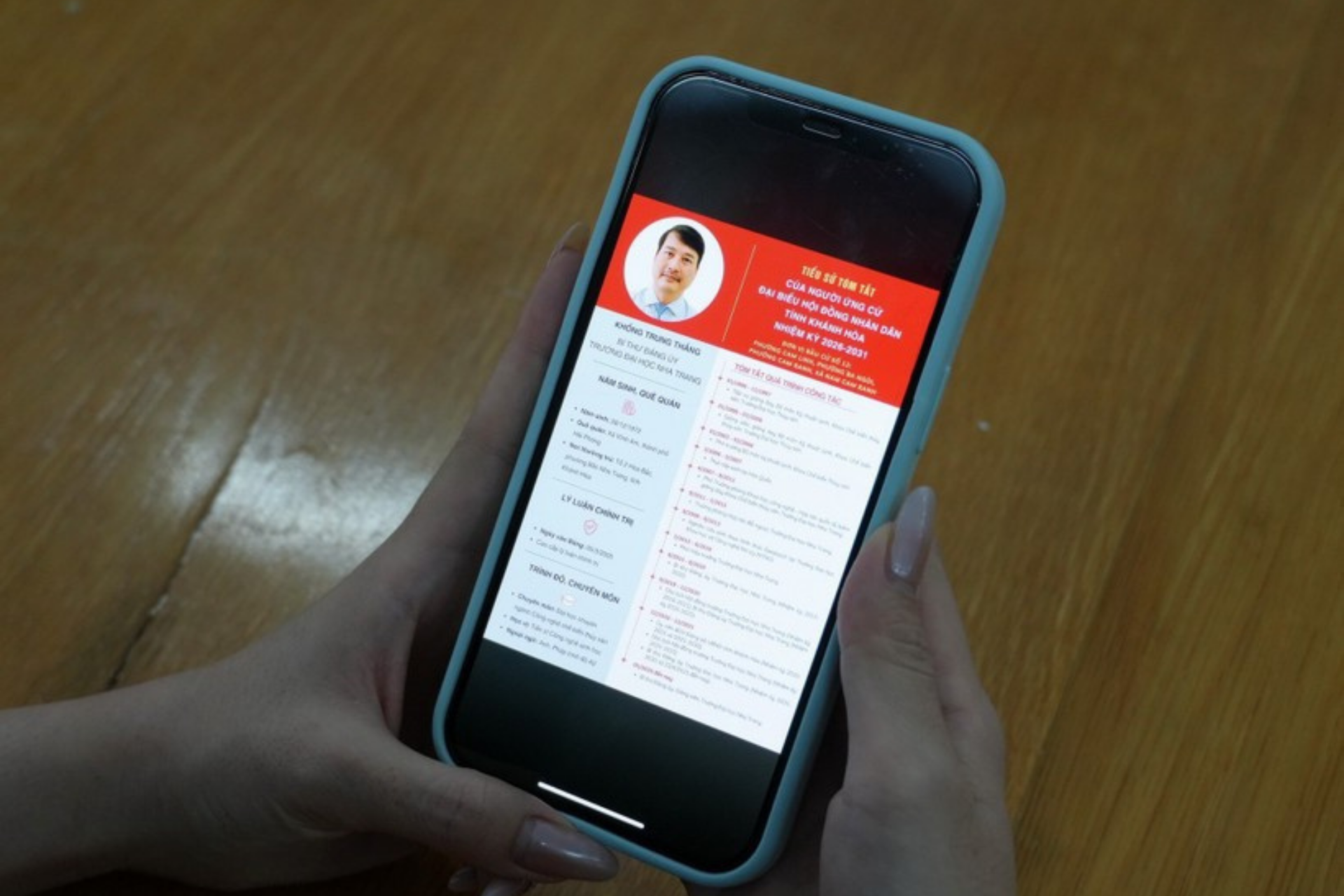
Technology is not only used for management but also to bring election information closer to the public. In Sa Dec Ward, Dong Thap Province, 40 “Be Cuc” Sa Dec information models have been placed in public spaces, crowded areas, and government offices to help voters easily access information. By scanning QR codes, residents can view electoral units, polling locations, election Q&A, election handbooks, candidate lists and biographies, voting instructions, and channels for submitting feedback.
According to Ms, Nguyen Thi Viet Nga, Deputy Head of the specialized delegation of the National Assembly deputies of Hai Phong, diversifying forms of voter engagement—including online interactions—helps expand democratic space and broaden the reach of information about candidates.
In previous elections, information was mainly conveyed through loudspeakers, banners, posters, and meetings in villages or residential quarters. This year, however, many communes and wards across different regions have actively used digital technology, social media, and online platforms to bring election information closer to the public. In localities such as Can Tho, Son La, Da Nang, and Nghe An, artificial intelligence has also been applied to refresh communication methods, making election information more visual, engaging, and accessible.
At a nationwide online conference on election preparations, Mr. Tran Thanh Man, Chairman of the National Assembly and Chairman of the National Election Council of Vietnam, affirmed that preparations from the central to local levels are largely on schedule, in accordance with the law, and carried out in a synchronized and well-organized manner. Guidance documents have been issued early and comprehensively; personnel work has been carefully prepared; political security and social order have been maintained; and complaints or denunciations have decreased, with no complicated cases arising so far.

Alongside digital transformation, election preparations across localities also demonstrate a strong commitment to practical implementation and a focus on voters in all regions.
In Hanoi, the system of guiding documents has been developed consistently, with tasks assigned clearly—defining specific persons, responsibilities, timelines, outputs, and authorities. The city has deployed election information management software down to the commune level and coordinated with telecommunications providers to issue accounts and organize training sessions. The use of the National Population Database of Vietnam and the VNeID application has made population statistics and voter list compilation more accurate and transparent.
In Da Nang, Mr. Nguyen Duc Dung, Chairman of the city’s Election Committee, noted that the election is taking place while the city has recently completed the restructuring and consolidation of administrative units and is operating under a two-tier local government model. With more than 2.18 million voters, 93 communes and wards, and one special zone, the workload is enormous. For areas with special conditions such as border regions, islands, and remote areas, the city requires thorough reviews and appropriate organizational plans to ensure the people’s right to vote.
Based on geographical conditions, transportation access, and the distance between polling stations and administrative centers, many localities have proactively arranged reasonable polling locations and developed plans for transporting election materials, ballot boxes, and related documents.
At Polling Station No. 30 in Uong Bi Ward, Quang Ninh—where the Vietnam–Sweden Uong Bi Hospital is located and many transient voters are patients and their relatives—the election team closely coordinated with the hospital to finalize the voter list shortly before Election Day, ensuring maximum accuracy. The locality also prepared mobile ballot boxes to be brought directly to hospital beds for voters unable to move, ensuring compliance with regulations while respecting citizens’ rights in special circumstances.
In Quang Ngai, election communication has been implemented flexibly through various methods. Ms. Y Tro, born in 1938 and living in Dak Duong Hamlet, Ngok Reo Commune, shared that due to her age and limited mobility, she could not go to the communal house or the commune People’s Committee headquarters to follow election information. Local officials therefore visited her home to provide the full list of candidates, enabling her to stay informed and make her choice.
The spirit of staying close to reality is also evident in border and island areas. The National Election Council of Vietnam has permitted many localities to conduct early voting to ensure citizens’ rights for those serving on the nation’s frontlines.
On the afternoon of March 5, the patrol vessel Fisheries Surveillance Ship 260 docked in Ho Chi Minh City after completing a voyage of more than a week to transport election teams offshore. On 13 duty vessels operating in waters bordering neighboring countries, early voting was conducted seriously and safely. At noon on March 1, 100% of voterson the DK1/9 Platform at Ba Ke Shoal completed early voting in a solemn atmosphere.
Earlier, from February 26, in early voting areas in the wards of Tam Thang Ward and Phuoc Thang Ward in Ho Chi Minh City, oil and gas workers scheduled to work on offshore rigs on the official Election Day had already exercised their voting rights. On March 8, 20 polling stations across islands in the Truong Sa Special Zone simultaneously conducted early voting; central areas such as Truong Sa Island and the Brigade 146 will vote together with the rest of the country on March 15.
In areas with large populations of ethnic minorities, the principle of “listening to the people and speaking in ways they understand” has been translated into practical approaches. Many localities have leveraged the role of village elders and respected community figures to convey election information in clear and authentic ways.
In Tri Ton District of An Giang, the Vietnamese–Khmer bilingual broadcasting system has become an effective bridge, helping residents clearly understand their rights and responsibilities as voters, as well as the timing, location, and significance of casting a ballot. In Dong Van Commune, Tuyen Quang—where more than 80% of the population are Hmong people—communication teams consist of individuals familiar with local customs and fluent in the Hmong language. Integrating traditional performances into communication sessions has made legal regulations easier for residents to understand and accept.
From the lowlands to mountainous areas, from hospitals to remote seas and islands, election preparations demonstrate a close combination of digital transformation and a spirit of public service. This ensures that every ballot truly becomes the voice of the voters, expressing trust in the most worthy representatives of the people’s will and aspirations.
Hai Phong News