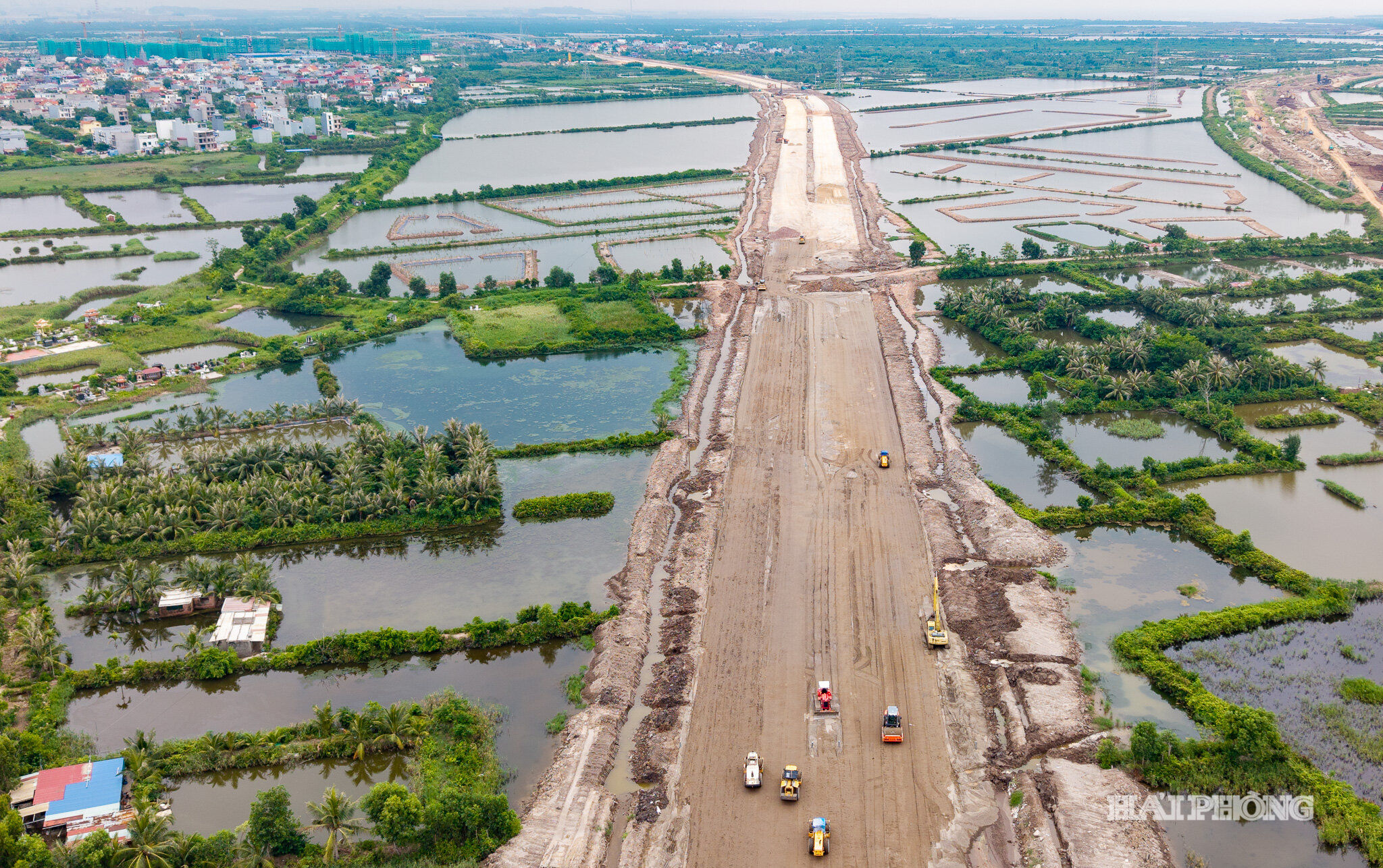
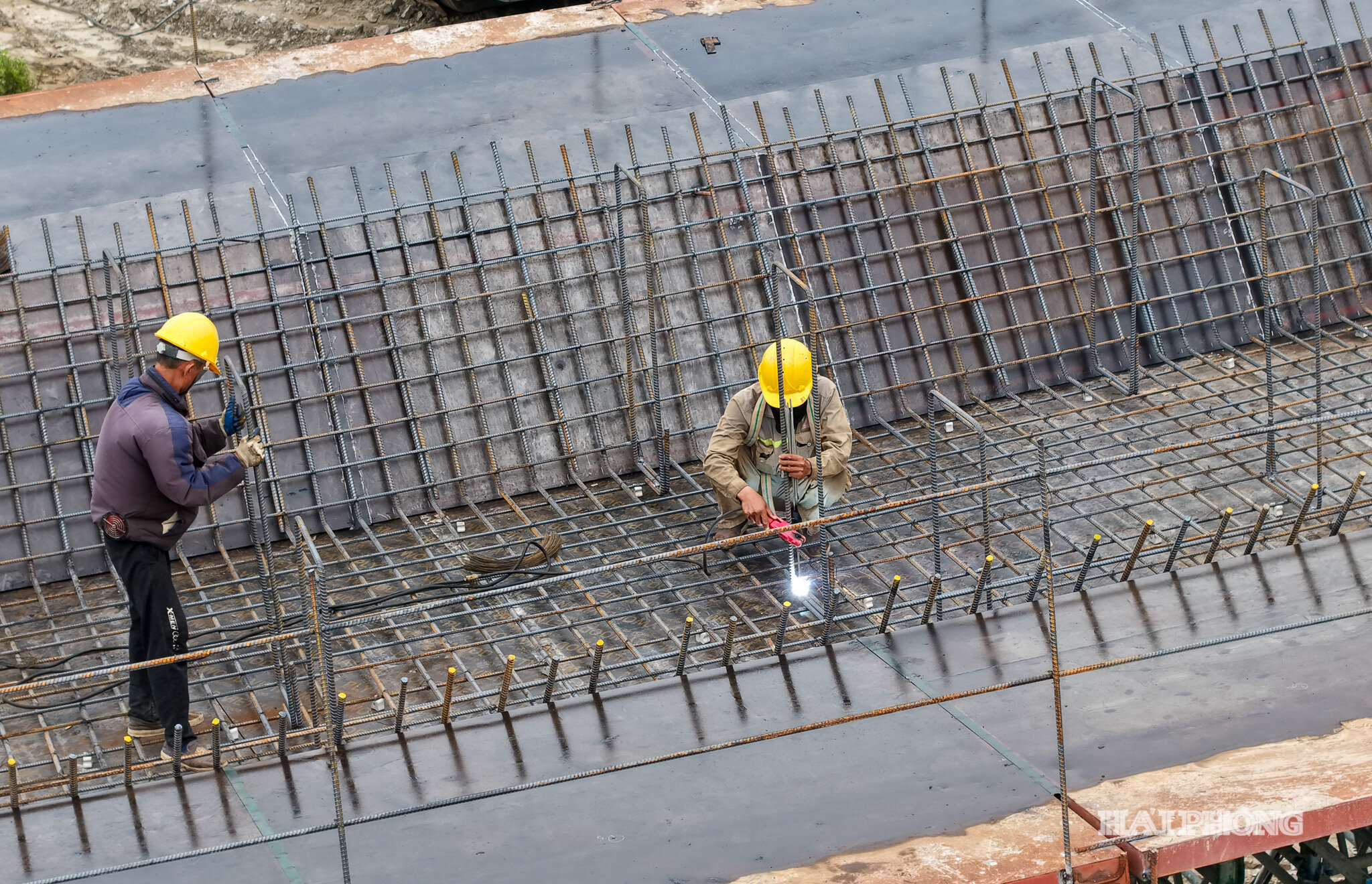
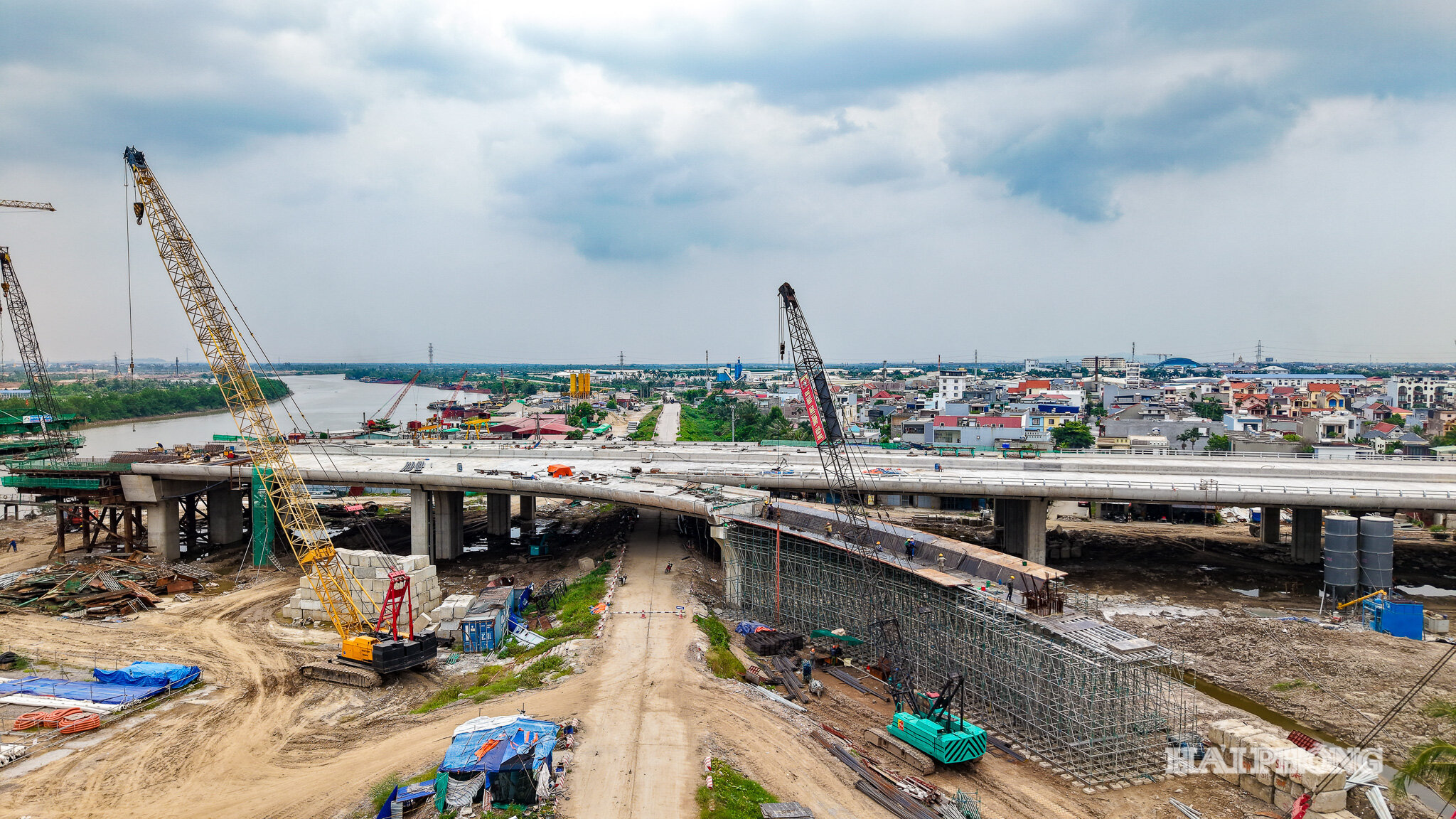
The construction of the Tan Vu - Hung Dao - Bui Vien section of Ring Road 2 is being accelerated, with about 61.5% of the workload completed.
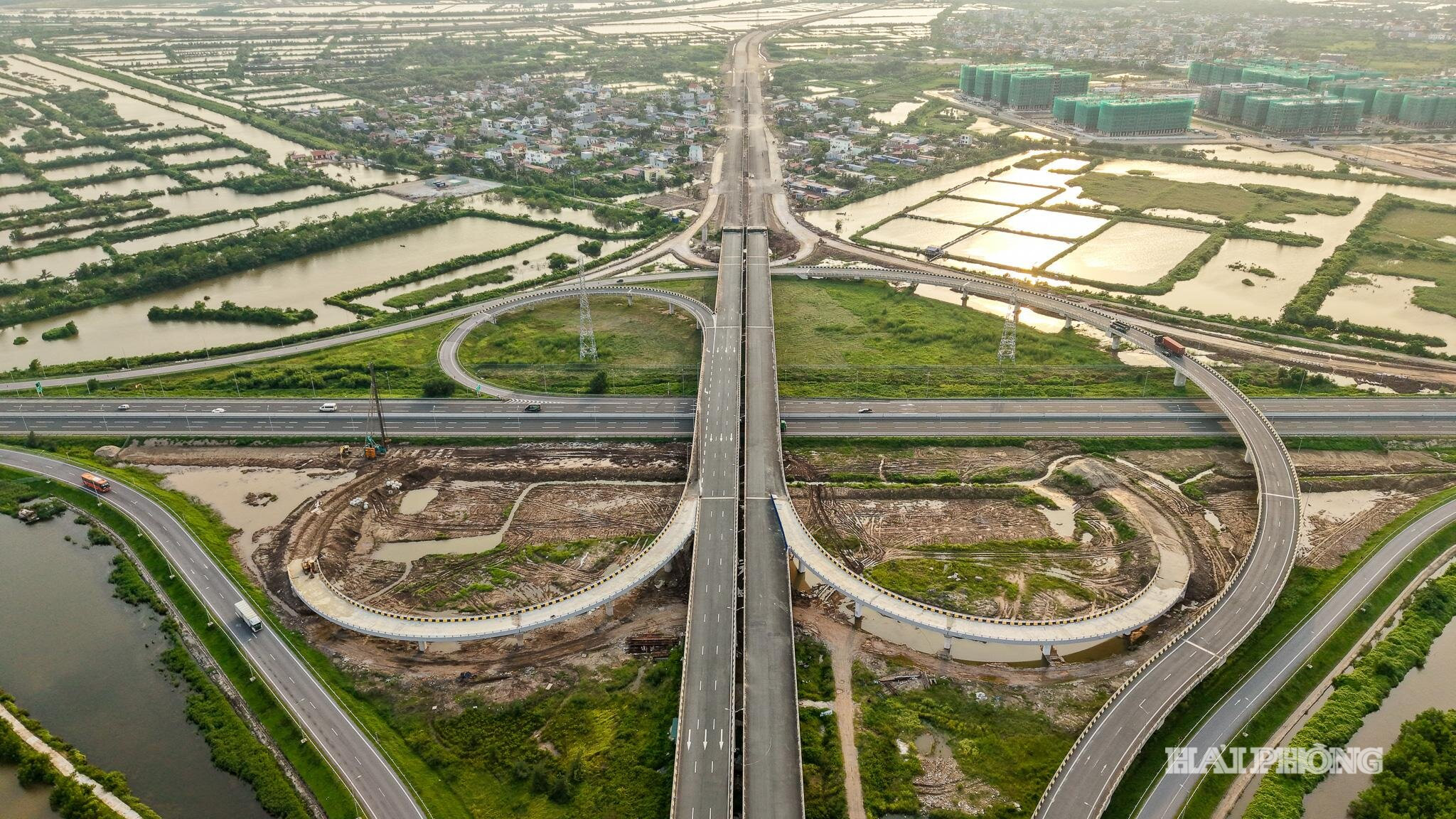
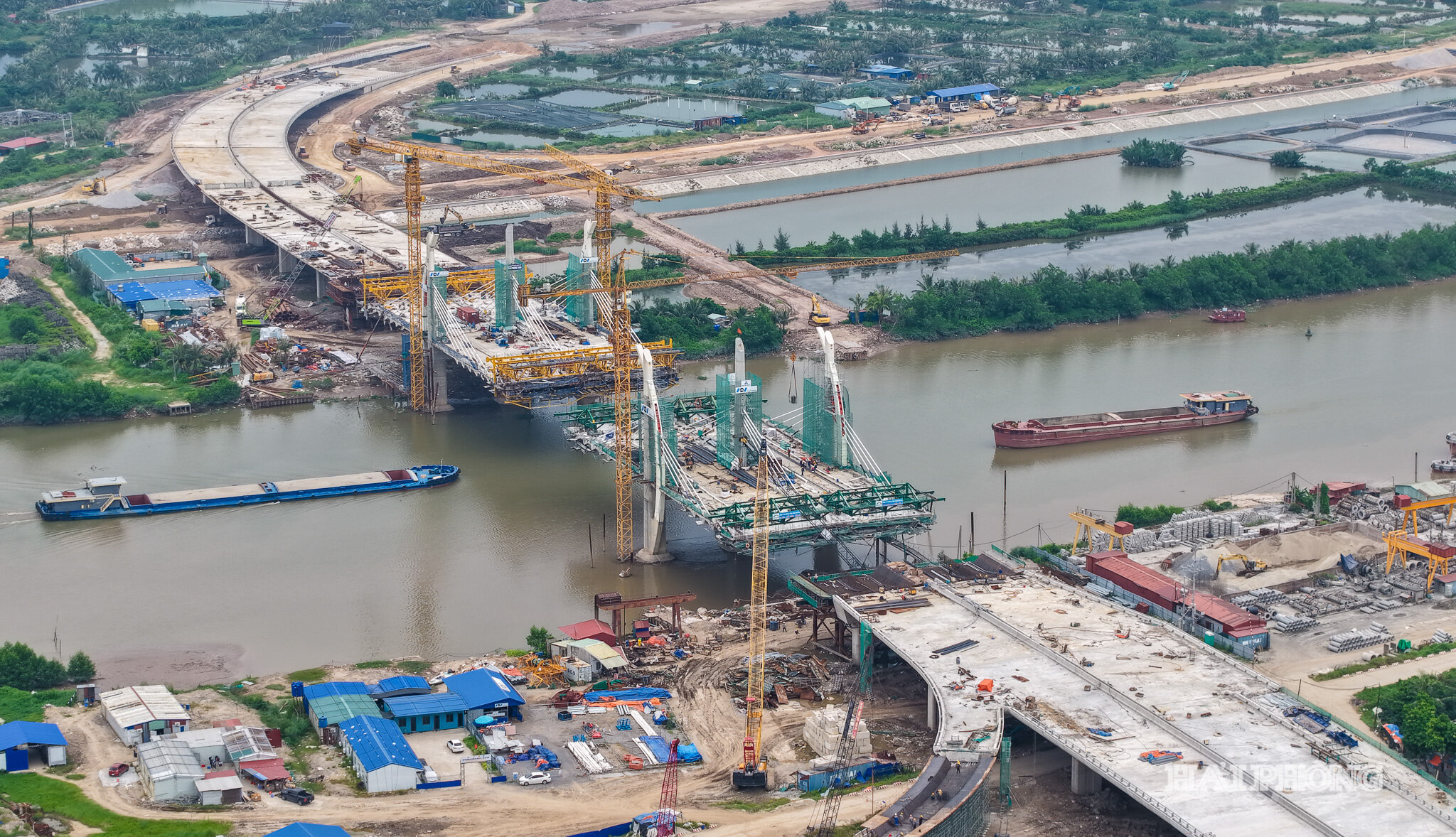
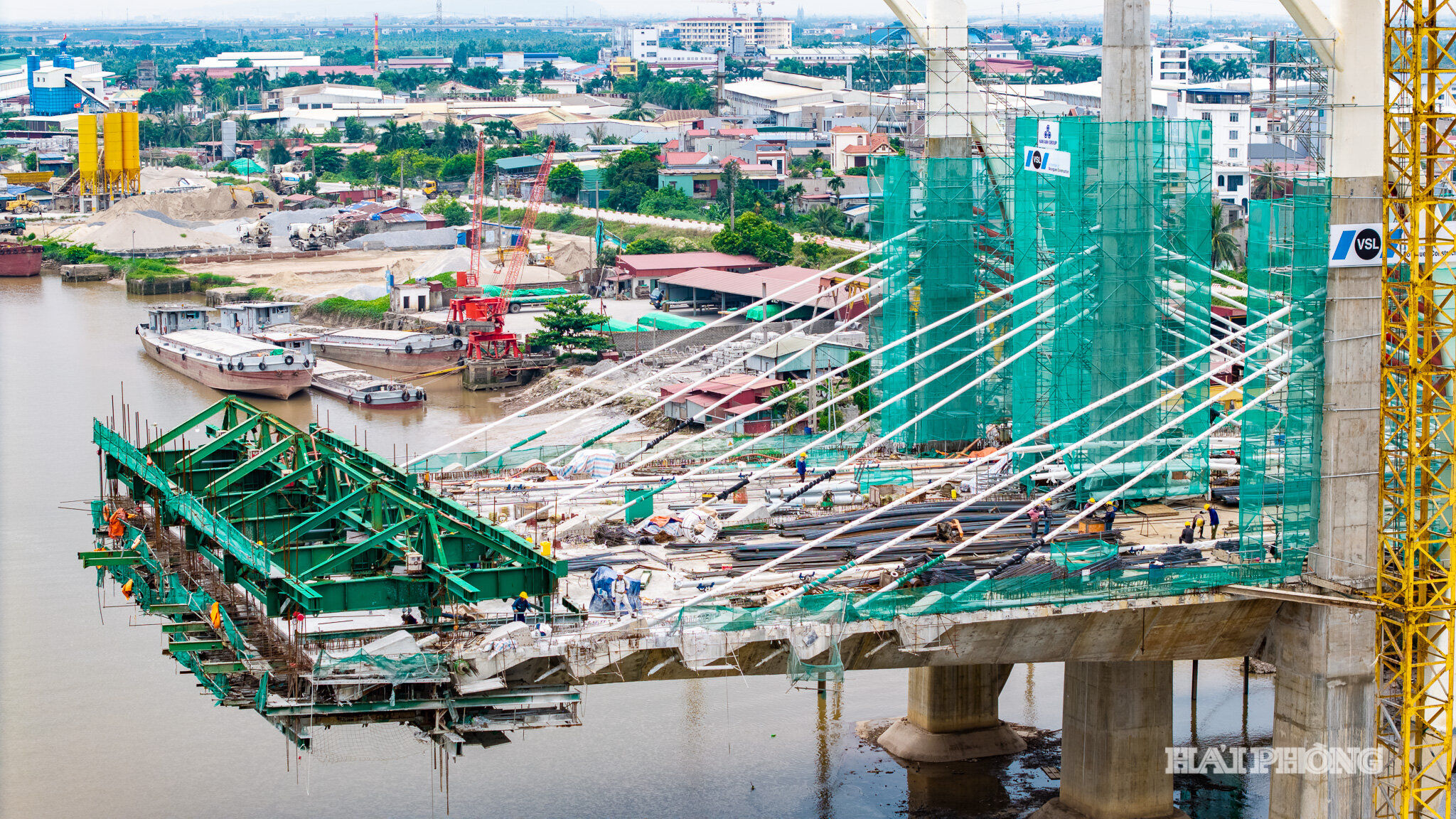
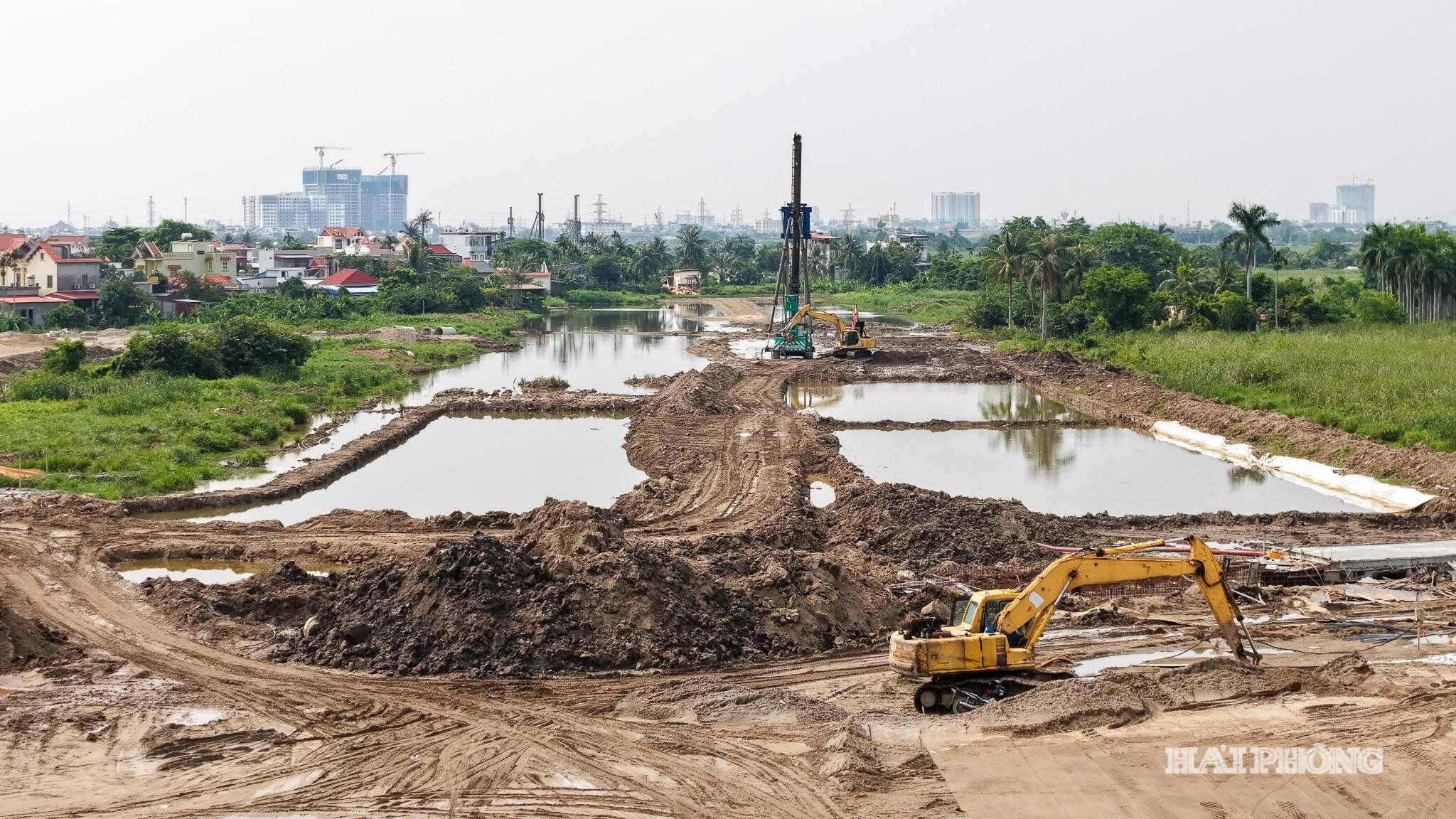
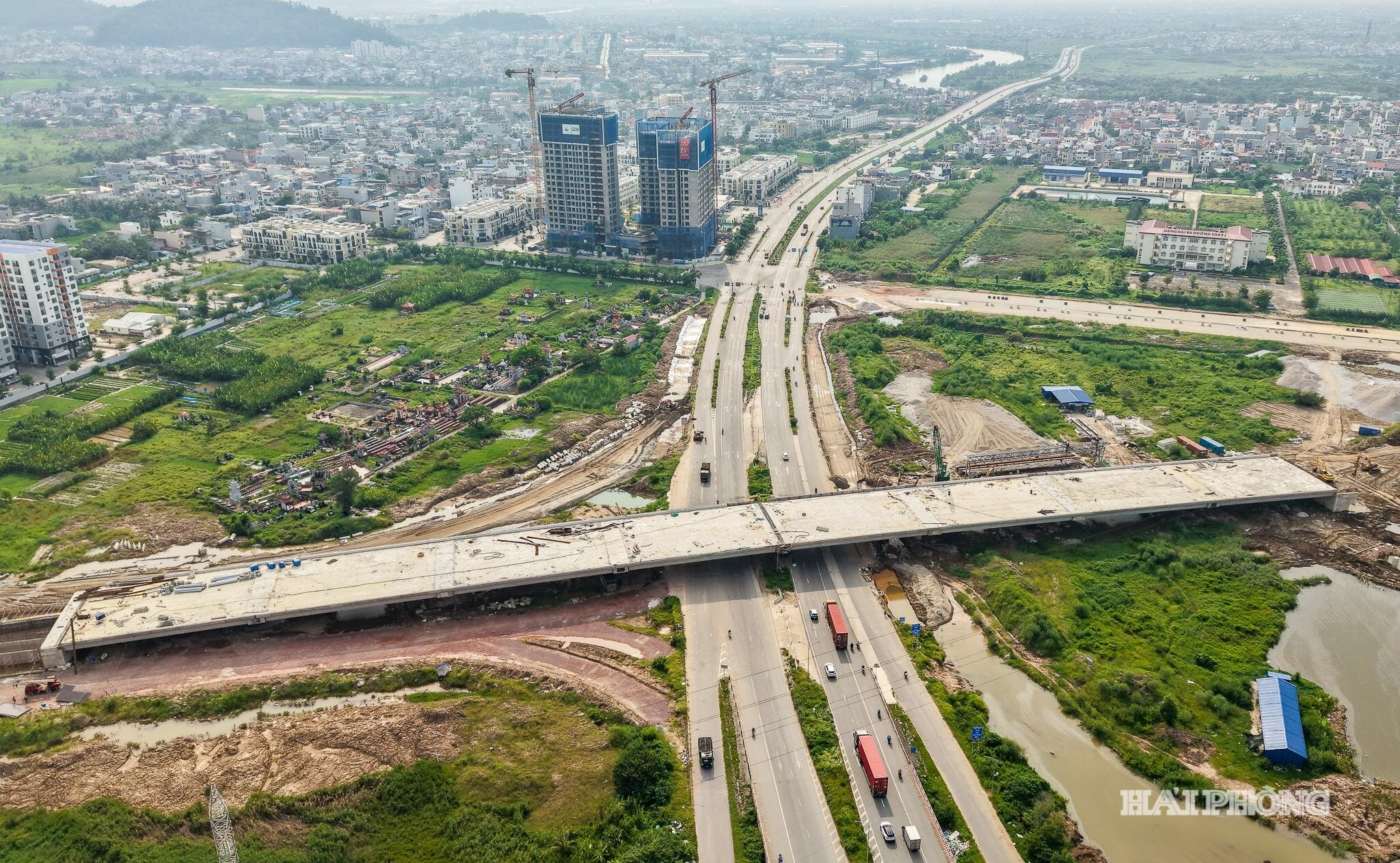
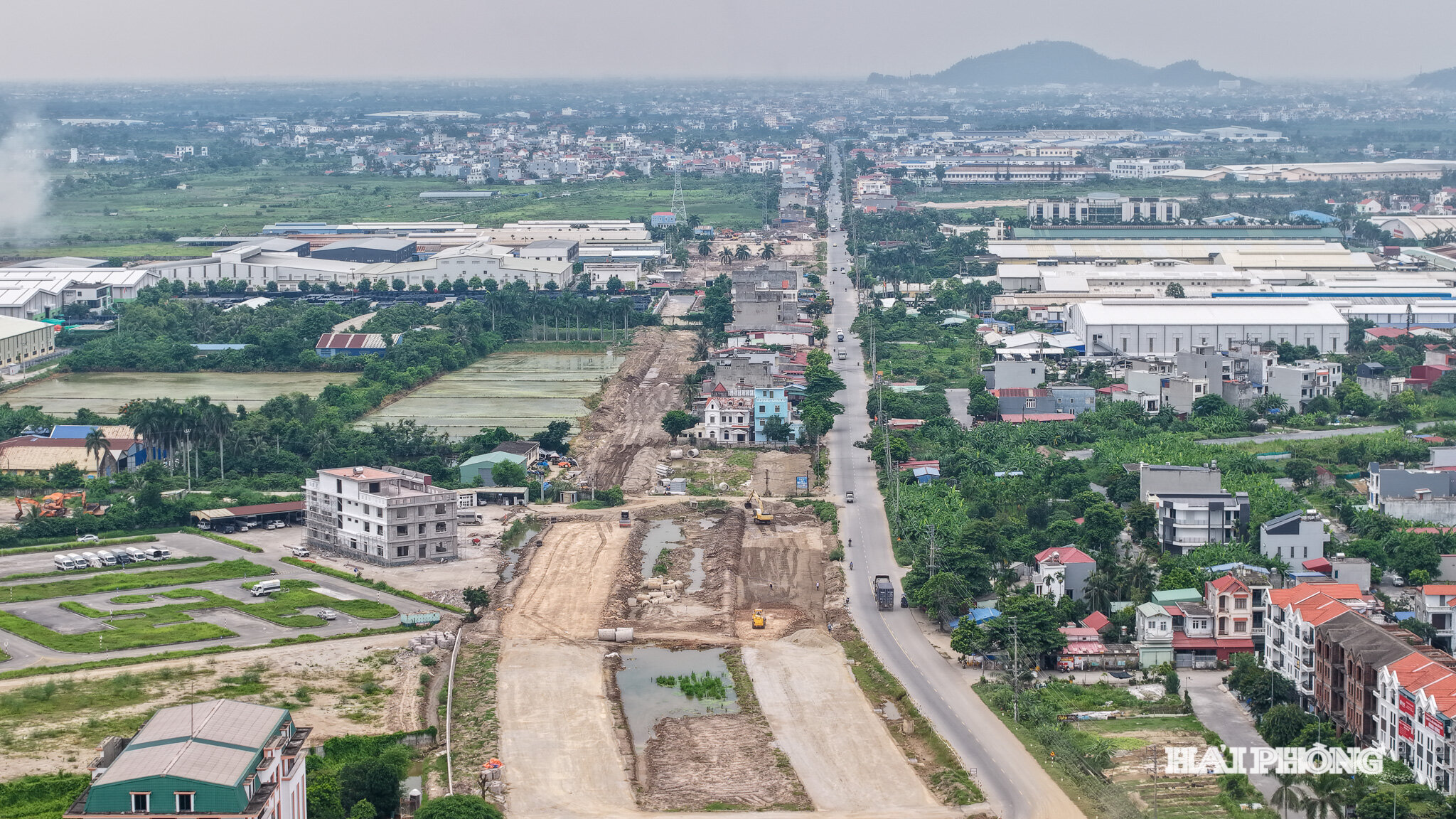
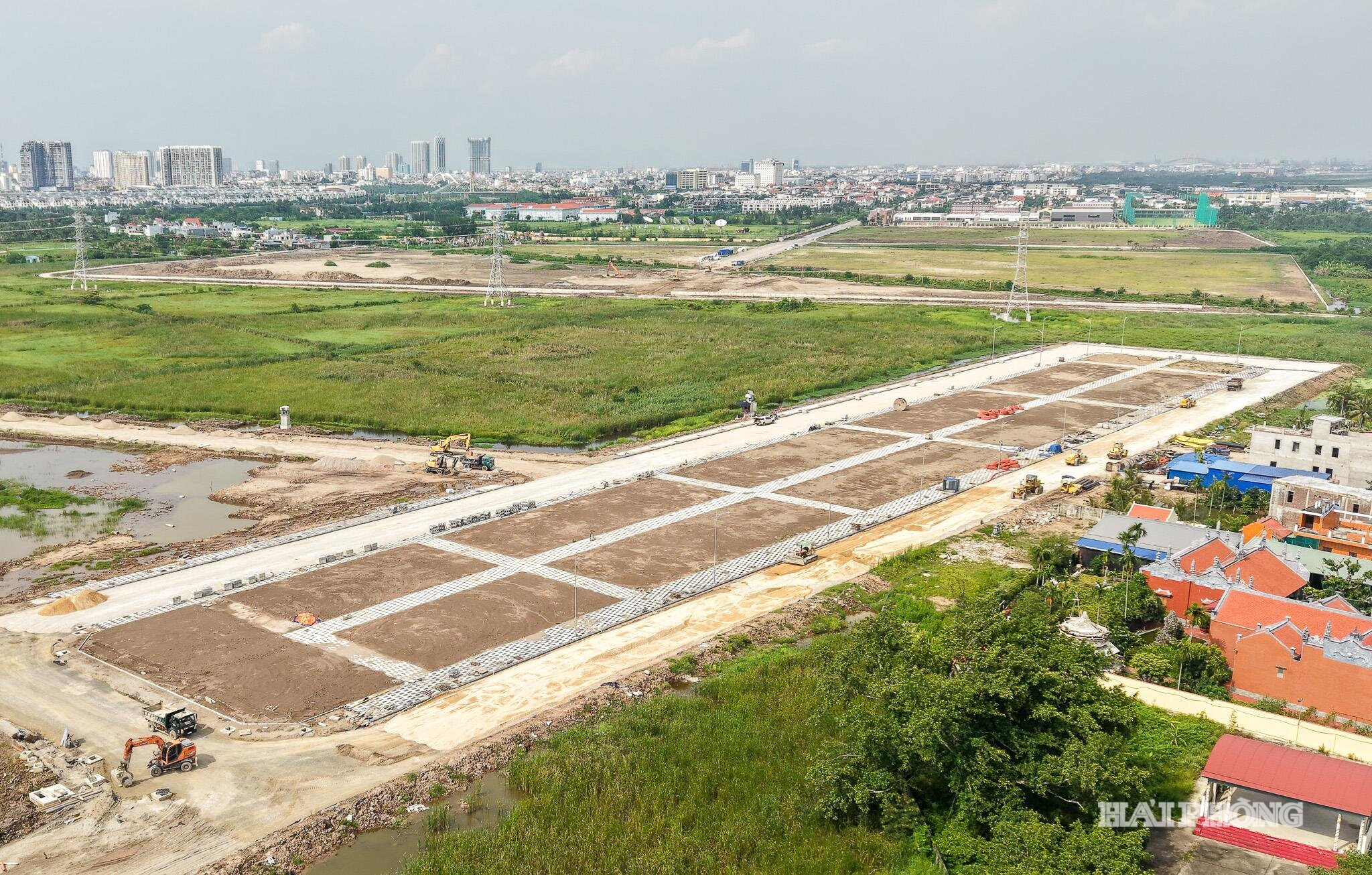
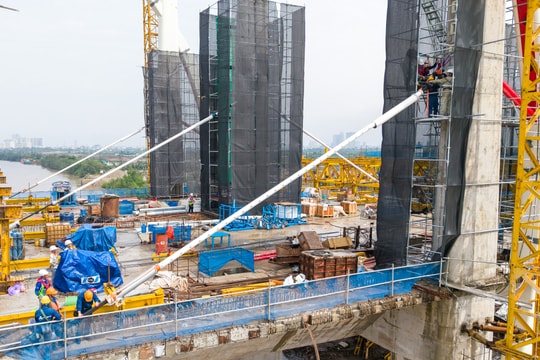
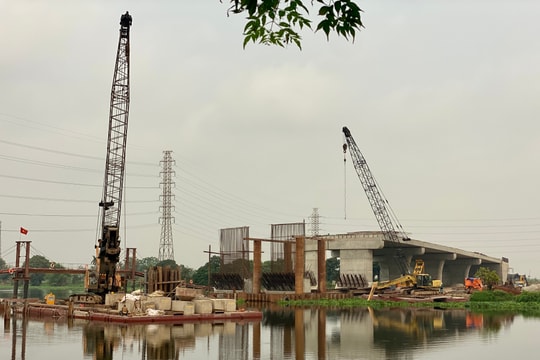
Construction crews are working along the Tan Vu - Hung Dao - Bui Vien section, one of Hai Phong’s key transport projects. The main route is about 11 km long, with a total investment of more than VND 8.593 trillion. In the photo: Tan Vu interchange and the section leading to the beginning of Lien Phuong road interchange.The more than 1.1-km-long Hai Thanh bridge crossing the Lach Tray river is one of the key structures along the route and is currently receiving concentrated construction efforts.At several key bidding packages, construction work has reached more than 70%, providing an important foundation for accelerating the overall project schedule. In the photo: Pulling bundles of suspension cables across Hai Thanh bridge.Alongside the sections progressing on schedule, some bidding packages still have a large volume of work remaining, requiring contractors to add new construction crews to meet the completion requirements set by the city authorities.The Bui Vien road interchange construction package has reached more than 64% completion and is considered basically on schedule.Site clearance along most of the route has basically been completed. Small remaining areas in Hung Dao, Kien An and An Duong still need to be cleared and handed over to construction units.Infrastructure at the resettlement area is continuing to be completed, but progress on some items has been affected by weather and shortages of fill materials, requiring work to be made up later.Prolonged rain in recent months has directly affected roadbed treatment, asphalt paving and many outdoor construction activities, putting considerable pressure on the project schedule.In addition to weather, shortages of supplies and materials, machinery operators and skilled workers are among the major difficulties at the construction site.Under the pressure to meet the schedule, contractors have been asked to increase manpower, equipment and construction crews to make up for affected workloads, with the goal of putting the entire project into operation around April 30 and May 1, 2027.

.jpg "Hai Duong city’s Ring Road I to link regions and expand urban development space")