
Gửi bình luận
Developing next-generation industrial parks in Hai Phong requires substantial capital, highlighting the need to diversify financing channels.
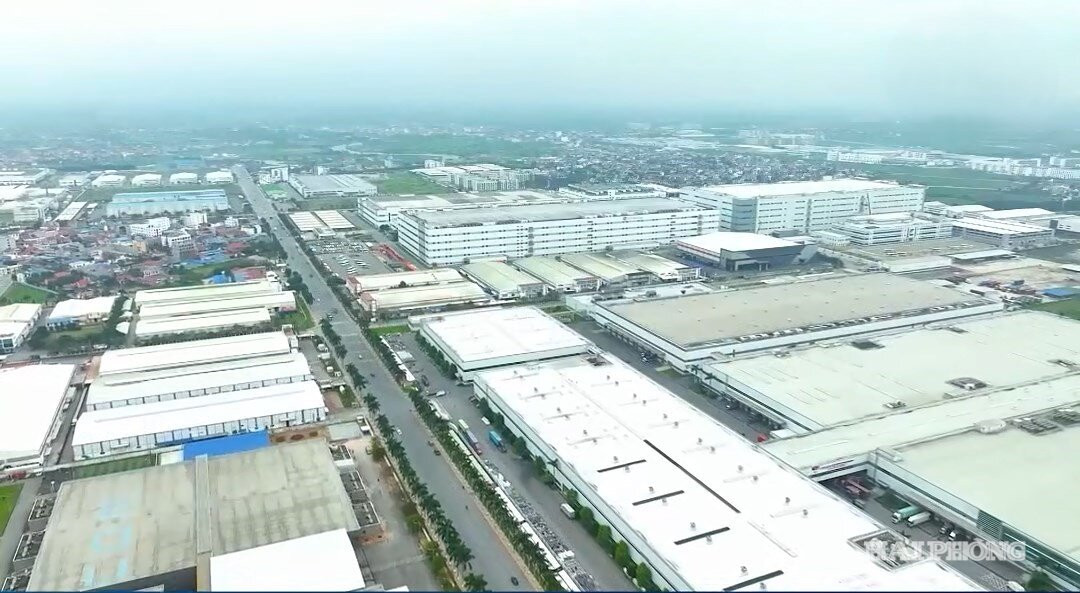
Under the Hai Phong City Master Plan for the 2021–2030 period, with a vision to 2050, approved by the Prime Minister, the city has set a strategic target of increasing the contribution of the processing and manufacturing industries to 47–48% of its gross regional domestic product (GRDP).
This direction places a key task on the Hai Phong Economic Zone Authority for the 2026–2030 period: striving to attract an additional USD 20–25 billion in foreign direct investment (FDI). To attract high-quality investment from multinational corporations operating in core technology sectors such as semiconductor chips, advanced electronic components, clean energy and artificial intelligence (AI), developing an eco-industrial and smart industrial park infrastructure system has become an inevitable trend.
As of October 20, 2026, Hai Phong had 1,895 valid FDI projects from investors representing 42 countries and territories, with total registered capital of approximately USD 54.05 billion. Of these, industrial parks and economic zones accounted for 1,078 projects, with registered capital of approximately USD 45.85 billion.
However, according to Dr. Phan Huu Thang, Chairman of the Vietnam Industrial Park Finance Association, under the Vietnam Financial Consultants Association (VFCA), increasingly stringent technical barriers in international markets, such as the Carbon Border Adjustment Mechanism (CBAM) and Environmental, Social and Governance (ESG) reporting standards, have fundamentally changed the nature of global investment competition.
The competitiveness of a locality is no longer determined by the availability of cheap undeveloped land or short-term tax incentives. Instead, it increasingly hinges on green energy, circular solutions and digital infrastructure. This shift is placing significant financial pressure on local industrial park infrastructure developers.
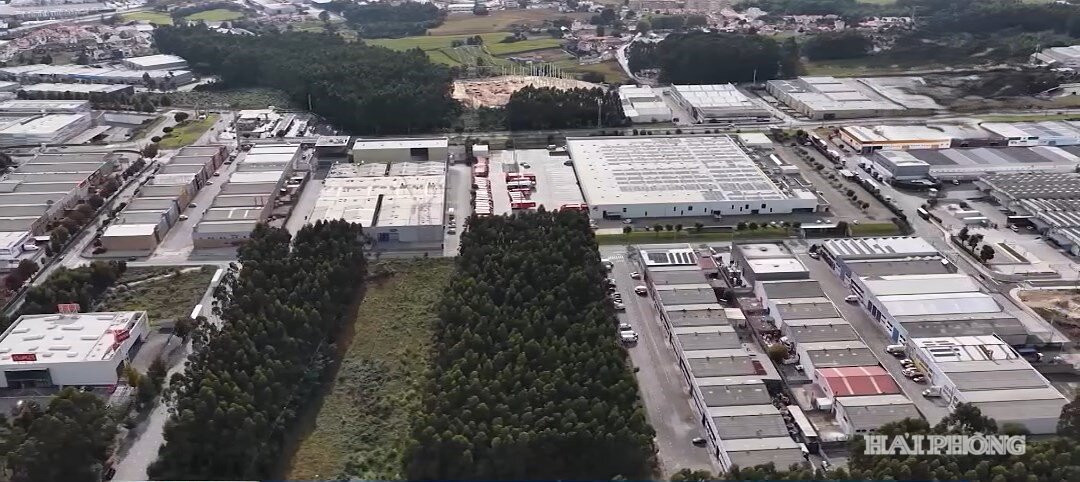
Upgrading a traditional industrial park to a next-generation model requires an initial investment many times higher than before. The investment costs for rooftop solar power systems, closed-loop wastewater treatment facilities, water reuse systems designed to achieve "Zero Discharge", smart data centers and automated energy management systems (EMS) all require enormous financial resources.
If the traditional financing model is maintained, relying primarily on enterprises' own capital combined with short- or medium-term commercial loans from domestic banks, investors may face cash flow imbalances. The payback period for a next-generation eco-industrial park typically ranges from 20 to 30 years, creating significant liquidity pressure if capital is not structured in a sustainable and long-term manner.
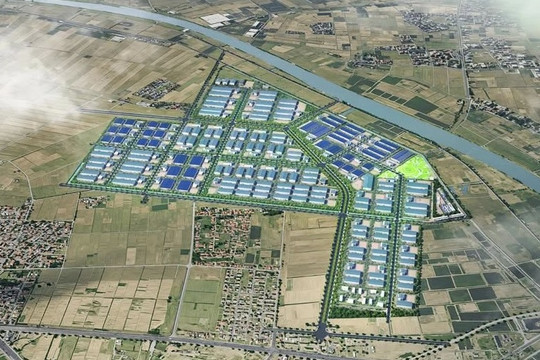
Mr. Pham Hong Diep, Chairman of the Board of Directors of Shinec Joint Stock Company, the investor in Nam Cau Kien Eco-Industrial Park, said that building a truly circular ecosystem requires businesses to mobilize substantial investment resources from the very foundation-building stage. Without flexible, long-term capital structures to support these investments, infrastructure developers will find it difficult to sustain their operations while meeting the stringent environmental commitments required by international partners.
At forums on next-generation industrial real estate held in Hai Phong in July and September 2026, many experts said that, to address financial bottlenecks, the shift towards a hybrid long-term financing model combining multiple funding sources is emerging as an optimal solution for investors in Hai Phong.
The key to this approach lies in accessing green credit and issuing corporate green bonds. These funding sources offer preferential interest rates, typically 2–3 percentage points lower than conventional commercial lending rates, as well as extended grace periods. They are provided by international financial institutions and specialized global investment funds focusing on sustainable infrastructure.
However, accessing these funding sources is far from easy. According to Dr. Ngo Trung Hai, Vice Chairman of the Vietnam Urban Planning and Development Association, for green financing to be disbursed at many industrial parks, projects must undergo rigorous audits to assess greenhouse gas emission reductions, energy-saving rates, climate risk management solutions and industrial symbiosis within the park's sub-zones.
This requires infrastructure developers to standardize their financial reporting capabilities and integrate them with sustainability reporting in accordance with widely recognized international standards.
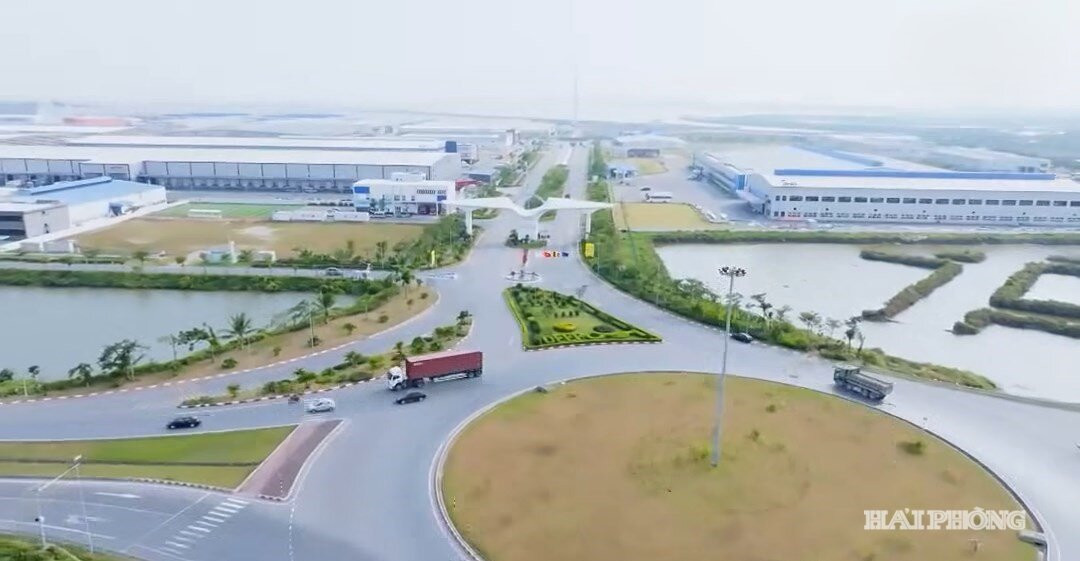
Another effective financing model that is taking shape in Hai Phong is ownership diversification through joint ventures between domestic infrastructure corporations, which have advantages in land reserves and site clearance capacity, and multinational financial groups and industrial real estate management corporations. This combination helps spread initial investment risks while enabling Hai Phong's new industrial parks to gain more direct access to the extensive tenant networks within their foreign partners' global supply chains.
Alongside businesses' efforts, the city is actively creating favorable conditions through effective financial incentive policies. The Hai Phong People's Committee has introduced financial support mechanisms for innovation zones, provided partial funding for certification assessments of eco-industrial parks, and promoted the Public-Private Partnership (PPP) model in developing off-site technical infrastructure connecting to industrial parks, such as main roads, power supply systems and water supply networks.
Thu Hang