.jpg "Hai Phong mobilizes resources to ensure social welfare")



Gửi bình luận
The ‘Community Welfare’ model in Hai Phong helps identify people in difficult circumstances, connect resources, and improve the effectiveness of social welfare.
Identifying ‘welfare addresses’
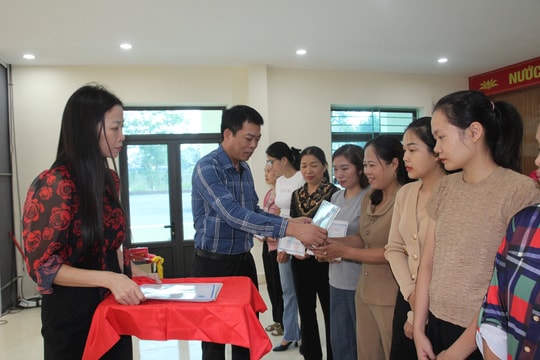
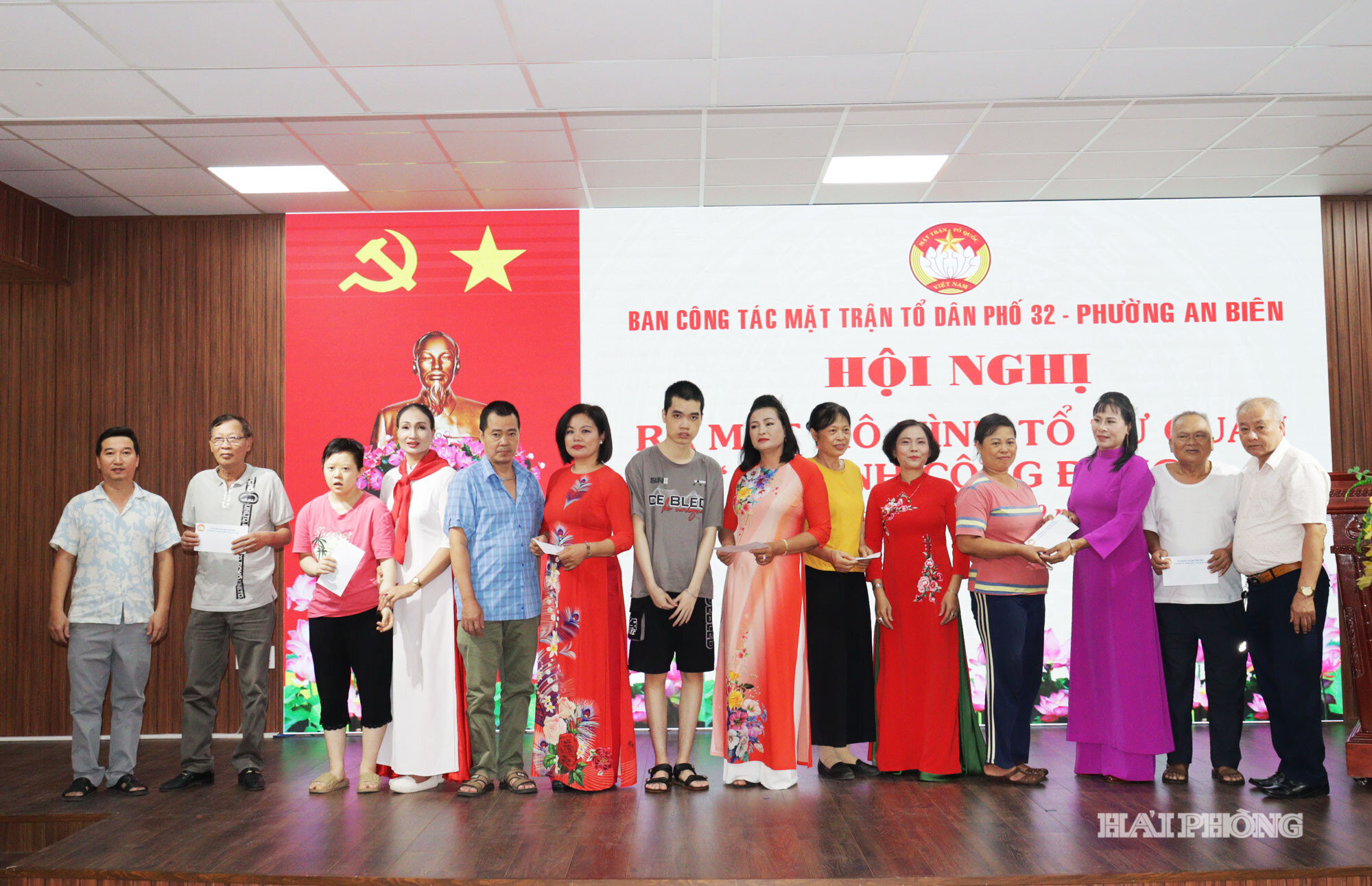
Nguyen Duy Hai was among 52 “welfare addresses” identified by the Vietnam Fatherland Front Committee of Hong Bang Ward as eligible for support at a conference launching the pilot “Community Welfare” model in mid-September 2026.
Hai is a victim of Agent Orange and has poor health. For many years, he has lived in a severely deteriorated house. The ward identified his needs and connected resources to support the construction of a new home, with an estimated budget of VND 200 million.
Alongside Hai's case, the Vietnam Fatherland Front Committee of Hong Bang Ward compiled welfare records for 35 orphans in difficult circumstances, six students who have excelled academically despite hardship, seven people with serious illnesses or particularly difficult circumstances, and four households facing housing difficulties. A total of 31 organizations and individuals have registered for companionship, with expected resources totaling nearly VND 900 million.
Tran Thi Lan, Chairwoman of the Vietnam Fatherland Front Committee of Hong Bang Ward, said that following the first round of support, the ward would continue coordinating with member organizations and Fatherland Front working groups to review and update cases involving people in difficult circumstances and vulnerable groups.
The ward would complete the “Community Welfare Register,” classify cases by priority and support needs, and connect each identified case with suitable organizations, businesses, and individuals. The goal is to establish a community network in which people share concern for and responsibility toward those in need.
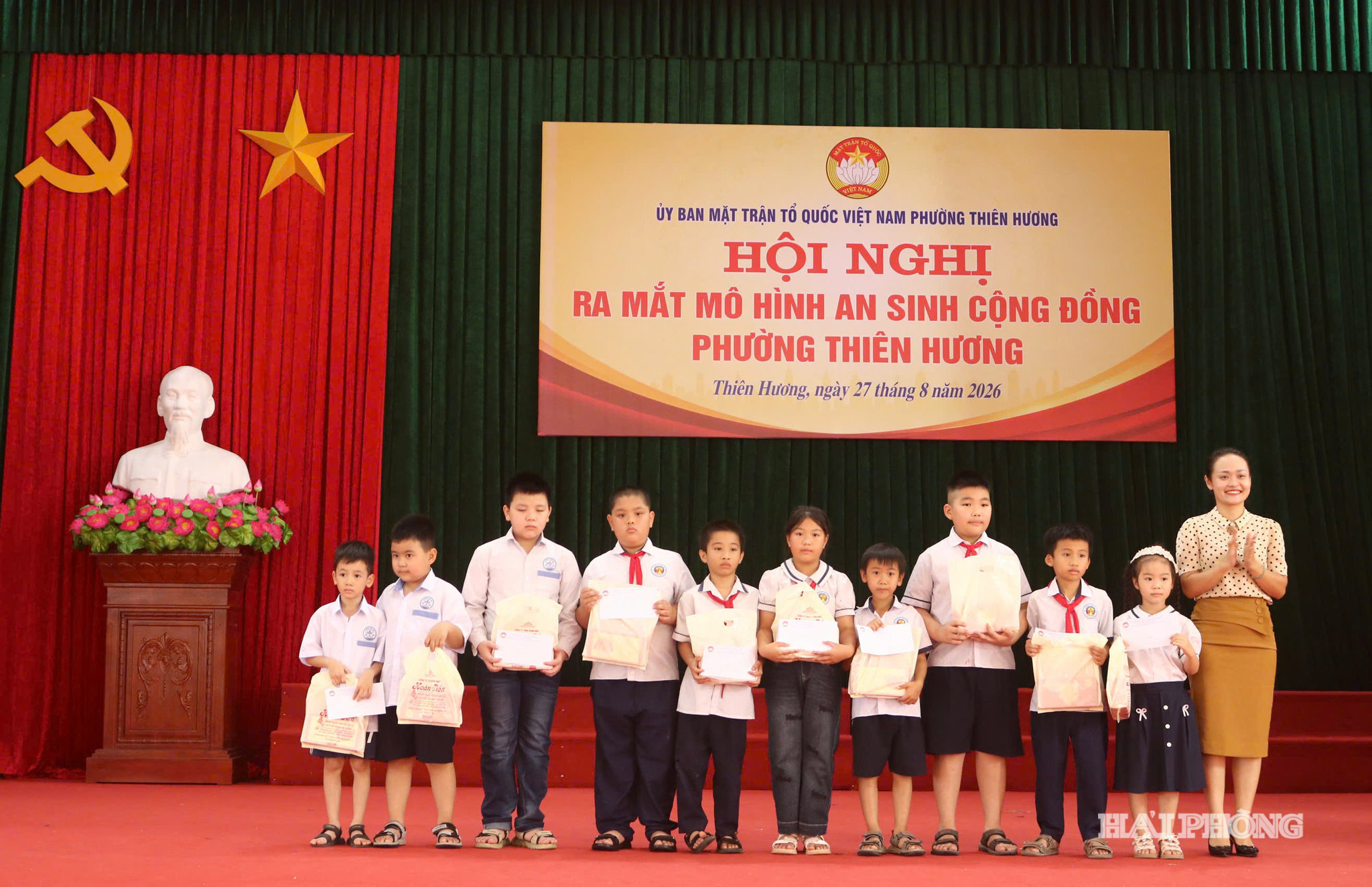
This approach has also been implemented in Thien Huong Ward since August 2026. At the launch ceremony, the ward's Vietnam Fatherland Front Committee provided funding for a “Great Unity” house, presented nine “Community Welfare Registers” worth VND 8 million each, and distributed 71 gifts worth VND 1.1 million each, bringing the total value of support to VND 151 million.
Sao A D.C JSC donated VND 72 million. The Fatherland Front and mass organizations presented VND 36 million, ward departments and units provided VND 23 million, and ward leaders contributed VND 20 million.
Expansion
The “Community Welfare” model was launched under the direction of the Standing Committee of the Vietnam Fatherland Front Committee of Hai Phong in 2026 to strengthen the Front's central role in mobilizing residents, businesses, organizations, and individuals to participate in social welfare efforts and build united, caring, prosperous, and happy residential communities.
For the 2026 – 2030 period, the city aims for 100% of its communes, wards, and special zones to establish and maintain at least one “Community Welfare” model. A key feature is bringing social welfare support directly to villages and residential groups associated with the “Community Welfare Register.”
Rather than waiting for holidays and the Lunar New Year to provide assistance, Fatherland Front working groups and self-governance teams regularly review individual households, verify their circumstances, identify their needs, update data, and connect them with appropriate resources. Information on the receipt of contributions, support provided, and results is also updated so residents can monitor the process.
Nguyen Duc Tuan, Member of the Standing Committee of the Hai Phong Party Committee and Standing Vice Chairman of the Vietnam Fatherland Front Committee of Hai Phong, emphasized that the core of the “Community Welfare” model is to understand people's circumstances, accurately identify their needs, and connect them with the right resources.
The model must be implemented down to the village and residential-group level, promoting the role of Fatherland Front working groups without spreading resources too thinly or pursuing achievements for their own sake. Local authorities should standardize the “Community Welfare Register,” develop a digital database, expand resources from businesses, benefactors, and the community, and measure effectiveness by tangible improvements in individual households' lives.
NGUYEN NGUYEN