
![[Infographic] Digital economy contributes 15% to GDP in H1](https://bhd.1cdn.vn/thumbs/540x360/2023/08/16/files-library-newimages-16082023__digital_economy_contributes_15_percent_to_gdp_in_h1.jpg "[Infographic] Digital economy contributes 15% to GDP in H1")

Gửi bình luận
In 2025, Vietnam accelerated the rollout of 5G, placing priority on infrastructure development. While network expansion is progressing rapidly, turning 5G into a sustained driver of economic growth will require more time as well as coordinated and consistent policy support.
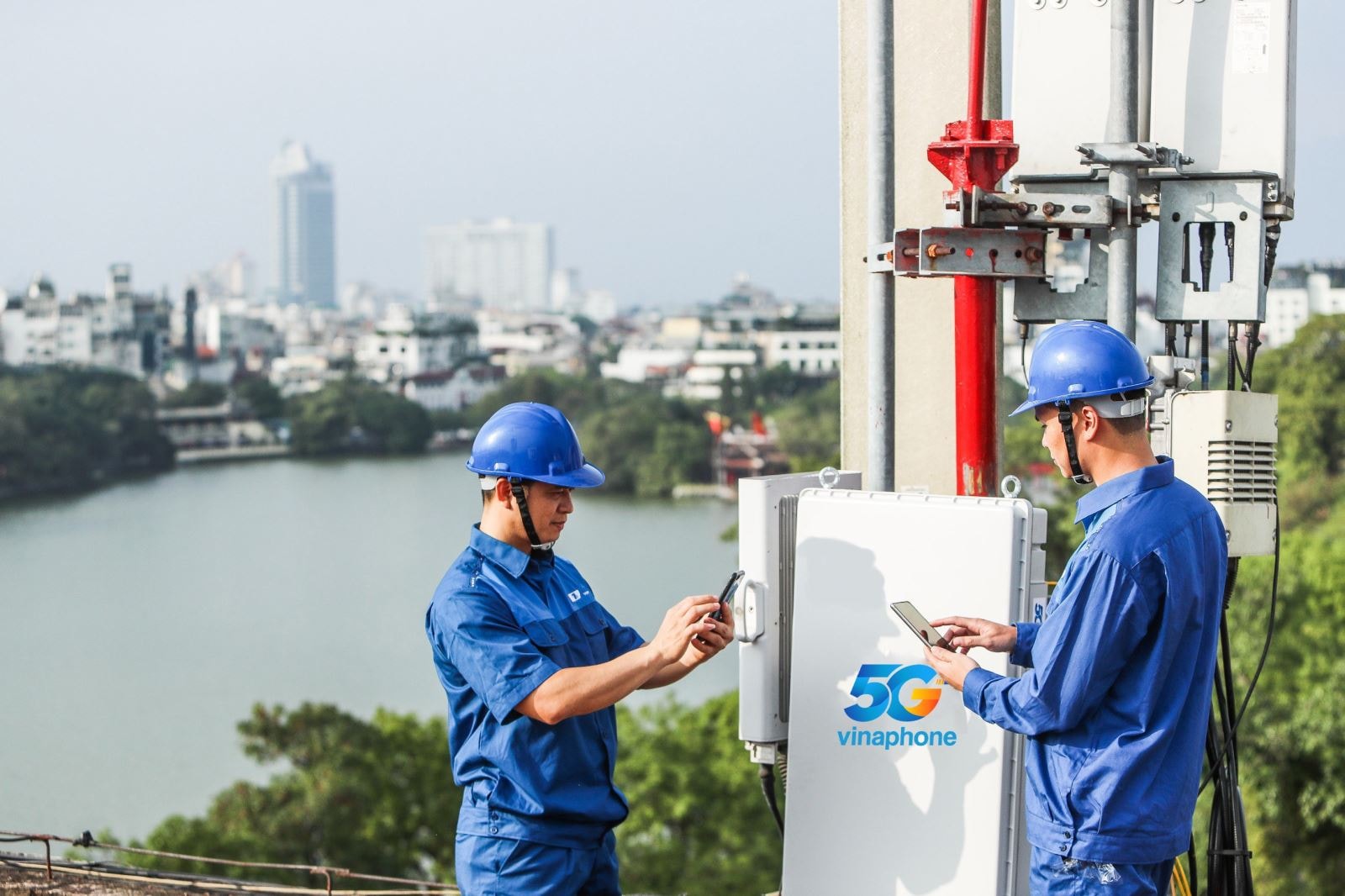
Infrastructure Development Backed by Policy Support
Unlike previous generations of mobile networks, Vietnam’s 5G has been developed within a clearly defined and unified policy framework. The Politburo’s Resolution No. 57 and related government resolutions have identified 5G as a key component of national strategic infrastructure, guided by the principle that infrastructure must be developed first to create room for growth.
Aligned with this direction, major telecommunications operators are accelerating their investments. Viettel, VNPT and MobiFone have all identified 2025 as a pivotal year, laying the groundwork for 5G to emerge as a meaningful growth driver in the 2026–2030 period.
According to Nguyen Ha Thanh, Deputy General Director of Viettel Telecom, the company deployed more than 23,500 5G base stations in 2025, bringing the nationwide total to around 30,000. Outdoor coverage has reached nearly 90% of the population, while indoor coverage stands at about 70% and continues to expand.
VNPT is also stepping up its rollout. Nguyen Quoc Khanh, Deputy Head of the Technology Department of VNPT Group, said the operator officially launched 5G at the end of 2024 and has been expanding coverage across urban centers, industrial parks, seaports, airports and other high-traffic areas.
MobiFone, by contrast, has adopted a more cautious approach. Nguyen Tuan Huy, Deputy Head of the Technology Department of MobiFone Corporation, noted that 2025 is a foundation-building year, with 5G expected to fully place its role as a driver of growth from 2026 onward.
The operator is currently piloting 5G in new urban areas and industrial zones, while preparing B2G (business-to-government) solutions such as smart cities, intelligent transport systems, flood management and smart energy - applications that require large-scale IoT connectivity.

Diverging Application Development
Despite rapid infrastructure expansion, the development of 5G applications in Vietnam shows clear divergence. Consumer-oriented services are advancing quickly, while applications for businesses and government agencies require more time to mature.
Experts note that globally, consumer-focused 5G applications tend to advance more quickly due to lower deployment barriers and faster market adoption. In Vietnam, e-commerce and livestreaming are widely viewed as sectors with strong potential for effective early-stage deployment.
Notably, 5G is also opening up new opportunities for rural and remote areas. By combining 5G connectivity with digital platforms and logistics services, farmers can livestream sales directly from their fields, connect more closely with consumers and help address long-standing challenges in agricultural product distribution.
Experts broadly agree that 5G will not generate immediate economic growth but serve as a catalyst for comprehensive digital transformation. With more synchronized progress in infrastructure, devices and policy frameworks, from 2026–2030, 5G is expected to clearly demonstrate its values in Vietnam’s socio-economy.
Hai Phong News