-046ff6fff7d3bcf93f5733da0f95c6ea.png "Technology innovations improve urban water quality")

Gửi bình luận
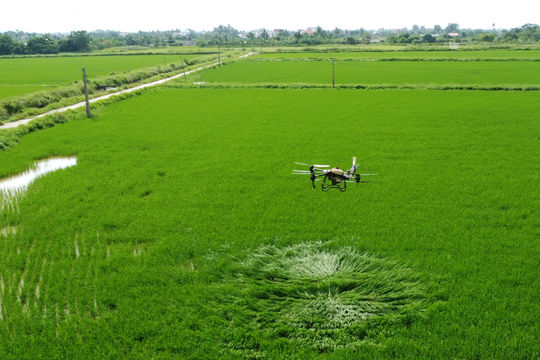
Experimental and production farms are stepping up the testing of new crop varieties and technology transfer, contributing to the development of modern and sustainable agriculture in Hai Phong.
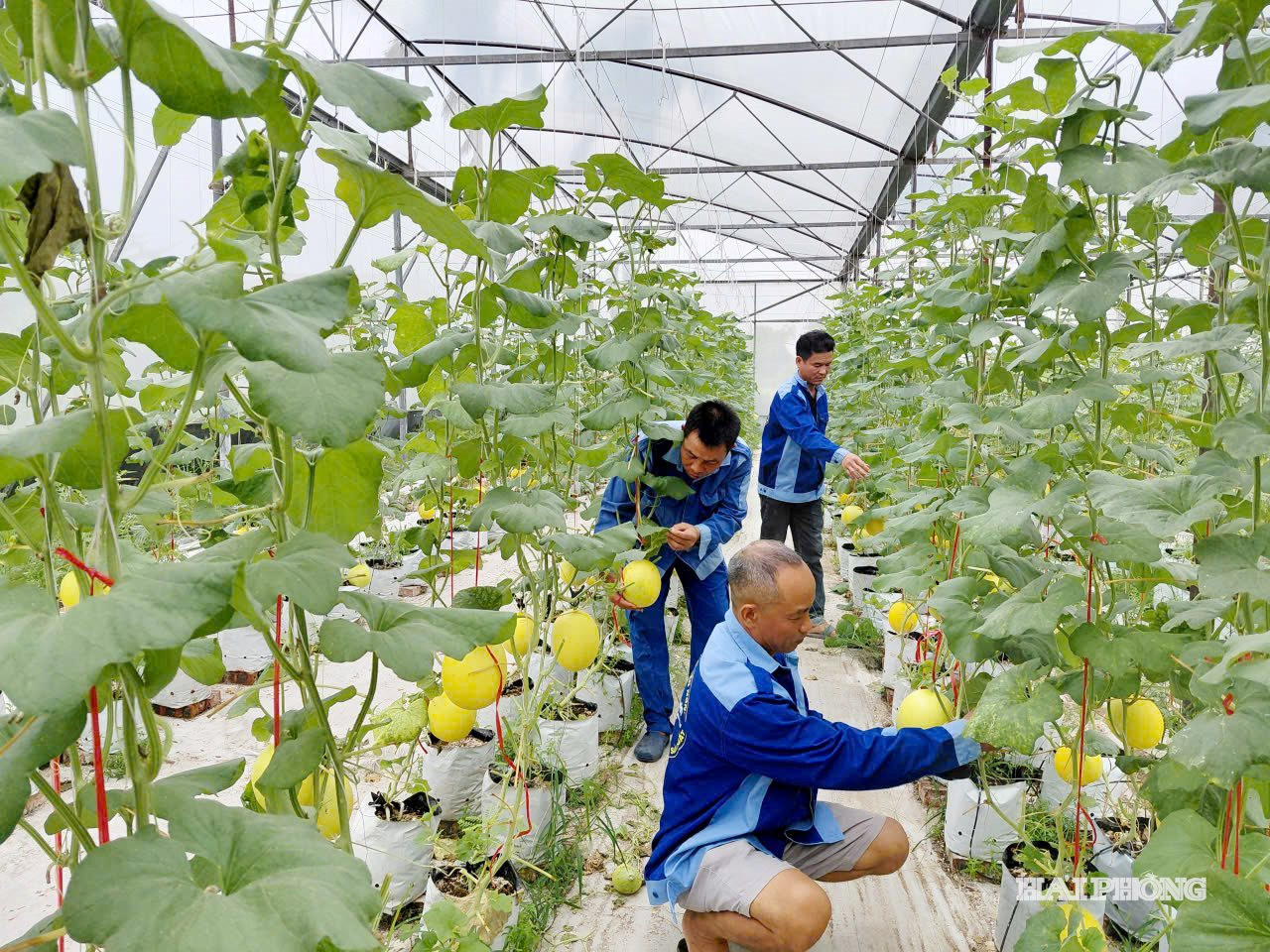
In recent days, continuous rainfall followed by sunny weather has affected many areas of conventional agricultural production. Rice and vegetable crops have frequently been affected by pests and diseases. Meanwhile, all the greenhouses at the Experimental and Production Farm continue to thrive normally. Off-season yellow melons, baby melons, and leafy greens are growing well and producing regular harvests.
Mr. Nguyen Cong Nguyen, a technical officer in charge of high-tech agriculture at the farm, said that greenhouse production, combined with advanced technology and an Israeli drip irrigation system, helps reduce production risks while improving product quality. The yellow melons and baby melons grown at the farm are crisp and sweet and command good prices. In particular, off-season leafy greens grown in substrate-based systems are not yet produced in sufficient quantities for widespread market supply and are mainly provided to regular customers.
Currently, the Experimental and Production Farm focuses on testing varieties of crops, aquaculture species, and forestry plants in order to transfer new and modern production techniques, helping farmers apply them effectively on a larger scale. The farm operates three facilities: the Aquaculture Seedling Farm in Thuy Nguyen Ward, the High-Tech Crop Seedling Farm in An Khanh Commune, and the Forestry and Landscape Plant Production Farm in An Hung Commune.
The High-Tech Crop Seedling Farm currently has three large-scale greenhouses and net houses, which were the first of their kind to be installed in Hai Phong and were designed and constructed in 2007. Each year, the greenhouses produce six melon crops, with a total output of 25–30 tonnes. They are among the three most advanced large-scale greenhouse facilities using Israeli technology in northern Vietnam.
The crop varieties produced at the farm not only serve as a testing ground for new varieties that meet market demand, but also provide a site for applying new techniques and technologies and evaluating their adaptability to Hai Phong's local soil and growing conditions before the technologies are transferred to farmers for wider production.
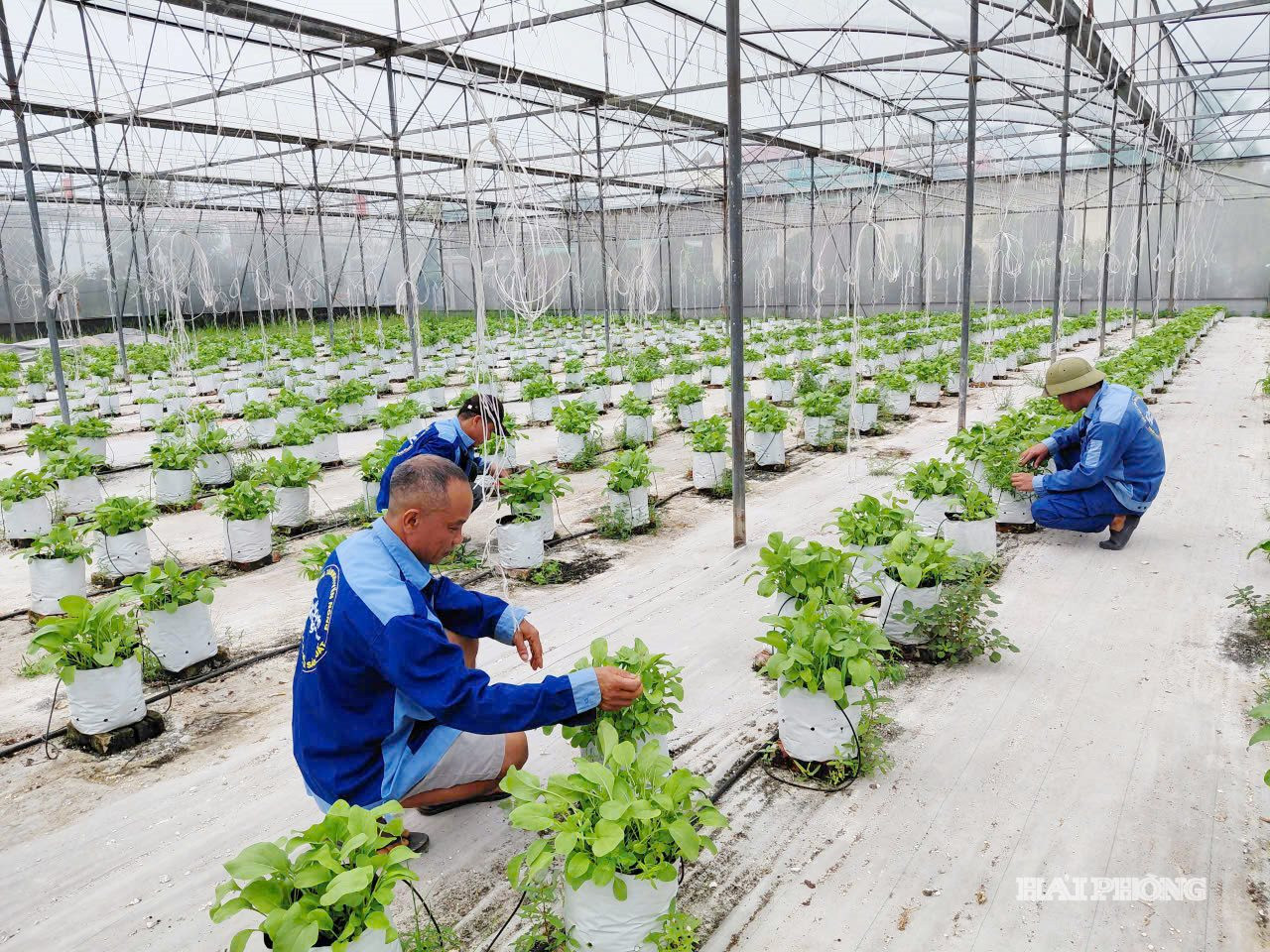
According to Mr. Luu Van Canh, Deputy Director of the Hai Phong Forest Management and Agricultural Extension Board, the greatest achievement of the Experimental and Production Farm is reflected not only in the volume and quality of agricultural products, which have earned high praise from consumers, but more importantly in the successful transfer and application of modern technologies in Hai Phong's fields.
Under traditional open-field production methods, farmers face numerous weather-related risks that affect both yields and product quality. By contrast, agricultural products grown in greenhouses and net houses are of higher quality, more popular with consumers, and more valuable, giving farmers greater confidence in their market prospects.
The Experimental and Production Farm has therefore become a trusted center for conducting trials and transferring technical advances to farmers in Hai Phong. It helps farmers gain access to new technologies, change their production methods, increase their incomes, and develop modern and sustainable agriculture.
Over the years, the farm has transferred greenhouse and net-house production processes, as well as high-tech agricultural techniques, to numerous farmers. To date, the city has 140 hectares of greenhouses and net houses applying high technology across its communes and wards. Notably, Truong Tan Commune has the largest area of greenhouses and net houses in the city, covering more than 97 hectares.
According to Mr. Vu Van Vy, Director of the Experimental and Production Farm, the farm's engineers are always enthusiastic and ready to welcome farmers and production organizations, such as cooperatives, to visit and experience high-tech agricultural models. When farmers need assistance, the farm's technical staff and engineers are willing to provide hands-on guidance, bringing scientific knowledge into practice and transferring it to farmers. This enables them to apply technical advances and modern technologies and improve the efficiency of commercial agricultural production.
Mr. Pham Van Quyen, Director of Nam Viet Agricultural Cooperative, said that climate change and increasingly extreme weather conditions are creating greater challenges for traditional agricultural production. With experience in greenhouse and net-house production gained through technology transfer from the relevant authorities, farmers can now produce with greater confidence.
One of the key goals of Hai Phong's agricultural sector in the coming years is to develop green, smart, and high-tech agricultural models. This makes it essential to further promote the role of the Experimental and Production Farm. The city should prioritize investment in and support for programs and projects at the farm, enabling it to carry out experimental production of high-tech crop, aquaculture, and forestry varieties and support farmers in expanding commercial production.
At the same time, favorable conditions should be created for the farm's technical staff and technicians to improve their expertise and learn from modern and advanced practices both at home and abroad. These experiences can then be applied to experimental production, enabling the farm to serve as a bridge for transferring technology to farmers.
Ho Huong