

Gửi bình luận
The tax-exempt revenue threshold being raised to 500 million VND per year is bringing positive signals for many small household businesses.
.jpg)
The new policy helps reduce cost pressures, allowing vendors to trade with greater peace of mind and accumulate capital to improve their livelihoods.
According to Decree No. 68/2026 of the Government of Viet Nam, which took effect on March 5, 2026, households and individual businesses with annual revenue of 500 million VND or less are exempt from value-added tax (VAT) and personal income tax. This level is significantly higher than the previous threshold of 100 million VND per year.
Raising the tax-exempt revenue threshold is considered appropriate in the context of rising business costs and changes in the price level over many years. With reduced tax obligations, many small household businesses have better conditions to maintain operations, circulate capital, and stabilize their livelihoods.
In Hai Phong, the household economic sector is quite vibrant, with about 73,000 household businesses operating in trade, services, small-scale production, and traditional crafts. From small grocery stores in residential areas to family-run manufacturing facilities, this sector helps maintain the city’s everyday commercial activity.
Ms. Do Thi Thuy, the owner of a grocery store in Le Thanh Nghi Ward, said her shop mainly serves residents in the neighborhood and generates moderate revenue. “Grocery trading doesn’t bring large profits, but the capital turns over quickly. When the tax-exemption threshold increased to 500 million VND, I was very pleased because I can use the reduced costs to purchase more goods,” Ms. Thuy shared.
Similarly, a wheat-flour cake production facility run by Mr. Nguyen Van Vien in Hai Duong Ward also benefits from the new policy. According to Mr. Vien, cake production mainly relies on labor for profit, so when tax policies become more flexible, people in the trade feel more confident about continuing their work.
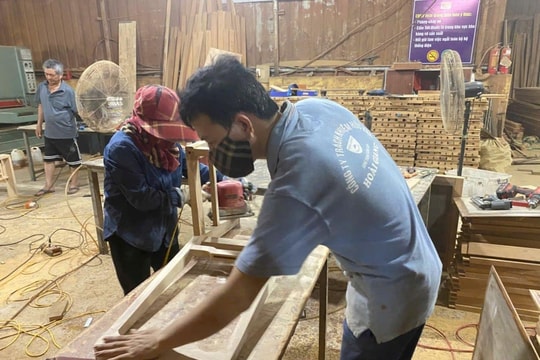
Meanwhile, Mr. Le Van Manh, owner of Hung Manh Mechanical Workshop in Tan Hung Ward, said that materials, machinery, and labor account for most of the production costs. “When costs are reduced, the workshop has more conditions to invest in tools, expand services, and stabilize operations,” Mr. Manh said.

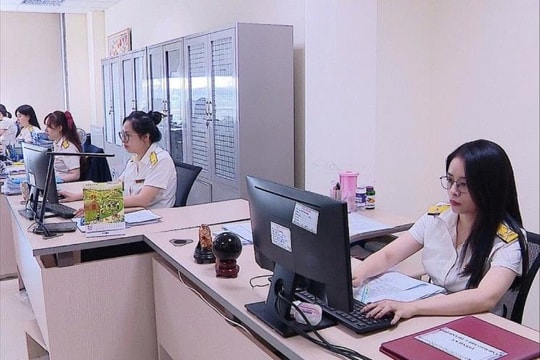
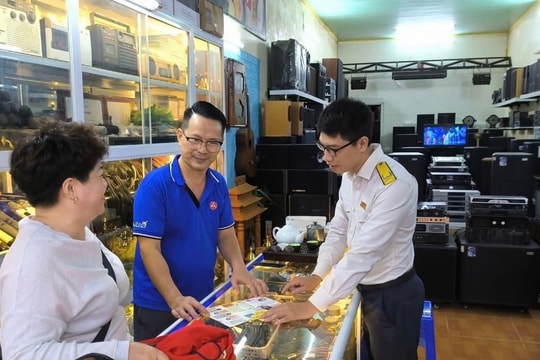
A representative of the tax authority in Hai Phong said that raising the tax-exempt revenue threshold is intended to better reflect current business conditions while supporting small household businesses in maintaining stable production. The regulation also helps clearly distinguish between small-scale businesses and those with larger revenues.
Accordingly, small household businesses that mainly rely on family labor will face less pressure from tax obligations and administrative procedures. Meanwhile, establishments with higher revenues will still fulfill their tax obligations in accordance with regulations, contributing to a fair business environment.
From the perspective of urban economic development, the household economic sector has long been a familiar part of commercial life in residential areas. Small grocery stores, market stalls, family-run production facilities, and small workshops not only provide goods and services but also create jobs for many local workers.
In Hai Phong, tens of thousands of household businesses contribute to vibrant trading activities at traditional markets, commercial streets, and craft villages. Many service, repair, and small-scale production activities are closely connected to the daily lives of residents.
When tax obligations are adjusted to better match business scale, small businesses have more favorable conditions to maintain operations, accumulate capital, and gradually improve their production and business capacity. Many households can invest in additional equipment, improve product quality, or expand their services.
Financial experts believe that supporting the household economic sector does not contradict the policy of encouraging businesses to transition to the enterprise model. On the contrary, when operations become stable and resources are accumulated more effectively, many households will have the conditions to expand their scale and gradually make the transition when appropriate.
In reality, many of today’s enterprises started as family businesses or small household production facilities. As markets expand and management methods become more professional, transitioning to the enterprise model naturally becomes the next stage of development.
For the tens of thousands of household businesses in Hai Phong, raising the tax-exempt revenue threshold to 500 million VND per year not only helps reduce immediate cost pressures but also provides additional motivation to maintain production and business activities. This contributes to sustaining the vibrancy of commercial life and the vitality of the urban economy.
Ha Kien