.jpg "Tram Gian pagoda woodblocks recognized as national treasure")

Gửi bình luận
Amid the vibrant rhythm of the Lunar New Year of the Horse, streams of people head toward the coastal area to pray for peace and pay homage to the Buddha at Hang Pagoda (anciently known as Coc Tu) in Do Son Ward, Hai Phong.
According to local legend, toward the end of the Hung Kings era more than two millennia ago, a monk named Ban from Thien Truc (present-day India) followed merchant ships across the East Sea and arrived at Do Son. He chose a large cave at the foot of the mountain, facing the sea, where he built a small hermitage to practice and spread Buddhist teachings. It was this distinctive setting — “the sea in front, the mountain behind” — that gave the pagoda its popular name, Hang Pagoda.
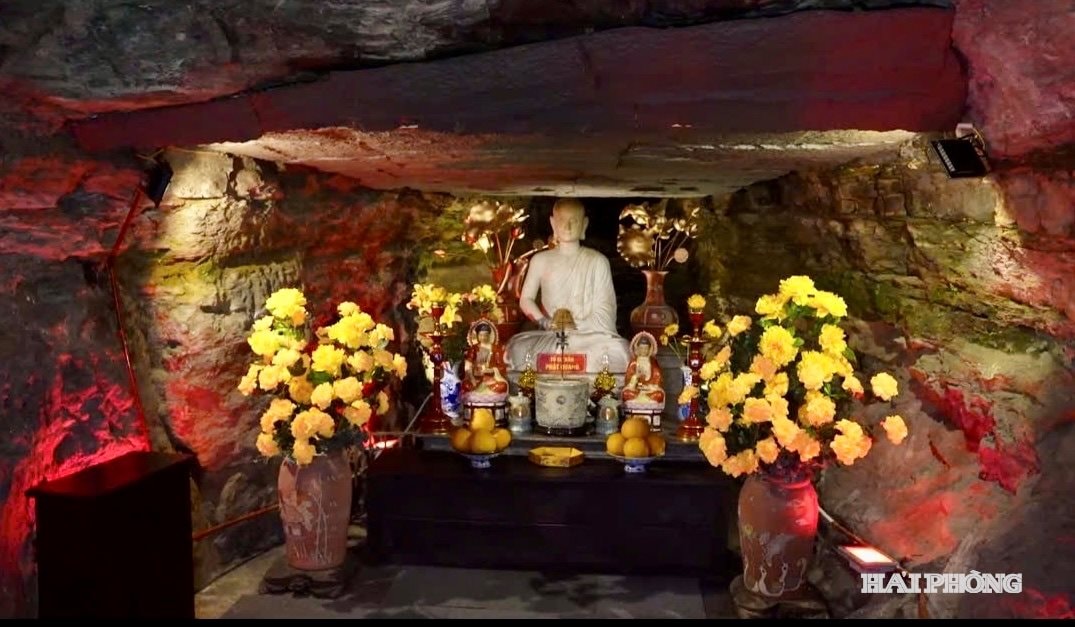
The ancient cave was described as trapezoidal in structure, extending about 25 meters deep into the mountain, forming a secluded and tranquil space for spiritual practice amid the sound of rolling waves. From here, Buddhism gradually spread inland along maritime trade routes.
Over time and through wars, the original ancient pagoda no longer remains intact. Yet sacred traces still endure in the cave behind the present-day temple, where a stone statue of Monk Ban and a solemn altar are placed. Locals often refer to it as “the pagoda within the pagoda,” a vivid testament to the earliest days when Buddhism took root in Vietnam.
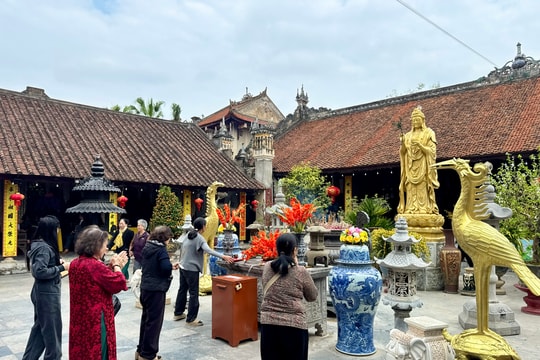
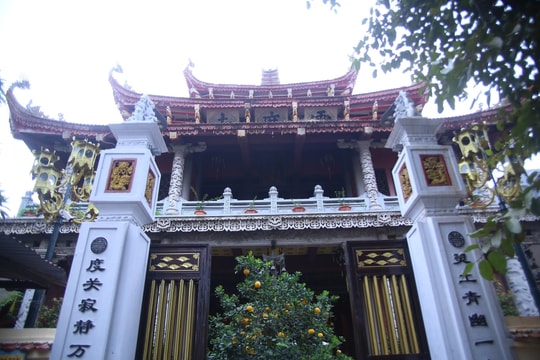
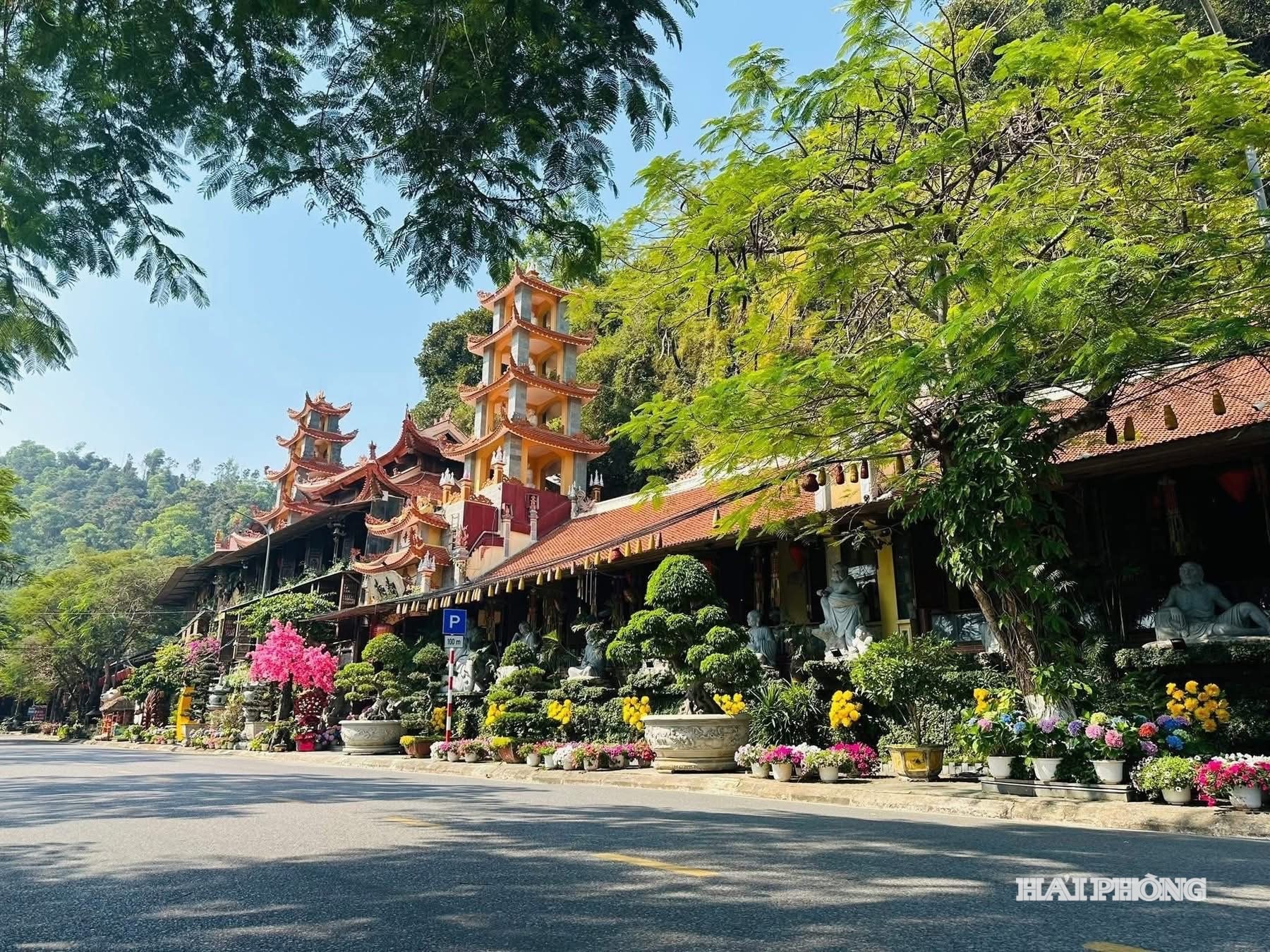
In the early days of spring, Hang Pagoda has welcomed large numbers of residents and visitors who come to pray and sightsee. Incense smoke gently fills the Tam Bao Hall, on the upper level stands the Western Paradise Hall.
In front of the pagoda’s courtyard, a compassionate statue of Guanyin stands majestically against the clear blue sky. To the right rises a seven-story tower symbolizing the seven patriarch monks who attained enlightenment here. Along the pagoda’s façade is a series of Arhat statues with vivid expressions, creating a space that feels both ancient and intimate.
Ms. Nguyen Thu Ha, a visitor from Le Chan Ward in Hai Phong, shared: “At the beginning of the year, I often visit many pagodas, but whenever I come to Hang Pagoda, I always feel something very special — a sense of solemnity and reverence. Standing inside the cave behind the pagoda, listening to the distant sound of the waves, I feel my mind grow calm. Knowing that this is where Buddhism first entered our country by sea makes me appreciate it even more.”
Mr, Tran Van Hau, a resident of Do Son Ward, spoke with pride: “For the people of Do Son, Hang Pagoda is not only a place to pray for good fortune at the start of the year but also a source of pride. We always remind our children that our hometown was among the earliest places to receive the light of Buddhist teachings.”
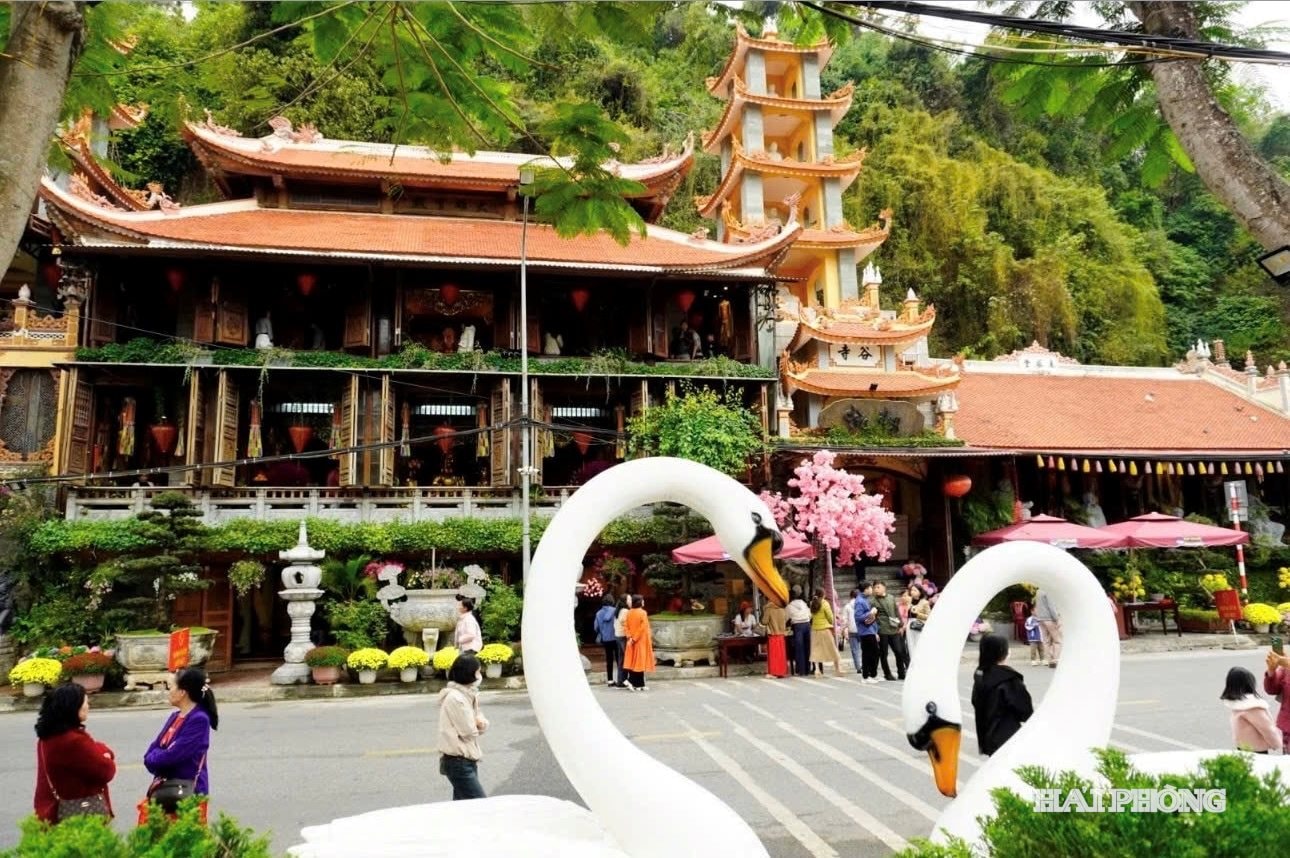
Beyond its historical and spiritual significance, Hang Pagoda also plays an important role in Do Son’s spring tourism landscape. While the sea remains cold, the area’s system of cultural and religious heritage sites becomes a highlight drawing visitors. A spring journey can extend from Hang Pagoda to Ba De Temple, Co Chin Suoi Rong Temple, Tuong Long Tower, Ben Nghieng Wharf, and the K15 “No-Number” Wharf, creating a richly layered cultural and historical space along the coast.
In 2010, Hang Pagoda was recognized as a city-level Historical and Cultural Relic, affirming its special place in the historical development of Hai Phong.
Venerable Thich Giac Hieu, abbot of Hang Pagoda, shared: “Hang Pagoda is not only a place where people come to pray for peace at the beginning of the year, but also a landmark recalling the more than 2,000-year journey of Buddhism entering Vietnam by sea. We are always mindful of our responsibility to preserve the site, while guiding Buddhists to practice their faith in a civilized and orthodox manner so that its historical and spiritual values can be sustainably preserved.”
According to Venerable Thich Giac Hieu, the pagoda places special emphasis on organizing festivals in a solemn and economical manner, creating a tranquil space where visitors can both pay homage and rediscover inner peace.
Each year, the pagoda welcomes hundreds of thousands of visitors and worshippers. During this year’s Lunar New Year holiday alone, it is estimated that more than 10,000 people visited the site to offer prayers at the start of the year.
In the Spring of the Horse, the sound of the temple bell resonates amid the echo of ocean waves, serving as a reminder of a civilizational exchange that took place more than two millennia ago. Hang Pagoda is therefore not merely a springtime destination, but a place of return — to cultural memory and to the historical pride of the people of Hai Phong.
Hai Van