


Gửi bình luận
World Heritage designation is creating new momentum for the heritage economy in Quang Ninh, Hai Phong, and Bac Ninh, enhancing the region's appeal as a destination, strengthening regional connectivity, and promoting the development of high-quality tourism.

The inter-provincial World Heritage designation not only affirms the outstanding universal value of the Northeast region's cultural and natural landscape, but also serves as a powerful catalyst for socio-economic development in Quang Ninh, Hai Phong, and Bac Ninh.
The strong growth in visitor arrivals at spiritual heritage sites, island destinations, and inter-bay cruise routes since the beginning of 2026 demonstrates the effectiveness of the localities' heritage-based economic development strategy.
Situated along a unified geographical, historical, and cultural corridor, the Hai Phong–Quang Ninh heritage axis possesses an exceptional concentration of heritage resources. The expansion of the Ha Long Bay World Natural Heritage Site to include the Cat Ba Archipelago in 2023, followed by UNESCO's inscription of the Yen Tu–Vinh Nghiem–Con Son–Kiep Bac Complex of Monuments and Landscapes as a World Cultural Heritage Site in 2025, has created a unique trans-provincial heritage complex distinguished by its integrated landscape, geological significance, and spiritual values. This has also laid a solid foundation for attracting international visitors interested in cultural and historical tourism.
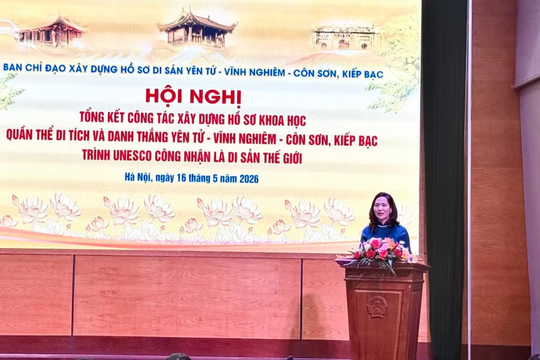
Since receiving UNESCO recognition, the most noticeable changes have been the enhanced profile of these destinations and evolving visitor behavior. The 2026 spring festival season marked the first time Yen Tu welcomed visitors as a World Heritage Site.
Whereas visitors previously tended to make short trips, an increasing number are now choosing more immersive experiences. Tourists are spending more time at the destination, opting for higher-quality accommodation, and spending more on local cuisine and cultural products.
Festival organization has also been upgraded with a series of large-scale cultural and artistic events. One of the highlights was the performance "Sacred Yen Tu – A Millennium of Spirit," which attracted around 10,000 attendees, alongside fairs, exhibitions, and displays promoting the site's heritage values.
In the first four months of 2026 alone, the Yen Tu Heritage Area welcomed more than one million visitors, more than doubling the figure recorded during the same period in 2025.
According to Mr. Le Trong Thanh, Deputy General Director of Tung Lam Development Joint Stock Company, the 2026 spring festival season was the first held after Yen Tu's World Heritage inscription, with visitor numbers increasing by more than twofold year-on-year.
To accommodate the surge in visitors, the company has replaced all interpretive signage at UNESCO-recognized sites and deployed an artificial intelligence (AI)-powered camera system to monitor and manage visitor flows, helping ensure safety and order throughout the festival season.
Mr. Thanh attributed the growth to the international recognition, together with Quang Ninh Province's Resolution No. 101/2026/NQ-HĐND, which waives 100% of admission fees to the Yen Tu Scenic Area from 2026 through the end of 2028, as well as the policy of providing free parking at Ha Kieu Parking Station.
Under the theme "Yen Tu – A Journey to the Land of Spiritual Heritage," Quang Ninh has also launched a promotional campaign aimed at attracting approximately 2.3 million visitors to Yen Tu Ward in 2026, including around 1.5 million visitors to the Yen Tu World Heritage Site.
The plan also plays a key role in supporting Quang Ninh's goal of welcoming 23 million visitors and generating approximately VND 65 trillion (USD 2.5 billion) in tourism revenue in 2026.
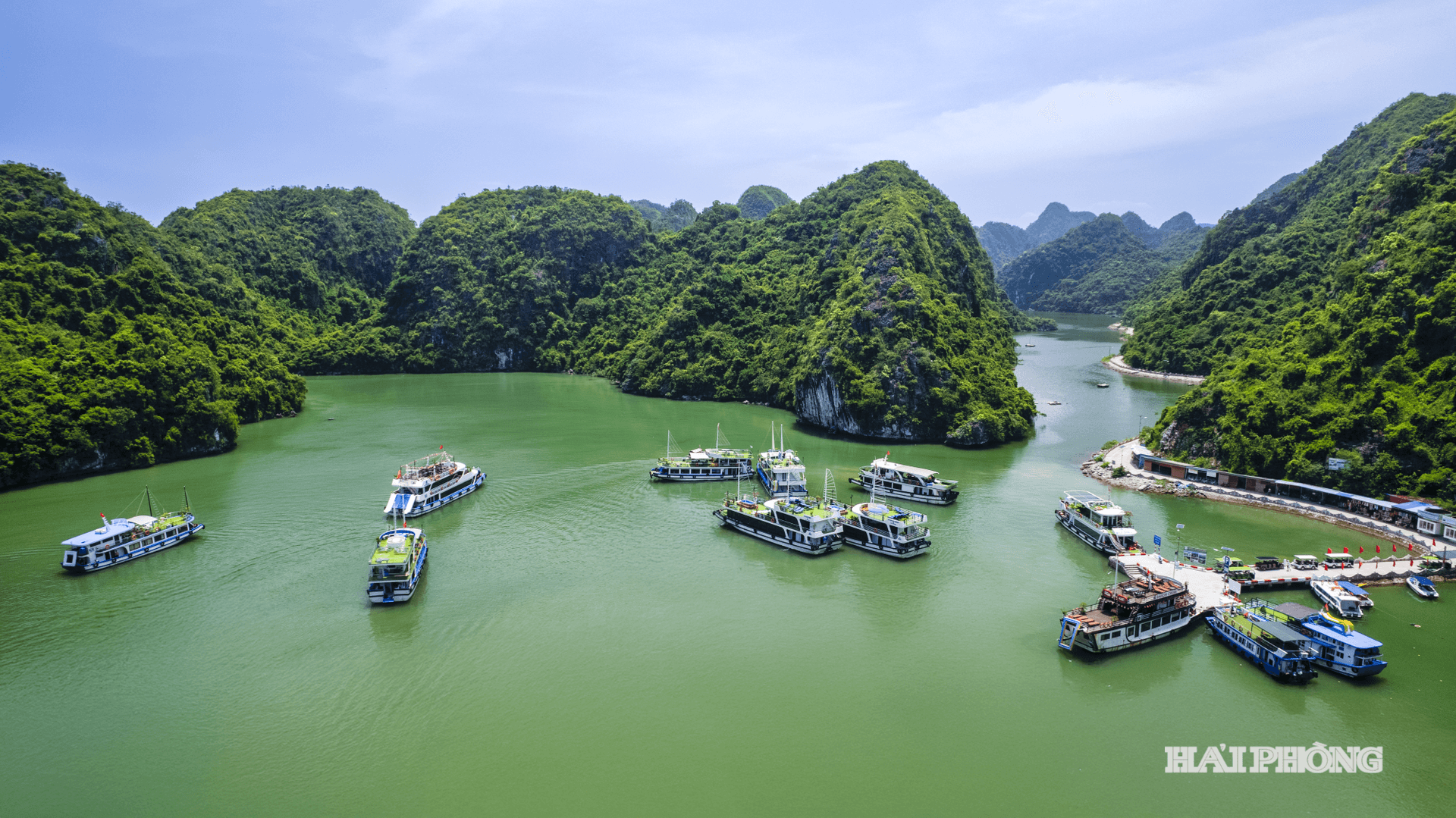
UNESCO's recognition of Ha Long Bay – Cat Ba Archipelago has elevated the Hai Phong–Quang Ninh corridor into one of the world's outstanding heritage regions, while providing strong momentum for implementing a heritage-based economic development strategy.
From a governance perspective, these exceptional heritage assets provide a solid foundation for developing an integrated management model that transforms heritage into a driver of green growth, enhances the quality of economic development, and creates employment opportunities for tens of thousands of local residents.
According to Mr. Vu Kien Cuong, Deputy Head of the Management Board of the Ha Long Bay – Yen Tu World Heritage Site, these invaluable heritage resources have enabled Quang Ninh to effectively implement its strategies of "integrated governance" and the "heritage economy" by connecting the region's river, coastal, and mountain heritage corridors into a unified whole.
Mr. Cuong noted that the establishment of a trans-provincial heritage area has also created favorable conditions for developing integrated tourism products, extending visitors' length of stay, increasing tourist spending, and contributing to the sustainable economic growth of participating localities.
To maximize the value of these heritage sites in line with international commitments, Quang Ninh and Hai Phong have proactively established a comprehensive cooperation mechanism. The two localities regularly exchange information, jointly monitor impacts on the core heritage zones, and collaborate on scientific research, environmental protection, biodiversity conservation, and destination promotion.
Building on this partnership, integrated tourism products linking Ha Long Bay and the Cat Ba Archipelago have gradually taken shape. The issuance of joint regulations governing tourist vessels operating between Ha Long Bay and Lan Ha Bay marks a significant step toward improving service quality and ensuring sustainable tourism development.
The two localities are also accelerating the completion of a joint management plan and conservation regulations, aiming to establish a unified and effective governance model that fully complies with UNESCO standards in the new development phase.
The opening of the marine tourism route linking Ha Long Bay and Lan Ha Bay in April 2026, together with the implementation of coordinated regulations for managing inter-regional tourist vessels, has eliminated the previous requirement for cruise boats to stop at the maritime boundary, creating more favorable conditions for tourism operators.
According to Mr. Hoang Van Nguyen, Business Manager of Ha Long International Cruise Port, direct connectivity between the two localities has brought significant benefits to both tourism businesses and visitors.
Previously, large cruise vessels were not permitted to dock directly at the ports and instead had to anchor offshore, requiring passengers to transfer to shuttle boats or high-speed ferries to travel between Ha Long Bay and Lan Ha Bay. This process was inconvenient and often affected visitors' comfort and overall travel experience.
Under the new arrangements, vessels that meet all maritime safety, inspection, and regulatory requirements, and have completed the necessary operating agreements at both ports, are now allowed to embark and disembark passengers directly. As a result, the inter-regional cruise route has evolved into a unique "two bays in one journey" experience, expanding tourism offerings and encouraging visitors to spend more time in the heritage region.
A representative of the Culture and Social Affairs Division of Cat Hai Special Zone (Hai Phong) said that following the opening of the inter-bay route, an additional 5,000–6,000 visitors and more than 50 overnight cruise vessels are expected to operate daily between the two heritage areas.
The "two destinations in one journey" model is expected to extend visitors' stays, increase tourism spending, redistribute visitor flows, and reduce pressure on the core heritage zones.
The seamless connectivity between modern port facilities not only delivers immediate benefits to the tourism industry but also lays the foundation for developing an internationally recognized marine and island tourism hub.
The initial success of the tourism route linking Ha Long and Cat Ba also provides a solid basis for Quang Ninh and Hai Phong to further strengthen cooperation in developing the Yen Tu–Vinh Nghiem–Con Son–Kiep Bac spiritual and cultural heritage corridor, enabling more effective utilization of heritage values and fostering the continued growth of the heritage economy in the years ahead.
Hai Phong News