

Gửi bình luận
Hai Phong’s domestic budget revenue reached nearly VND 81 trillion in the first nine months of the year, providing a foundation for the city to intensify efforts to meet its 2026 revenue target.

Domestic revenue broadly on track in nine months
According to a report by the Hai Phong People's Committee, total State budget revenue in the city exceeded VND 163.74 trillion in the first nine months of the year, equivalent to 84% of the targets assigned by the Central bodies and the City People's Council, and up 12.8% year on year.
In particular, domestic budget revenue totaled VND 80.894 trillion, equivalent to 78.4% of the statutory estimate and 74.4% of the target set out in Resolution No. 11-NQ/TU of the City Party Committee on strengthening leadership and direction to achieve average annual GRDP growth of at least 13% in the second half of 2026 and the 2026-2030 period.
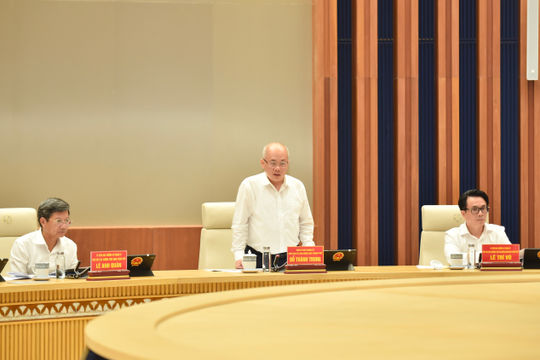
Despite the significant impact of economic conditions and various tax support, deferral, reduction and exemption policies on the revenue estimate, domestic revenue performance in the first nine months of 2026 reflects the tax sector's efforts to implement coordinated measures. According to Nguyen Tien Truong, Director of the City Tax Office, tax reduction and exemption policies and market factors reduced budget revenue by nearly VND 5.5 trillion over the past nine months, an impact that had not been anticipated when the 2026 budget estimate was prepared. Tax payment extensions also affected revenue collection, delaying approximately VND 2.218 trillion.
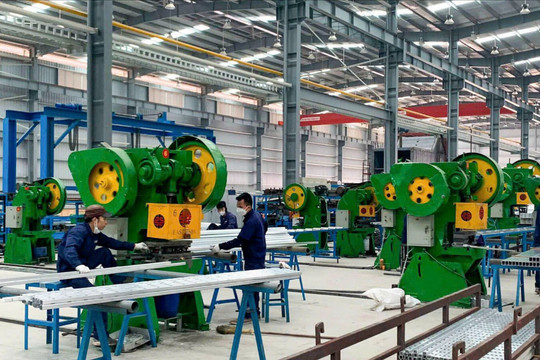
Under these circumstances, the city's tax authorities proactively assessed the impact of these factors, closely monitored developments and developed revenue collection scenarios. They also promptly directed and managed operations, focusing on areas with substantial untapped revenue potential. In particular, the tax sector stepped up administrative reform, strengthened dialogue and helped businesses resolve difficulties, creating favorable conditions for them to sustain and expand production and business activities.
Kim Yoon Ho, Director of Halla Electronics Vina Co., Ltd., said that during the company's operations in Hai Phong, tax authorities had regularly updated it on new tax policies, provided guidance and promptly addressed emerging issues. Tax procedures have become increasingly streamlined, while digital transformation applications have made it easier for businesses to fulfill their tax obligations.
Pressure mounts in the final three months

To achieve its 2026 growth targets, Resolution No. 11-NQ/TU sets a goal of collecting at least VND 208 trillion in total State budget revenue across the city, including VND 91 trillion from import and export activities and VND 108.8 trillion in domestic revenue, of which VND 36.2 trillion is expected from land use fees.
Thus, although domestic revenue was broadly on track in nine months, Hai Phong must collect nearly VND 28 trillion in the final three months to meet the full-year target set out in Resolution No. 11-NQ/TU. This amounts to an average of more than VND 9.333 trillion per month, exceeding the average of more than VND 8.988 trillion per month recorded over the first nine months.
In response to these challenges and the demands of the task, the city's tax authorities have conducted a comprehensive review and assessment of revenue sources and developing collection scenarios for the final three months of the year by revenue category and locality and proactively coordinated with the Department of Finance to ensure appropriate management.
Accordingly, the tax sector is working with relevant departments and agencies to accelerate land use fee collection through auctions and recover outstanding payments from projects in arrears. It is also stepping up communications, support and guidance, and maintaining engagement with taxpayers through multiple channels.
Tax authorities are closely monitoring tax payments eligible for extensions under regulations to ensure timely collection into the State budget and fulfillment of assigned estimates. They are also strengthening tax debt management and conducting inspections to combat revenue losses in sectors, business lines and areas with high tax risks.
Alongside these revenue management measures, the tax sector is continuing to accelerate the “Tax Identification Number Cleanup” campaign, address bottlenecks affecting business operations and standardize data on non-agricultural land use tax. It is also helping residents install and use the eTax Mobile application to pay non-agricultural land use tax, with the aim of achieving the highest possible level of domestic revenue collection in 2026.
NGOC LAN