-4929285210acac3bd7aaa528a82f8a48.jpg "Hai Phong supports Gia Lai, Dak Lak with 20 billion VND to overcome storm impacts")


Gửi bình luận
Hai Phong is urgently implementing various measures to minimize the risk of falling trees and protect urban greenery during the upcoming storm season.
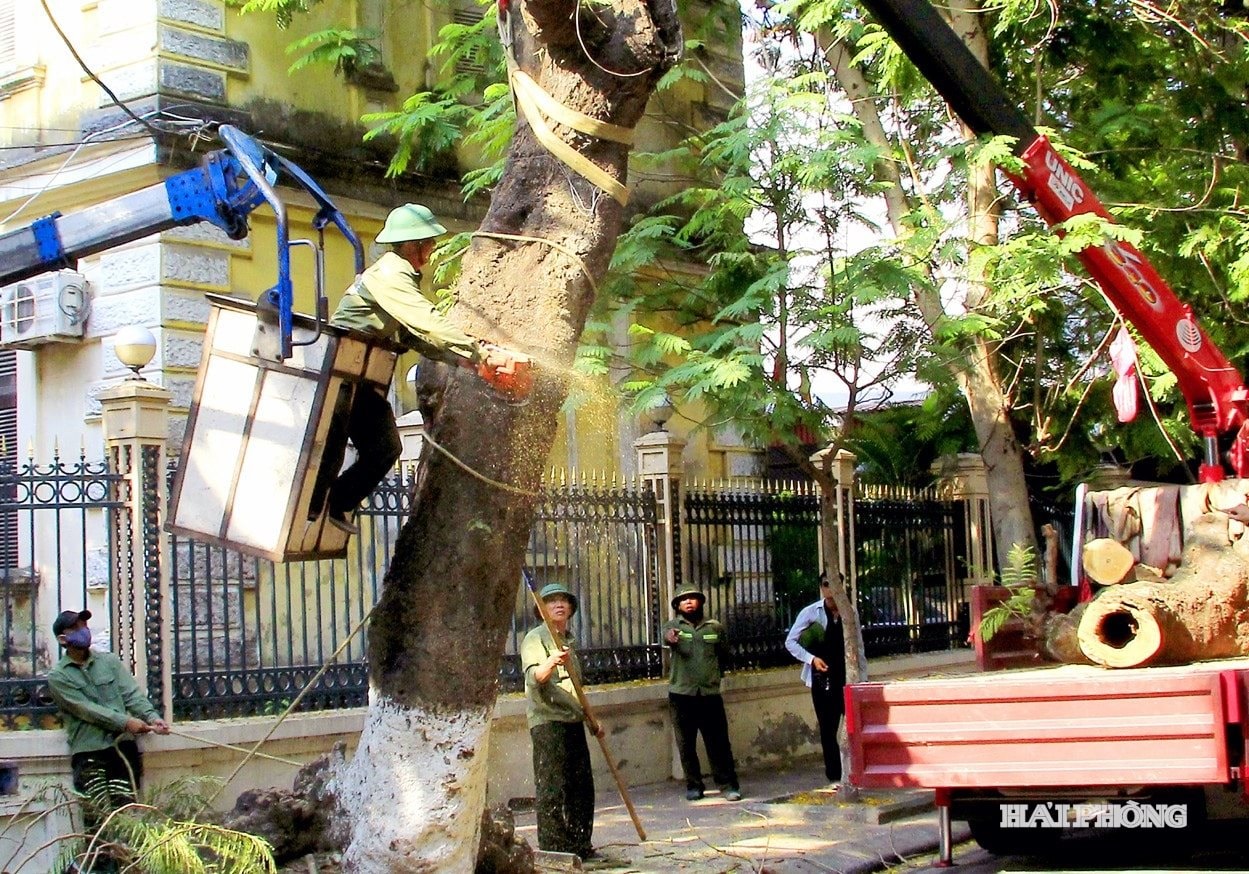
Since mid-April 2026, dozens of worker teams have been urgently carrying out tree pruning, canopy height reduction, and reinforcement of large trees at risk of collapse during the storm season on many central streets such as Tran Phu Street, Dien Bien Phu Street, Nguyen Duc Canh Street, Lach Tray Street, Van Cao Street, and the city’s central boulevard area.
Currently, urban areas in Hai Phong are home to tens of thousands of shade trees. Among them, Hai Phong Green Park Joint Stock Company manages nearly 30,000 trees in central districts. Since the beginning of the year, the company has pruned around 8,000 trees and handled hundreds of cases involving leaning, decayed, or hollow trees that posed safety risks ahead of the 2026 storm season.
The company has now basically completed the removal of severely decayed trees beyond recovery. Most locations where trees were cut down have been replanted with replacement trees of similar height to maintain urban greenery density.
Mr. Nguyen Van Hung from Residential Group No. 85 in Le Chan Ward shared that weather conditions in recent years have become increasingly unpredictable. Some days remain intensely hot before strong thunderstorms suddenly develop in the evening. He noted that the city’s early tree-pruning efforts help residents feel safer while traveling.
According to the National Center for Hydro-Meteorological Forecasting, the probability of transitioning to El Niño conditions between June and August 2026 is forecast to rise to between 85% and 95%. Heatwaves in Northern Vietnam and the North Central region are expected to intensify, while extreme weather phenomena such as thunderstorms, tornadoes, lightning, and strong gusts remain likely to occur on a large scale.
Notably, after prolonged heatwaves, many urban trees may suffer weakened structural stability due to growth imbalance, weakened root systems, or trunk decay. When heavy rain and strong winds occur, the risk of broken branches and uprooted trees increases significantly.
Therefore, by early May 2026, urban tree management units in the city — including Hai Phong Green Park Joint Stock Company, Hai Phong Public Works and Tourism Services Joint Stock Company, and Hai Phong Public Works and Construction Joint Stock Company — had basically completed inspections and pruning of more than 50,000 shade trees across city streets.
During the summer of 2026, these companies will continue coordinating with local authorities and relevant agencies to inspect the entire urban tree system street by street, prioritizing densely populated areas, schools, hospitals, major intersections, and coastal roads frequently affected by strong winds. In addition, emergency response teams will remain on duty 24/7 throughout the storm season to promptly handle tree-related incidents and ensure smooth traffic flow.
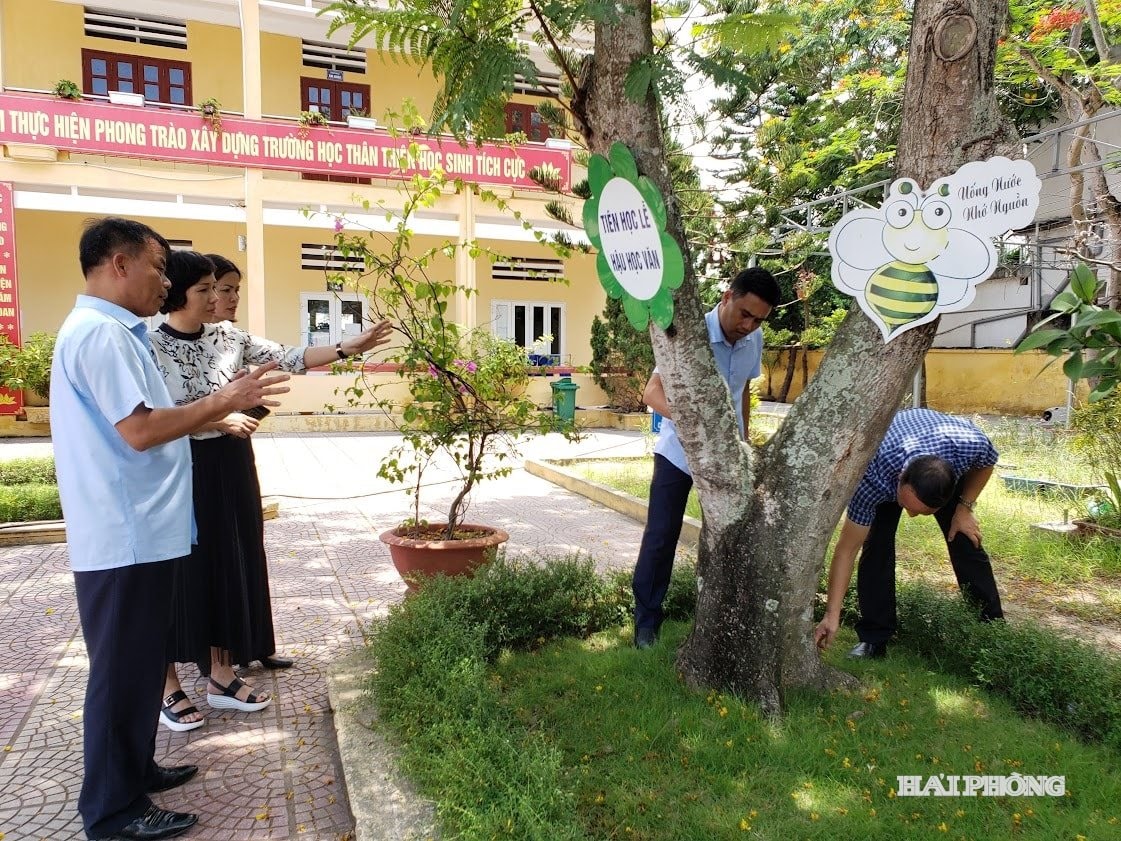
Currently, Hai Phong Green Park Joint Stock Company is maintaining more than 1,000 protected urban trees, mainly including banyan, bodhi, rain trees, red silk cotton trees, mahogany trees, and tropical almond trees. Among them are more than 90 ancient heritage trees classified as rare protected trees with trunk diameters exceeding 100 centimeters.
According to Chairman of the Board of Directors of Hai Phong Green Park Joint Stock Company Le Van Tuan, all ancient heritage trees have been labeled so that authorities and residents can easily identify and participate in their management and protection. These trees are also being inspected and cared for more carefully in order to promptly address pest infestations and ensure their stability during this year’s storm season.
This effort has become increasingly necessary as climate change grows more complicated, causing groundwater levels to decline. Many shallow-rooted trees can no longer access sufficient water, leading to drying and a higher risk of uprooting during storms and strong winds. In addition, ongoing sidewalk renovation projects and the underground installation of technical infrastructure have also partially affected many ancient trees.
Recent years have shown that extreme weather events are occurring more frequently and becoming harder to predict. Typhoon Yagi in 2024 caused severe damage in Hai Phong, with winds reaching force levels 12–13, toppling thousands of trees and causing temporary disruptions on many streets. The storm is regarded as a practical lesson for improving preventive measures and protecting the city’s urban tree system against natural disasters.
According to Deputy Director of the Department of Construction Nguyen Minh Tuan, in addition to routine pruning, the city is increasing the application of technology in urban tree management, including the creation of electronic records to monitor tree conditions, classify risk levels, and develop appropriate treatment plans for different categories of trees.
The city also prioritizes selecting tree species that are resistant to storms and suitable for coastal climate conditions when replacing and planting new trees along roads and in new urban areas.
Beyond their role in beautifying the urban landscape, trees help regulate the climate, reduce the urban heat island effect, and improve residents’ quality of life. As climate change continues to intensify, protecting urban greenery has been identified by Hai Phong as an important task associated with the goal of developing a green, sustainable city.
Alongside proactive measures by authorities, the construction sector also advises residents not to shelter under trees and to limit travel during thunderstorms, heavy rain, and lightning. At the same time, citizens are encouraged to raise awareness and cooperate with authorities in planting, caring for, and protecting trees, helping minimize damage caused by natural disasters while preserving the image of Hai Phong as a green, civilized, and livable port city.
Nguyen Duong