.jpg "Hai Phong builds 'green frontline'")


Gửi bình luận
With joint efforts of the authorities, businesses, and citizens, Hai Phong is gradually building a green transportation system, realizing the goal of building a modern, sustainable city and achieving Net Zero by 2050.
Businesses and citizens’ responses
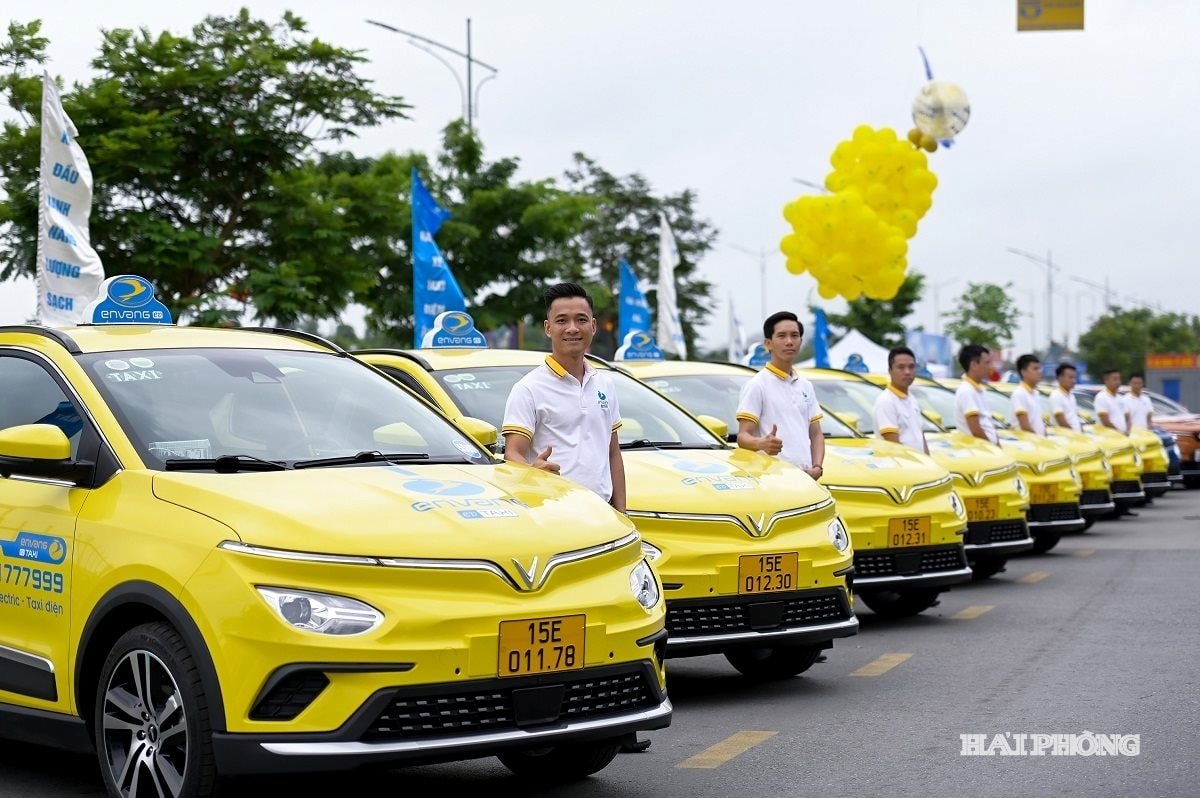
Many passenger transport enterprises in Hai Phong city have pioneered green transition. For example, En Vang International JSC. (En Vang Taxi) aims to become a fully electric taxi operator this year. After partnering with VinFast in 2023 to put 450 electric cars into operation, the company increased its fleet to 1,000 vehicles in 2024 and set the target of 1,500 vehicles in 2025.
“Taking an electric car is more comfortable, without unpleasant smells. I think using this means of transport also helps reduce air pollution,” said Pham Thi Nga, an office worker at Sumidenso Vietnam Co., Ltd. in Dai An industrial park, who often chooses electric taxis for commuting.
The railway and inland waterway sectors are also accelerating the green transition. Many handling devices at railway stations have been replaced with electric-powered ones. Meanwhile, inland waterway transport is gradually retrofitting and building new vessels using electric engines and clean energy sources, gradually replacing fossil fuels.
Notably, Hai Phong’s seaports are taking the lead in this process. In November 2024, Tan Cang – Hai Phong International Container Terminal Co., Ltd. (TC-HICT) was recognized by the Vietnam Maritime Administration as meeting the “green port” standard with a score of 3.94/5. TC-HICT converted all forklifts, tractors, and internal buses to electric; at the same time, it applied the ePort system, TOPS software, and e-invoices, improving operational efficiency and saving billions of dong in electricity compared to before.
.jpg)
Hateco Hai Phong International Container Terminal is the first unit in Vietnam to implement the Truck Appointment System (TAS), allowing drivers to actively schedule port entry, reducing waiting times, as well as congestion and emissions.
In April 2025, a system of electric buses from Phu Long station to Cat Ba’s center and electric buggies operating within the island came into service, transporting visitors to Cat Co, Ben Beo, and Cat Ba National Park. The sight of electric vehicles running along coastal routes has become a new highlight, offering visitors a dust-free, noise-free experience.
Gradually increasing the share of green transportation
Both Hai Phong city and Hai Duong province before the merger issued specific plans for green energy transition in transportation. Both localities identified this as a fundamental and most important task in the green growth strategy.

The People’s Committee of Hai Duong province issued a plan to implement the Action Program on green energy transition in transportation, setting the target that by 2050, all road, inland waterway, railway, and urban transport motor vehicles and vessels must switch to electricity or clean energy.
Meanwhile, the People’s Committee of Hai Phong city identified specific targets aligned with the national transition roadmap. From early 2025, 100% of buses replaced or newly invested in the city would use electricity or green energy. The city aimed for green public passenger transport to account for 10 – 15% of total travel demand, thereby easing the pressure on personal vehicles and reducing congestion and urban pollution.
Le Quy Tiep, Director of the Department of Construction, emphasized: “To achieve the goal of green transportation, the city identifies infrastructure as the decisive factor. It is not only transport works but the entire urban system that must be synchronized, from planning electric parking lots and charging stations to setting standards for bus stations and ports based on green criteria.”
After the merger, Hai Phong city also clearly identifies green transportation development as one of the key pillars to build a modern, civilized, and sustainable port city. Building on the previous goals of both localities, the new city will establish a unified roadmap with regional connectivity and a long-term vision.
BAO ANH