
Gửi bình luận
Hai Phong is accelerating a green transition across its industrial parks and economic zones to improve the quality of growth.
.jpeg)
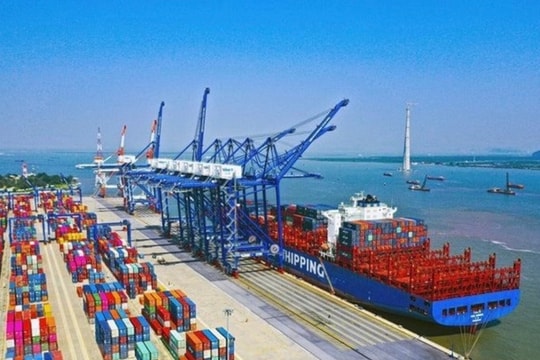
With a network of 45 industrial parks and economic zones, the northern port city plays a leading industrial role in the region. These zones serve not only as key growth drivers but also as a foundation for Hai Phong’s ambition to become a modern, high-tech industrial hub linked to seaports and global logistics.
However, as production expands, pressures related to the environment, energy and sustainable development are becoming more urgent. International environmental standards, particularly in major export markets, are tightening. “Green barriers” related to emissions, traceability and environmental responsibility are increasingly becoming mandatory, forcing businesses to adapt or risk being excluded from supply chains.
In this context, green transition in industrial parks and economic zones is no longer optional but essential to sustaining growth and enhancing competitiveness. The shift from rapid growth to green growth has become a consistent requirement in Hai Phong’s development strategy.
Recognizing this trend, the city in Resolution No. 08-NQ/TU dated Jan. 29, 2026 on green transition for 2026–2030, identified green transition as a central and overarching task, with the circular economy serving as a key driver and foundation for new competitive advantages.
Alongside other sectors, the development of green industry has been defined as a priority for 2026–2030, with a focus on transforming industrial parks into eco-industrial models, improving energy efficiency, promoting cleaner production and reducing greenhouse gas emissions.
The resolution’s targets are being translated into concrete tasks and solutions. The Hai Phong Economic Zone Authority has developed a green transition plan for industrial parks and economic zones, setting specific targets: by 2030, all operational industrial parks will be assessed for emission levels and transition potential; at least 50% will register to convert to eco-industrial models; and at least two parks are expected to be certified as eco-industrial parks.
Additional targets cover greenhouse gas emissions, energy efficiency, waste and wastewater treatment.
Initial results are beginning to emerge. Some industrial parks, such as DEEP C Industrial Zones and Nam Cau Kien Industrial Park, are pioneering eco-industrial approaches, including wastewater reuse, expansion of green spaces and promotion of industrial symbiosis. These models not only help reduce production costs but also enhance their appeal to high-quality investors.
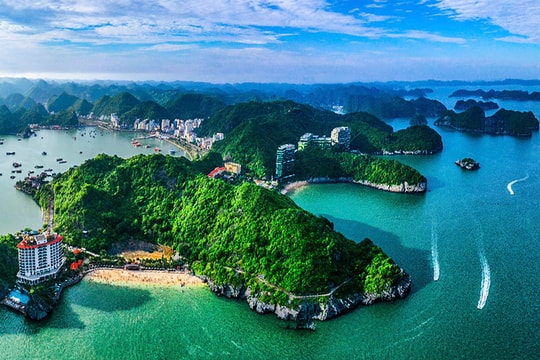
In 2025, Hai Phong was one of two localities in Vietnam recognised by ASEAN as a city with potential for environmental sustainability. The city previously ranked first nationwide in the Provincial Competitiveness Index (PCI) and the Provincial Green Index (PGI), providing a strong foundation for green growth and the goal of achieving net-zero emissions by 2050.
On the other hand, businesses also need to shift their mindset. In the current context, “green” is not only a responsibility but also a competitive advantage. Companies that proactively invest in clean technologies, adopt environmental standards and pursue sustainable governance will be better positioned to expand markets, integrate more deeply into supply chains and access high-quality capital flows.
Hai Phong News