-da59b7839c2177d65267e928a26b3399.jpg "Supporting household businesses in transitioning to enterprises")
.jpeg "Hai Phong Party Committee gives opinions on green transition and development planning")

Gửi bình luận
In response to changes in tax policies and development requirements, many household businesses in the city are considering transitioning to the enterprise model.
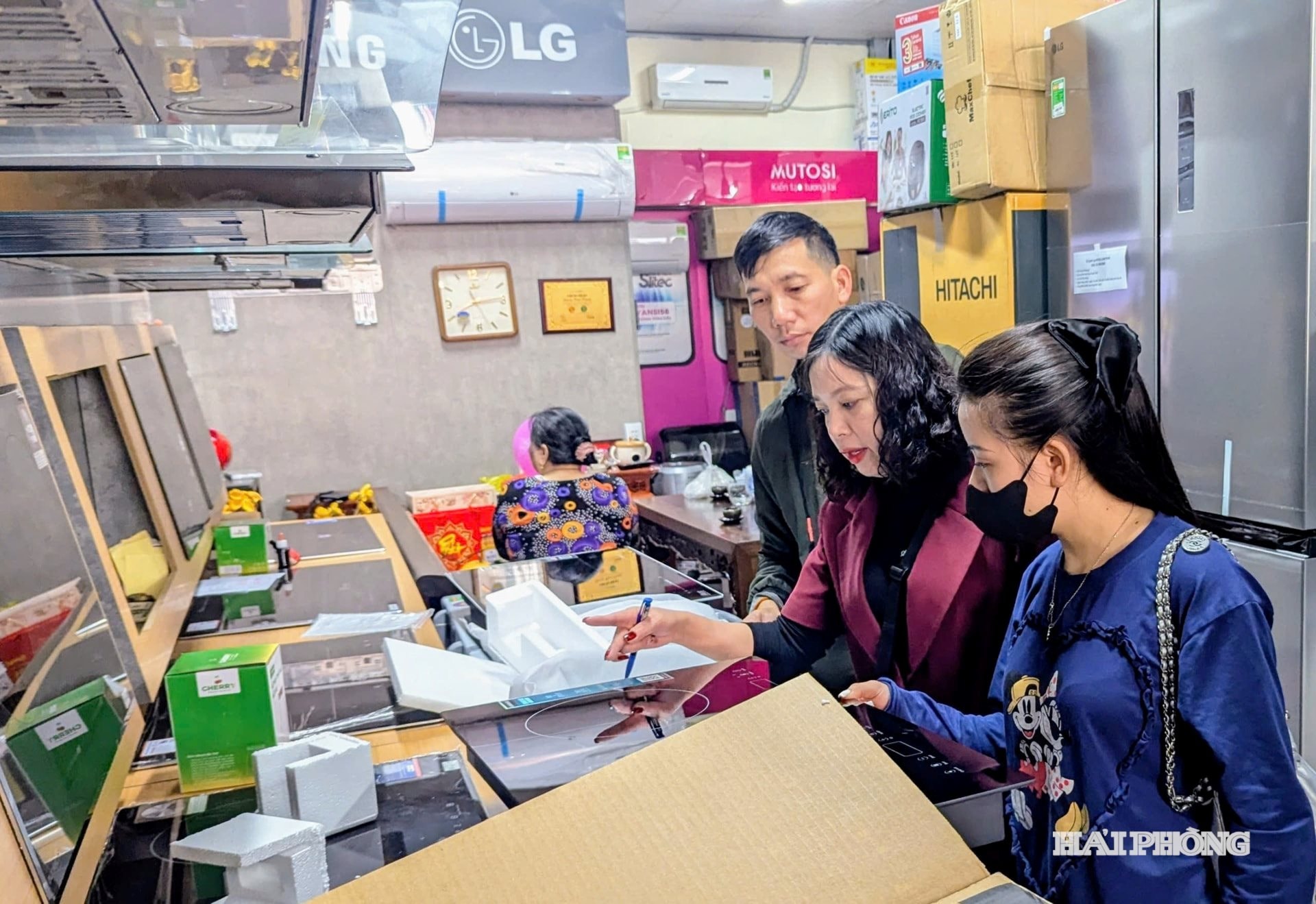
Ms. Nguyen Thu Trang, owner of the Phuc Trang electronics store located in Residential Group 5, Thien Huong Ward, said that the store’s average annual revenue exceeds VND 1 billion. Since late 2025, she has been guided by the tax authority to switch from the presumptive tax method to tax declaration, while also receiving information about transitioning to the enterprise model.
According to Ms. Trang, if the business continues operating as a declaring household business, it must still fulfill all tax obligations and comply with strict documentation requirements. Meanwhile, if it converts into a micro-enterprise, the business may gain access to various preferential policies related to taxation, credit, and market expansion opportunities. However, she still has concerns about management capacity, accounting, and human resources when making the transition.
“Currently, the store’s accounting work is mainly handled by me and family members. If we convert into an enterprise, the accounting regime will be more complicated and require higher professional expertise,” Ms. Trang shared.
Similarly, the An Phat motorcycle business in An Phong Ward, with annual revenue of over VND 500 million, is also considering transitioning to the enterprise model in order to operate more stably and sustainably. However, the biggest difficulty at present involves declaring input invoices for used motorcycles, which are the business’s main goods and are mostly purchased from individuals.
According to Mr. Mai Ich Nguyen, the owner, the purchase of used motorcycles is mainly civil transactions between individuals, so sellers usually do not provide invoices. After repair and upgrades, the business resells the motorcycles to consumers. As tax management regulations become increasingly strict, the lack of input invoices makes household businesses concerned about risks during tax declaration and finalization, especially when converting into the enterprise model.
Not only Ms. Trang and Mr. Nguyen, but many household businesses with large revenues across the city are currently facing the choice of converting to the enterprise model or continuing to operate as household businesses. Therefore, many hope that relevant authorities will continue to accompany and provide specific guidance, helping them confidently transition and operate in compliance with regulations.
.jpg)
Currently, there are around 200,000 household businesses operating across the city in many sectors such as trade, services, transportation, and small-scale manufacturing. Among them, a considerable number have revenue levels, workforce sizes, and operational scales that already exceed the criteria for micro-enterprises, creating a demand to transition to the enterprise model.
In connection with the implementation of Resolution No. 68 of the Politburo on the development of the private economy, Hai Phong has identified support for household businesses transitioning into enterprises as an important task that needs to be implemented in a coordinated manner. The key focus is to strengthen communication so that household businesses clearly understand relevant regulations, while also accelerating administrative reform, shortening the time required for business registration, and effectively implementing support policies related to taxes, fees, and charges.
According to Mr. Vu Huy Cuong, Deputy Head of the Business Registration and Enterprise Management Division under the Hai Phong Department of Finance, once household businesses convert into enterprises, they will be able to access a broader range of support policies such as credit, production premises leasing, and various preferential mechanisms. To facilitate the transition, the business registration authority has shortened the enterprise registration processing time from three working days, as stipulated by regulations, to about one and a half days. Procedures are also guided in detail on digital platforms, enabling household businesses to access and complete them more easily.
Since late 2025, the Department of Finance has also coordinated with tax authorities and local administrations to organize training sessions, communication activities, and direct support for household businesses during the transition process, helping them proactively choose a suitable development roadmap.
According to Mr. Tran Van Hai, Vice Chairman of the People’s Committee of An Phong Ward, there are currently more than 500 household businesses operating in the ward. Practical management shows that many businesses wish to expand their business locations, increase workforce size, mobilize additional capital, or separate personal assets from business assets. In addition, the demand for issuing value-added tax (VAT) invoices to cooperate with enterprises or participate in projects is increasing—requirements that can only be fully met when operating under the enterprise model.
Meanwhile, Mr. Pham Van Hau, Vice Chairman of the People’s Committee of Thien Huong Ward, noted that as operational scale expands and the need to join supply chains, cooperate with enterprises, and develop larger markets grows, the household business model begins to reveal certain limitations. Therefore, transitioning into an enterprise is considered an inevitable trend for businesses seeking more sustainable development. In the coming time, local authorities will continue coordinating with relevant agencies to strengthen communication, promptly identify and remove obstacles, and support household businesses in making a smooth transition.
Ha Minh