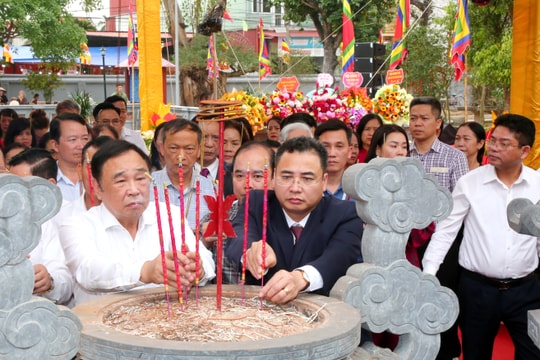
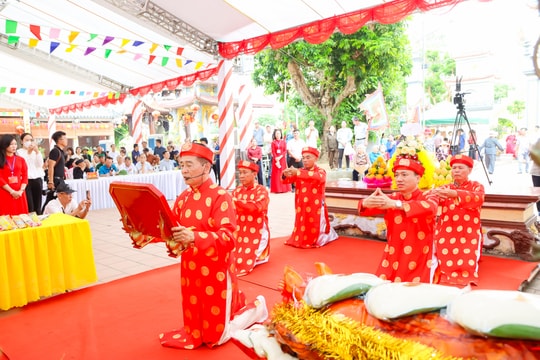
.jpg "Festival commemorating 488th anniversary of the death of Scholar Le Ich Moc")

Gửi bình luận
The decentralization of festival organization and management is currently being proposed by the Department of Culture, Sports and Tourism for submission to the City People’s Committee.
Hai Phong currently has 1,278 festivals, of which 1,083 are held during the spring season, while several others take place at different times throughout the year.
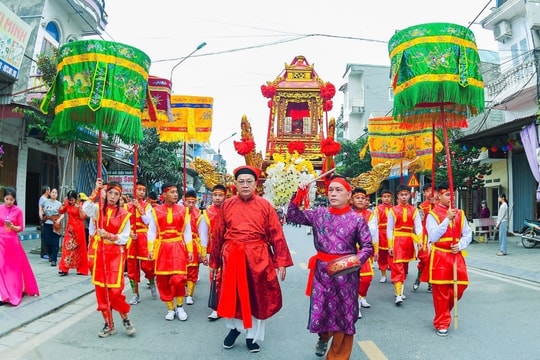
Under the previous decentralization framework, several annual festivals were maintained and organized by the City People’s Committee, including the Red Flamboyant Festival marking the anniversary of Hai Phong’s Liberation Day (May 13); the Con Son – Kiep Bac Spring Festival (from the 10th to the 23rd day of the first lunar month); and the Con Son – Kiep Bac Autumn Festival (from the 10th to the 20th day of the eighth lunar month), among others.
For these events, the City People’s Committee issued detailed plans, established organizing committees, and assigned specific responsibilities to subcommittees. The Department of Culture, Sports and Tourism served as the standing agency of the organizing committee. At the same time, relevant departments and agencies coordinated in implementation according to their assigned functions and responsibilities.
In recent years, city-level festivals have been organized solemnly and professionally, leaving a positive impression and strengthening the city’s cultural brand. These festivals have also contributed to promoting the city widely and attracting a large number of visitors to explore and experience.
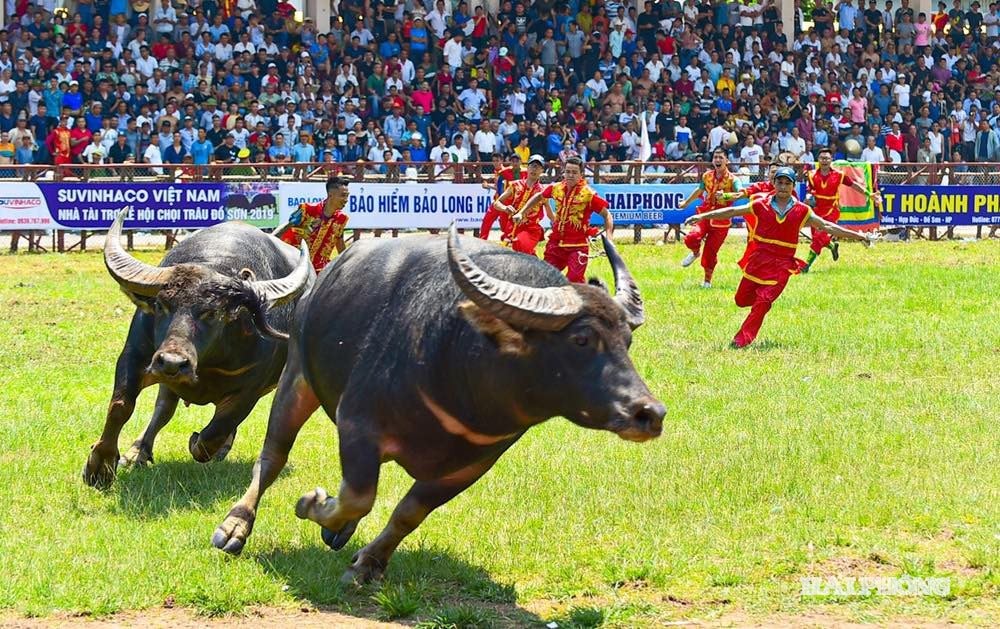
Beyond city-level festivals, many events have drawn strong community interest, such as the Do Son Buffalo Fighting Festival, the Tu Luong Xam Festival, the Voi Mountain Festival, the Cat Ba Fishing Village Festival, the Cao An Phu Temple Festival, the Nham Duong Pagoda Festival, and the Chu Van An Temple Calligraphy Opening Ceremony. Prior to the restructuring of administrative units at the commune and provincial levels and the implementation of the two-tier local government model on July 1, 2025, these festivals were organized by district-level People’s Committees.
Festivals organized by local authorities have generally ensured safety, thrift, and compliance with regulations, demonstrating the responsibility of the political system in preserving and promoting the values of local historical and cultural relics. However, some festival venues at the commune level currently face limitations, such as insufficient space and a lack of parking facilities. In addition, most festival funding relies on social contributions, which makes it difficult to ensure consistency and initiative in organization.
Moreover, the implementation of the two-tier local government model has raised new requirements for the organization and management of festivals at the grassroots level to ensure that festivals maintain their appropriate scale and nature, avoid fragmentation, and preserve their traditional and distinctive characteristics.
According to a proposal by the Department of Culture, Sports and Tourism submitted to the City People’s Committee, festivals held at ranked historical and cultural relic sites, religious establishments, and traditional craft-related festivals that are not organized by the City People’s Committee will be assigned to commune- or ward-level People’s Committees, or special administrative units responsible for managing the relic sites. The Department of Culture, Sports and Tourism will guide local authorities in organizing festivals in accordance with regulations.
This proposal is considered timely and consistent with practical conditions. Local authorities are most familiar with the specific characteristics of their festivals, enabling them to develop plans that ensure security, traffic safety, and environmental sanitation in line with local realities.
Decentralizing the organization and management of festivals helps enhance the initiative and responsibility of grassroots authorities, encourages localities to mobilize social resources, and enables more unified and specific solutions in festival organization, fire prevention, management of donation funds, and community participation in preserving and promoting heritage values in modern life.
When the rights and responsibilities of local authorities, communities, and festival participants are clearly and reasonably defined, it fosters community self-governance and awareness before, during, and after festivals, encouraging people to work together to make festivals increasingly vibrant and meaningful. When communities directly organize and maintain traditional rituals, it also helps prevent commercialization and distortion of festivals while preserving intangible cultural values.
Despite this decentralization, festival organization will continue to follow the guidance and direction of the Department of Culture, Sports and Tourism, ensuring professional consistency from the city level to the grassroots. The goal is to elevate festivals from purely local religious activities into civilized and modern community cultural spaces while still preserving their distinctive cultural identity.
Dai Thang