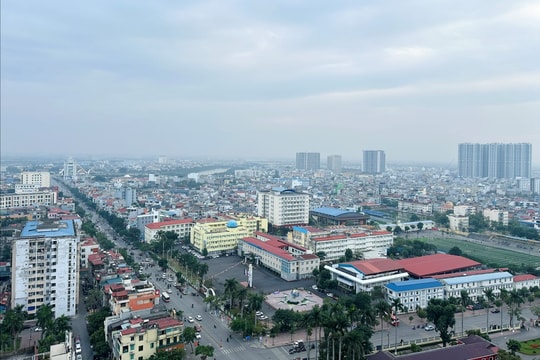
.jpg "Hai Phong announces adjustment to city master plan for 2021-2030 period, vision to 2050")
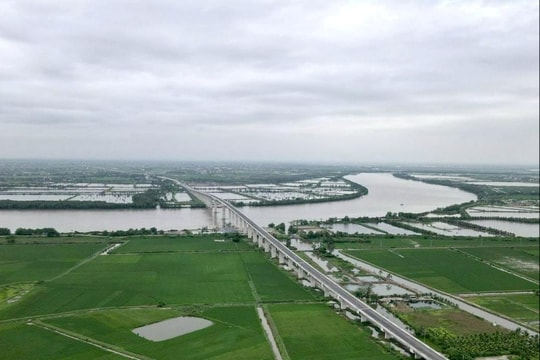
.jpg "Master plan for Dinh Vu – Cat Hai economic zone to 2045 adjusted")


Gửi bình luận
The plan aims to develop Hai Phong into a modern, smart coastal city with international competitiveness and sustainable development.
.jpeg)
Deputy Prime Minister Tran Hong Ha has recently signed Decision No. 423 dated March 11, 2026, approving the task for preparing the Master Plan of Hai Phong to 2050, with a vision to 2075.
The master plan aims to build and develop Hai Phong into a modern, smart coastal city with strong regional influence and international competitiveness, ensuring balanced development among the economy, society, and environment. The city is also envisioned as a model of sustainable urban governance with a distinct identity, closely linked with resource protection and climate change adaptation.
At the same time, the plan will concretize development orientations for Hai Phong within the national and regional socio-economic development strategies, serving as an important legal basis for managing urban and rural planning, formulating development policies, and creating growth momentum. It will also provide the foundation for preparing and adjusting master plans, zoning plans, detailed plans, and urban development programs, as well as managing construction investment in accordance with planning regulations.
In addition, the planning aims to establish spatial and infrastructure foundations for developing an urban system, cultural centers, marine economic hubs, high-tech industries, innovation centers, digital transformation, and green transformation, while enhancing regional connectivity and strengthening national and international linkages.
According to the approval, the planning scope covers the entire administrative boundary of Hai Phong after the administrative merger under Resolution No. 1669 dated June 16, 2025 issued by the Standing Committee of the National Assembly, along with relevant marine areas in accordance with current legal regulations. The city currently includes 114 commune-level administrative units.
The total natural area covered by the planning is approximately 3,194.72 km², based on Resolution No. 202/2025 dated June 12, 2025 issued by the National Assembly on the reorganization of provincial-level administrative units. The planning area includes mainland territory, coastal islands, and maritime zones.
In terms of population scale, by 2040, the total population of the city is projected to reach 6.5–6.8 million, including 5.2–5.5 million permanent residents.
By 2050, the city’s total population is expected to reach 8.5–9.5 million, with 7.5–8 million permanent residents.
Regarding land use, the total urban construction land area (excluding land for large-scale key infrastructure facilities) is projected to reach 100,000–120,000 hectares by 2040, and 160,000–180,000 hectares by 2050.
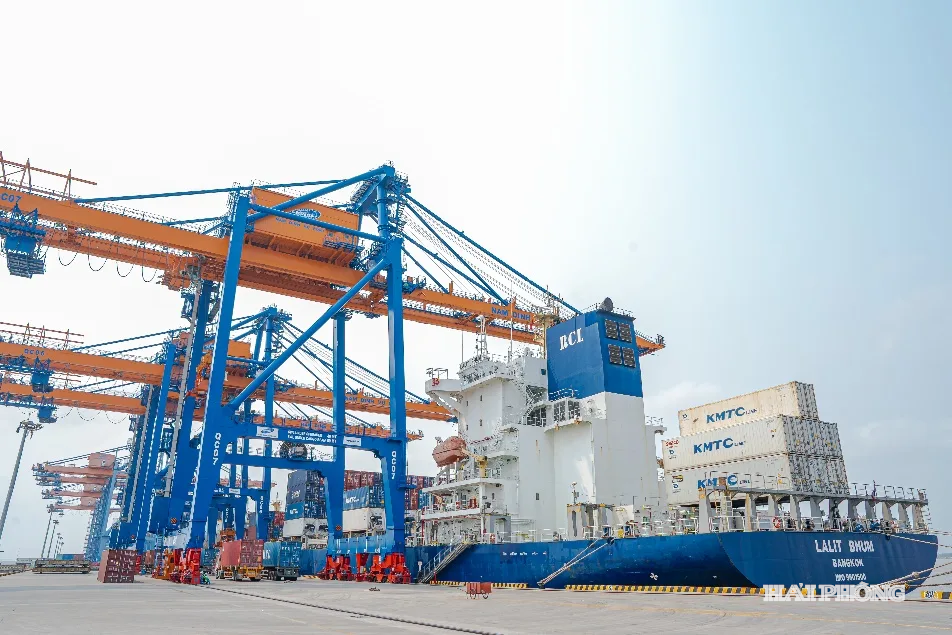
The decision outlines eight key requirements for the master planning task as follows:
1. The planning will study the development of Hai Phong in close linkage with provinces and cities in the Northern key economic region, the Red River Delta, and the Hanoi Capital Region, clarifying the city’s role as a growth pole, a marine economic center, and an international trade gateway of the region.
At the same time, spatial organization and infrastructure development will be oriented to enhance regional connectivity, strengthen complementarities, and define functional roles between Hai Phong and other major cities in the region.
2. Review and evaluate the implementation of approved plans; identify inherited content, existing shortcomings, limitations, and issues that are not suitable in the context of new development and after the merger of administrative units.
Research and update, integrate the policies and orientations of national-level plans, regional plans, and relevant sectoral plans; organize the spatial development in a synchronized manner between the eastern and western areas of Hai Phong city.
3. Research on the development orientation of the transportation infrastructure framework and multimodal transport hubs in key economic zones, linked to the national seaport, airport, railway system, and waterway network.
Simultaneously, clarify the role of the Lao Cai - Hanoi - Hai Phong railway line and the Dong Anh - Gia Binh - Ha Long railway line; research urban railway networks and models of transport-oriented development (TOD) in key areas; ensure synchronous connectivity with provinces in the Hanoi Capital Region and the Red River Delta region in each phase.
4. Study the spatial development orientation for key areas of the city, focusing on the reconstruction and renovation of old urban areas and the historical center, including the old town in the East (former Hai Phong city), the old town in the West (former Hai Duong city); study the spatial organization and connecting axes between clusters of wards and the city's administrative center.
In addition, orient the natural framework planning and urban-landscape design for water spaces along rivers and coastlines; clearly identify ecological conservation areas, transitional buffer zones, and controlled development areas, especially the Chi Linh - Con Son mountain region, Cat Ba archipelago, coastal lowlands, and mangrove forest systems; orient the urban spatial axis on both sides of the Cam River.
Preserve and promote urban architectural values; study the relationship between marine space and the seaport system (Lach Huyen, Nam Do Son), tourism space, and marine ecological conservation areas.
5. Research and develop a network of industrial parks, clusters, and logistics services towards a modern, specialized, and integrated approach with transportation infrastructure and multimodal transport hubs; ensuring efficient land use, environmental control, and alignment with the marine economic development strategy.
6. Propose models for concentrated agricultural development, clean agriculture, and high-tech agriculture linked to specialized agricultural production areas; guide the organization of rural residential spaces in accordance with urbanization, ensuring sustainable livelihoods and preserving rural identity.
7. Orienting the development of underground space and technical infrastructure according to legal regulations, with a focus on supplementing, conducting in-depth research, and drawing on international experience in the following areas: Urban railway systems and TOD models; planning and efficient exploitation of urban underground space; solutions for developing smart cities linked to information, science, and technology infrastructure; multimodal transport and logistics systems; regional inland waterway transport networks; justification for determining the location and scale of airports; parking systems in areas with high population density and activity; developing public transport by bus linked to green transformation; solutions to enhance resilience to natural disasters and climate change; ensuring safe water supply, protecting water sources, and using energy efficiently and effectively, including green energy.
At the same time, addressing existing problems and inadequacies regarding overlapping traffic between internal and external transport; The study focuses on the layout of the international bus terminal and multi-functional complex connected to transportation and logistics hubs; completing the missing basic technical infrastructure system such as water treatment plants, waste and wastewater treatment facilities, funeral homes, and cemeteries.
In addition, it aims to unify and synchronize forecast data and development orientations; ensuring interoperability with the Hai Phong City Planning for the period 2021-2030, with a vision to 2050, and other ongoing sectoral and specialized plans.
8. Propose solutions to develop a synchronized, modern, and high-quality socio-economic infrastructure system, while addressing urban and rural environmental issues and moving toward sustainable development.
The decision also requires further research for planning contents such as: analyzing the city’s position, role, and regional connectivity; evaluating the current status of the urban system, functional areas, population distribution, land use, architecture and landscape, social and technical infrastructure, and environmental conditions; and reviewing the management and implementation of planning.
At the same time, international experience will be studied; forecasts for population, labor, and land demand will be prepared; urban development models and overall spatial structures will be defined; underground space and infrastructure development will be oriented; environmental protection and climate change adaptation measures will be proposed; and priority investment programs and projects will be identified for each development stage.
Hai Phong News