.jpg "Behind Hai Phong’s top ranking in PAR INDEX and SIPAS")

Gửi bình luận
The National Standards Strategy for 2026–2035 aims to build a modern standards system that drives innovation, digital transformation and competitiveness.

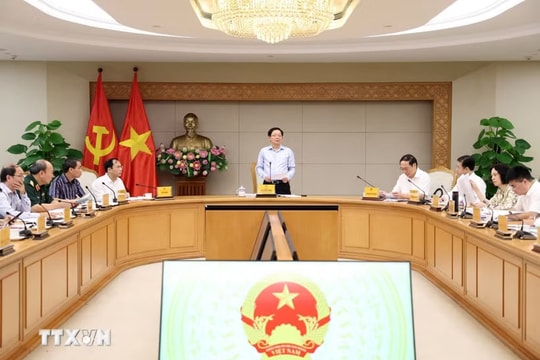
The Prime Minister has signed Decision No. 876 approving the National Standards Strategy for the 2026–2035 period.
The strategy aims to build a modern, open national standards system harmonized with international standards, serving as a “soft institutional infrastructure” for the country, a tool for implementing public policies, and a technical foundation for State management. It also seeks to make standards a driving force for innovation, digital transformation, green transition, and sustainable development.
Under the strategy, by 2026–2030, Vietnam targets harmonizing 75% of its national standards with international standards, while ensuring that 100% of its classification framework is compatible with Level-2 classifications under the International Classification for Standards (ICS). Vietnam also aims to have representatives participating in 60% of the corresponding technical committees of organizations such as International Organization for Standardization, International Electrotechnical Commission, and International Telecommunication Union.
By 2035, Vietnam aims to harmonize 80% of its national standards with international standards, while leading or co-leading between five and ten international standard-setting projects in key sectors, with Vietnamese representatives participating in 100% of the corresponding technical committees of ISO, IEC, and other organizations. The roadmap also targets completing the transition of the entire Vietnamese standards system into internationally compatible machine-readable formats.
The strategy outlines 10 groups of solutions, focusing on institutional reform, promoting innovation, enhancing competitiveness and the implementation of technical barriers to trade under WTO/TBT mechanisms, mobilizing financial resources, and supporting businesses in applying standards for sustainable international integration.
Hai Phong News