
.jpg "Ministry of Industry and Trade implements solutions to promote economic growth in 2026")


Gửi bình luận
Vietnam’s economy recorded numerous positive signals in exports, investment, consumption, and tourism during the first five months of the year, creating additional room and momentum to support the country’s goal of achieving double-digit economic growth.
Vietnam’s socio-economic performance in the first five months of 2026 has shown many encouraging signs, supported by the synchronized implementation of institutional reforms, government streamlining efforts, and flexible fiscal and monetary policy management.
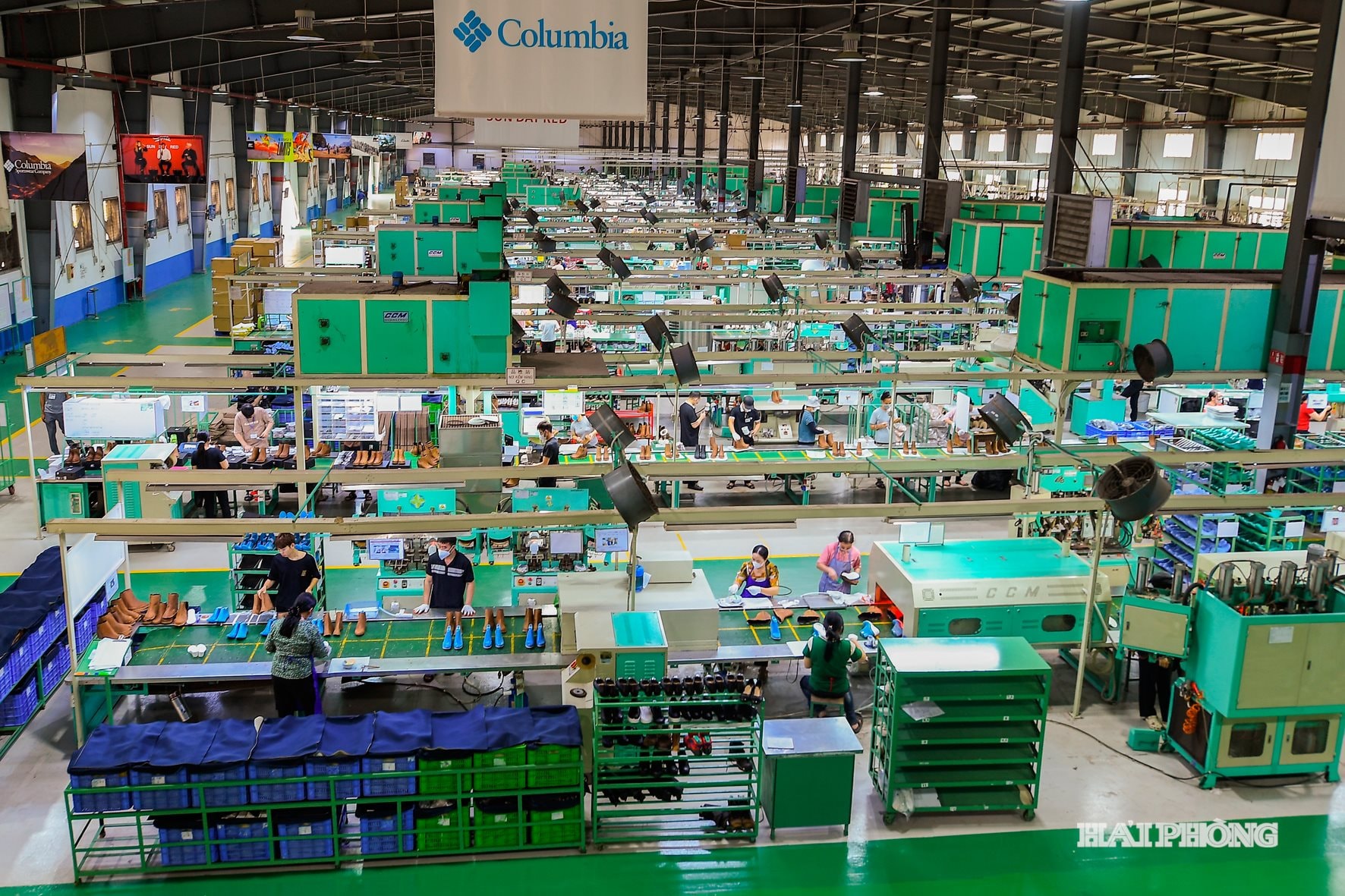
According to Mr. Pham Tuyen, Director of Brokerage at KIS Vietnam Securities Corporation, many localities are increasingly becoming attractive destinations for multinational corporations. He noted that total import-export turnover during the first five months of the year exceeded USD 445 billion, up approximately 25% year-on-year. Meanwhile, newly registered foreign direct investment (FDI) surpassed USD 24 billion, representing an increase of more than 33.4%.
Mr. Pham Tuyen said these figures reflect foreign investors’ confidence in Vietnam’s stable macroeconomic environment and long-term growth prospects.
In addition to exports and investment, the domestic market has also experienced a strong recovery. Total retail sales of goods and consumer service revenues increased by more than 11%, reaching the highest level since 2024. The tourism sector maintained its growth momentum, welcoming nearly 11 million international visitors, up almost 15% from the same period last year and marking an all-time high.
According to Mr. Pham Tuyen, these developments are key drivers supporting the economy’s ability to sustain high growth in the coming years.
He stated: “These results show that Vietnam is closely following Conclusion No. 18, overcoming challenges in 2026, accelerating growth during the 2027–2030 period, and maintaining the double-digit growth target that has been set. In my view, the Government’s flexible management, together with the efforts of key agencies such as the Ministry of Finance, the State Bank of Vietnam, and the Ministry of Industry and Trade, will unlock new growth drivers for the 2026–2031 period, particularly in line with the socio-economic development targets approved by the National Assembly.”
Alongside economic expansion, inflationary pressure has begun to emerge more clearly. The Consumer Price Index (CPI) in May increased by 0.3% compared with the previous month, the lowest monthly rise in the past three months. However, compared with the same period last year, CPI rose by 5.6%, bringing the average increase for the first five months of the year to 4.31%.
Mr. Pham Tuyen emphasized that institutional reform has been identified by the Government as a critical driver of economic growth. Efforts to improve the legal framework, streamline administrative structures, operate the two-tier local government model, and strengthen decentralization are gradually creating positive changes in the investment and business environment.
He noted that administrative procedure simplification and the restructuring of digital governance systems have delivered tangible results. The removal of overlapping regulations and business conditions is estimated to save enterprises nearly USD 1 billion annually, equivalent to approximately VND 24–25 trillion.
Notably, the time required to process administrative procedures at the local level has been reduced bay as much as 53%thanks to the elimination of multiple intermediary steps. Long-standing obstacles related to project approvals, land administration, and site clearance are gradually being resolved, helping to improve the business climate and creating favorable conditions for enterprises to expand operations in the remaining months of the year.

Despite many encouraging signs, experts believe that Vietnam’s economy still faces significant challenges if it is to achieve a growth rate of 10% or higher in 2026.
According to Ms. Vu Viet Linh, Deputy Director of the Analysis Department for Institutional Clients at Maybank Investment Bank, the 7.8% GDP growth recorded in the first quarter was an encouraging result. However, based on economic data from April and May, second-quarter GDP growth is expected to remain around 7.8%, meaning that the goal of achieving annual growth above 10% remains a considerable challenge.
Ms. Vu Viet Linh noted that one of the key concerns is the slow pace of public investment disbursement. After the first five months of the year, only about 24% of the annual plan had been disbursed. Realized investment from the state budget increased by 11.2%, significantly lower than the 21.1% growth recorded during the same period last year.
She attributed the slowdown primarily to difficulties in land clearance and the limited implementation capacity of some contractors. Nevertheless, several localities have delivered impressive results. State-budget-funded investment rose by 59% in Hanoi, 47% in Can Tho, and 21% in Ninh Binh.
Ms. Vu Viet Linh stated: "The key factor behind these differences lies in the speed and effectiveness of land clearance. This is an important practical lesson that should be replicated more widely. In the coming period, as the two-tier local government model becomes more stable after one year of implementation, we expect its positive impacts to be reflected more clearly in the business environment."
Beyond public investment, energy security is increasingly viewed as a strategic requirement for long-term economic growth. According to Linh, as Vietnam continues to attract high-tech and semiconductor projects, ensuring a stable electricity supply is essential for retaining and attracting major global corporations.
Experts emphasize that securing adequate supplies of electricity and petroleum products is not only a matter of public welfare but also a critical requirement for maintaining the economy’s competitiveness. This requires authorities to proactively develop contingency plans to prevent localized shortages that could disrupt production chains.
To support growth while keeping inflation around 4.5%, experts believe that close coordination between fiscal and monetary policies remains crucial.
Mr. Pham Tuyen noted that external cost pressures—particularly geopolitical tensions in the Middle East that have pushed oil prices higher—are exerting pressure on both the exchange rate and inflation. In response, the State Bank of Vietnam has continued to maintain appropriate VND interest rates to stabilize the exchange rate and limit the impact of rising prices for imported inputs such as steel, fuel, and electronic components.
On the fiscal side, however, there remains considerable room to support economic activity.
Vu Viet Linh pointed out that the ratio of government debt to GDP has fallen from 48% in 2016 to approximately 30% in 2025. This provides the Government with greater flexibility to implement price stabilization measures when necessary.
She added that postponing scheduled increases in electricity prices, tuition fees, or healthcare charges proved effective during the pandemic period and could again be considered as a flexible tool to ease inflationary pressures. Proactive policy management, she said, would help stabilize public and business confidence while creating favorable conditions for investment, production, and consumption in the period ahead.
Hai Phong News