.jpg "Traceability system for Hai Phong’s agricultural products deployed")
.jpg "Applying traceability systems to enhance product quality management")
.jpg "Branding and traceability: Sustainable direction for cooperatives")

Gửi bình luận
Building strong brands supported by product traceability systems and intellectual property protection is becoming an increasingly urgent requirement for enhancing the value of Vietnamese agricultural products and expanding their export markets.
.jpg)
The Government’s goal of placing Vietnamese agriculture among the world’s top 15 by 2030, as outlined in Resolution No. 85 dated April 4, 2026, on implementing the Politburo’s Conclusion No. 219 and continuing the implementation of Resolution No. 19 on agriculture, farmers, and rural development through 2030 with a vision to 2045, is not simply a matter of increasing output or export turnover. More importantly, it requires a shift toward a development model focused on higher quality, greater added value, and stronger agricultural brands capable of competing in international markets.
To achieve this goal, the resolution emphasizes the need to reorganize production around specialized farming zones linked to geographical indications, product traceability systems, and cultivation and aquaculture area codes to meet increasingly stringent market requirements.
According to Mr. Tran Cong Thang, Director of the Institute of Strategy and Policy for Agriculture and Environment, major markets such as the European Union (EU), South Korea, and even China are tightening technical standards related to traceability, food safety, and sustainable development. This trend requires Vietnamese agriculture to change its approach—from producing what it can to producing what the market demands.
In this context, an agricultural brand is far more than a label printed on packaging. It represents the combined value of product quality, production processes, green standards, and the reputation built throughout the value chain.
Experience shows that agricultural sectors associated with strong brands generate higher added value. From durian and value-added coffee products to high-tech pangasius farming, product value comes not only from output but also from quality and differentiation.
In particular, the trend toward deep processing is creating new value opportunities for Vietnamese agricultural products. Instead of exporting raw materials, many products are now being diversified into processed goods such as dried durian, instant coffee, and various value-added pangasius products. This approach helps retain more value within the country while improving competitiveness.
A notable example is the One Million Hectares of High-Quality, Low-Emission Rice Project in the Mekong Delta. According to Mr. Tran Cong Thang, the project not only reduces production costs but also aims to establish a “low-emission rice” brand—a new competitive advantage for Vietnam in international markets.
Vietnam has already certified and exported rice carrying the “low-emission” label for the first time. More than 70,000 tons of rice have been certified, covering over 18,000 hectares of cultivated land. Although these figures remain modest compared with total rice production, they are considered an important first step, reflecting a fundamental shift in the development mindset of the rice industry.
Associate Professor Dr. Bui Ba Bong, Chairman of the Vietnam Rice Industry Association, believes that a brand cannot simply be a label on a package; it must become a “national story” communicated consistently. Vietnam is not only a major rice exporter but is also emerging as a pioneer in low-emission rice production. When this story is supported by reliable data, recognized standards, and production at scale, added value will come not from selling more, but from selling differently.
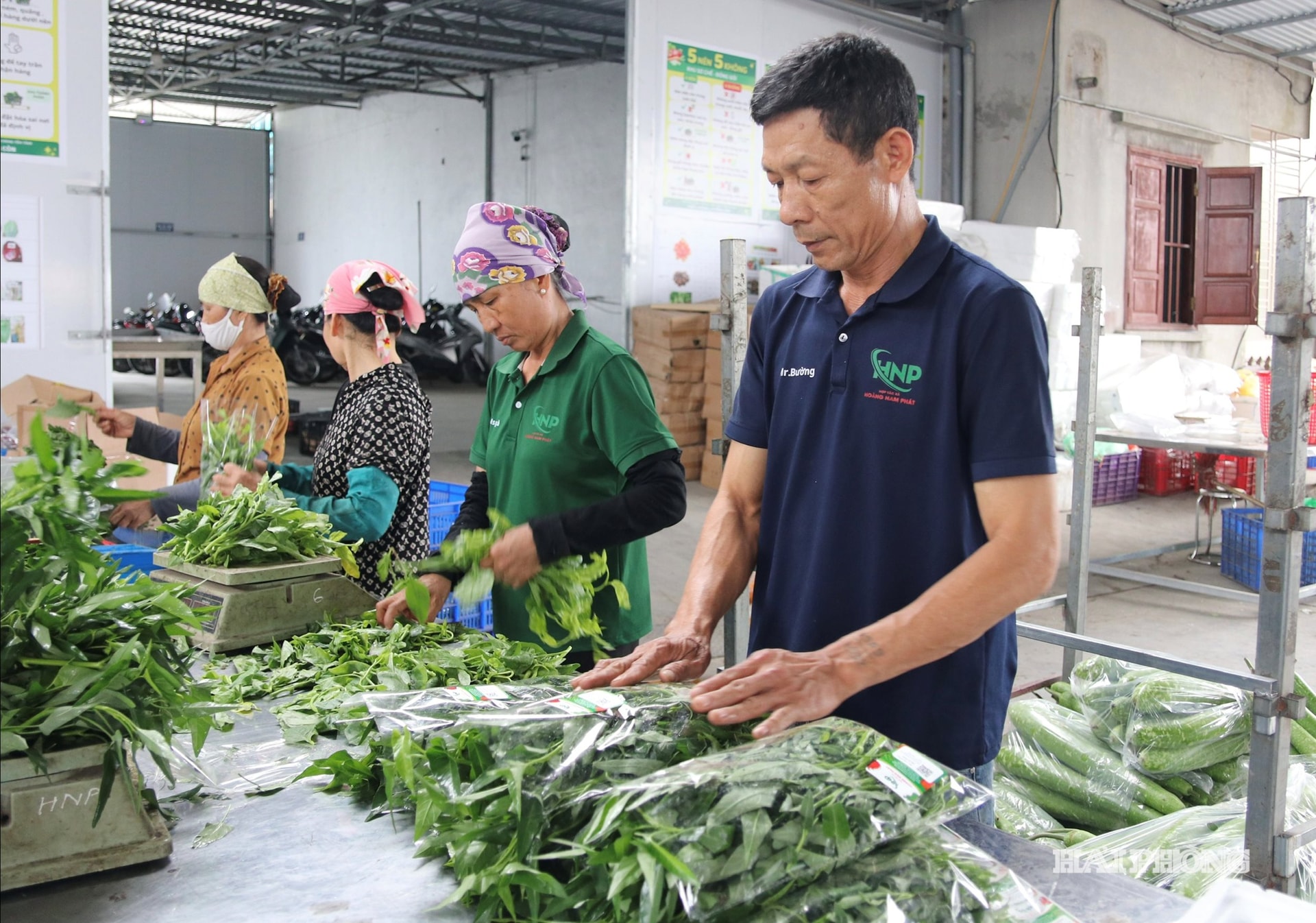
A common characteristic of successful agricultural brands is that they are built on transparency and traceability.
According to Mr. Le Van Hoang, Director of Bazan Dak Nong Coffee One-Member Co., Ltd., a brand cannot be separated from transparency and traceability. In addition to serving the domestic market, the company participates in global supply chains and must therefore comply with multiple stringent standards, particularly the European Union’s (EU)requirements on sustainable production and deforestation-free supply chains.
To meet these requirements, the company has developed a production process directly linked to individual farming households. Detailed records are maintained for every product batch, covering raw material areas, cultivation practices, and output quality, creating a comprehensive “batch profile” that enables full traceability. This system not only helps the company meet technical requirements but also strengthens its long-term credibility in international markets.
Traceability is becoming equally important for many regional specialty products seeking to protect and enhance their brands. Lai Chau ginseng is one such example.
According to Mr. Nguyen Thanh Dong, Deputy Director of the Lai Chau Department of Agriculture and Environment, the province is refining its standards system and promoting scientific research to achieve national standard recognition and include Lai Chau ginseng in the national pharmacopoeia. At the same time, local authorities are issuing cultivation area codes and strengthening oversight of production facilities to ensure transparency and traceability.
Mr. Nguyen Thanh Dong emphasized that traceability is a vital tool for protecting brands, preventing counterfeiting, and safeguarding product reputation. Sustainable brand development must begin with the value chain itself, meaning that producers, purchasing enterprises, processors, and markets must be connected through a system built on responsibility and shared benefits.
At the national level, the agricultural sector is also accelerating the development of a nationwide agricultural product traceability system. The system currently covers 112 product groups from 547 farming households, 255 cultivation areas, and 149 enterprises across 26 of the country’s 34 provinces and centrally governed cities.
Beginning July 1, 2026, the Ministry of Agriculture and Environment plans to expand traceability requirements to a wider range of key agricultural products, including rice, meat, eggs, milk, pineapple, passion fruit, and tea, with the participation of many major enterprises.
Traceability is not merely a tool for supply chain management or export compliance. More importantly, together with intellectual property protection, it is becoming a fundamental pillar for building market trust, increasing added value, and gradually strengthening the position of Vietnamese agricultural brands on the global agricultural map.
Hai Phong News