

Gửi bình luận
Following the directives of the Customs Department and the Hai Phong City authorities, Customs Sub-Department Region III is ready with plans to support businesses, shipping lines, and transport companies engaged in import–export activities with the Middle East.
Mr. Tran Manh Cuong, Head of Regional Customs Sub-Department III, stated that according to data analysis, the import–export turnover with the Middle Eastern market reached over USD 699 million in 2025 and over USD 219 million in the first two months of 2026. The Middle Eastern market accounts for approximately 0.6% of the total import–export turnover of the Sub-Department. Revenue from taxes collected from these import–export activities reached over VND 814 billion in 2025 and more than VND 118 billion in the first two months of 2026, accounting for about 0.9% of the Sub-Department’s total revenue.
Exports to the Middle Eastern market mainly include compressed sawdust briquettes, aluminum profiles, and veneer wood, while imports consist primarily of asphalt, petroleum bitumen, unprocessed aluminum ingots, ironwood, tires, and automobiles.
In the short term, according to the analysis of Regional Customs Sub-Department III, conflicts in the Middle East may not significantly affect import–export turnover or state budget revenue in the first quarter of 2026.
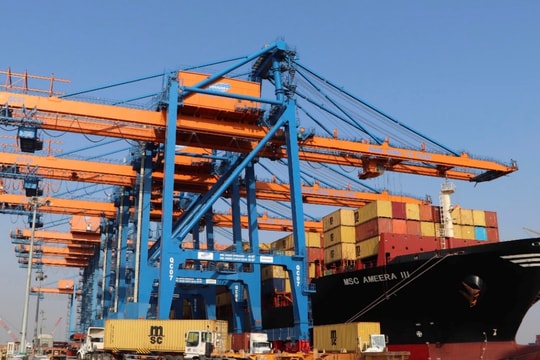
However, in the long term, businesses may face significant challenges in international transportation. Currently, several international shipping lines have suspended cargo transport through the Strait of Hormuz or are forced to take longer routes. This situation will increase freight rates and lead to additional costs, particularly for taxable import–export goods and key commodities traded with the Middle Eastern market, such as asphalt, aluminum ingots, aluminum bars, and ironwood, as well as processing and export manufacturing orders that businesses have already signed or are currently implementing.
At the same time, in Hai Phong, cargo throughput at the port may decline as businesses delay or postpone orders or shift logistics to other transshipment ports in the region, which could negatively affect the city’s state budget revenue.
If timely response measures are not implemented, the growth rate of import–export turnover, cargo throughput via Hai Phong Port, and state budget revenue may fall short of planned targets.
Specifically, the conflict in the Middle East not only affects direct shipping routes to and from the region but also disrupts one of the world’s key trade corridors connecting Asia, Europe, and the Mediterranean Sea.
Due to military tensions, many international shipping lines have suspended or limited voyages through high-risk areas and shifted to alternative routes, extending shipping times by 10 to 15 days. As a result, transportation costs for businesses increase by an average of about USD 3,000 per container, along with various additional expenses.
Moreover, cargo flows to other markets that transit through this region are also affected, leading to higher costs for importing raw materials and exporting finished products for Vietnamese enterprises.
To support businesses, leaders of Regional Customs Sub-Department III stated that the unit will continue monitoring and evaluating import–export turnover and revenue from enterprises engaged in trade with the Middle Eastern market in order to promptly propose appropriate solutions.
Hai Phong News