
Gửi bình luận
Prime Minister Le Minh Hung holds working session with Hai Phong City and four provinces on rental housing development
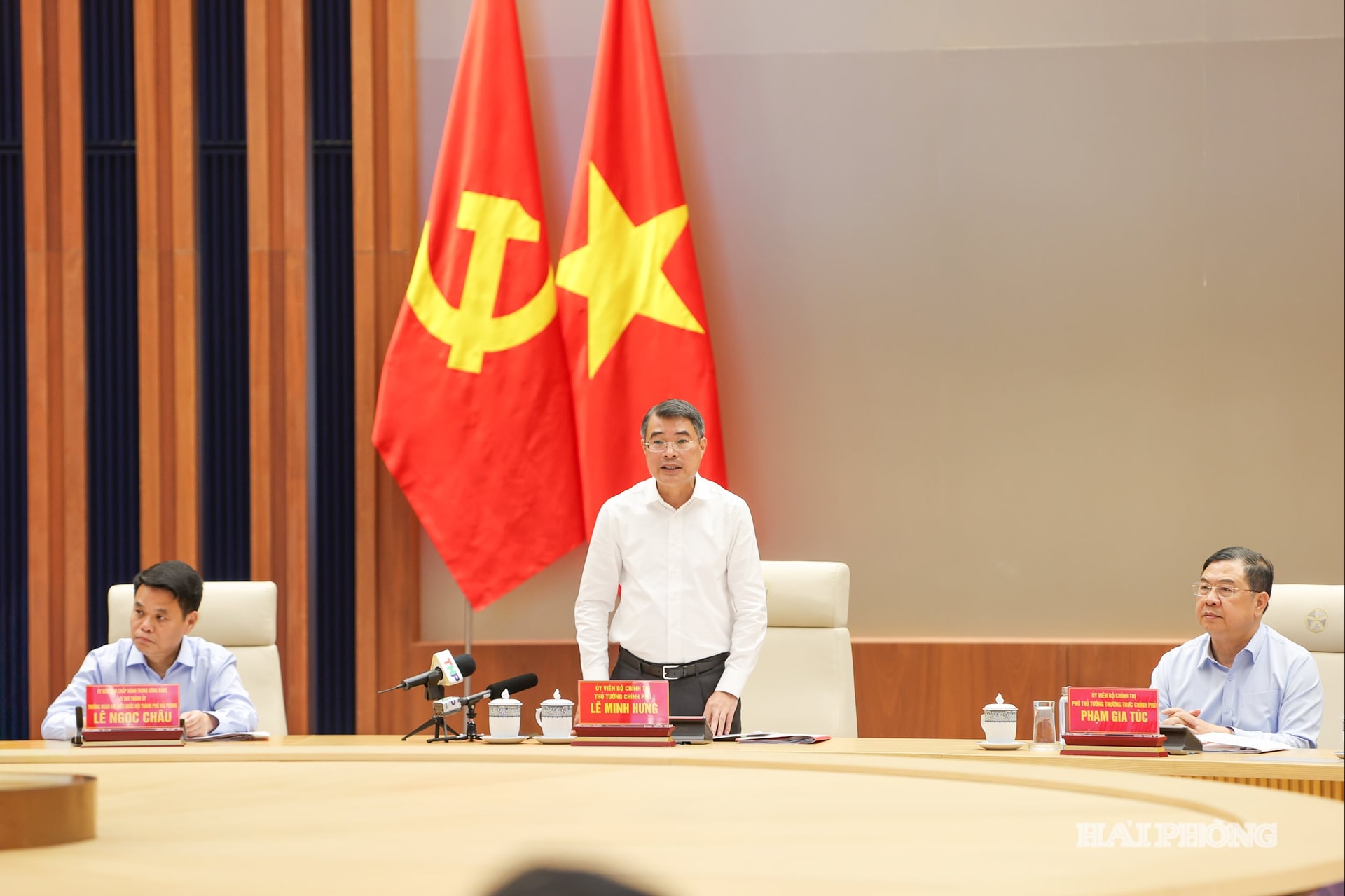
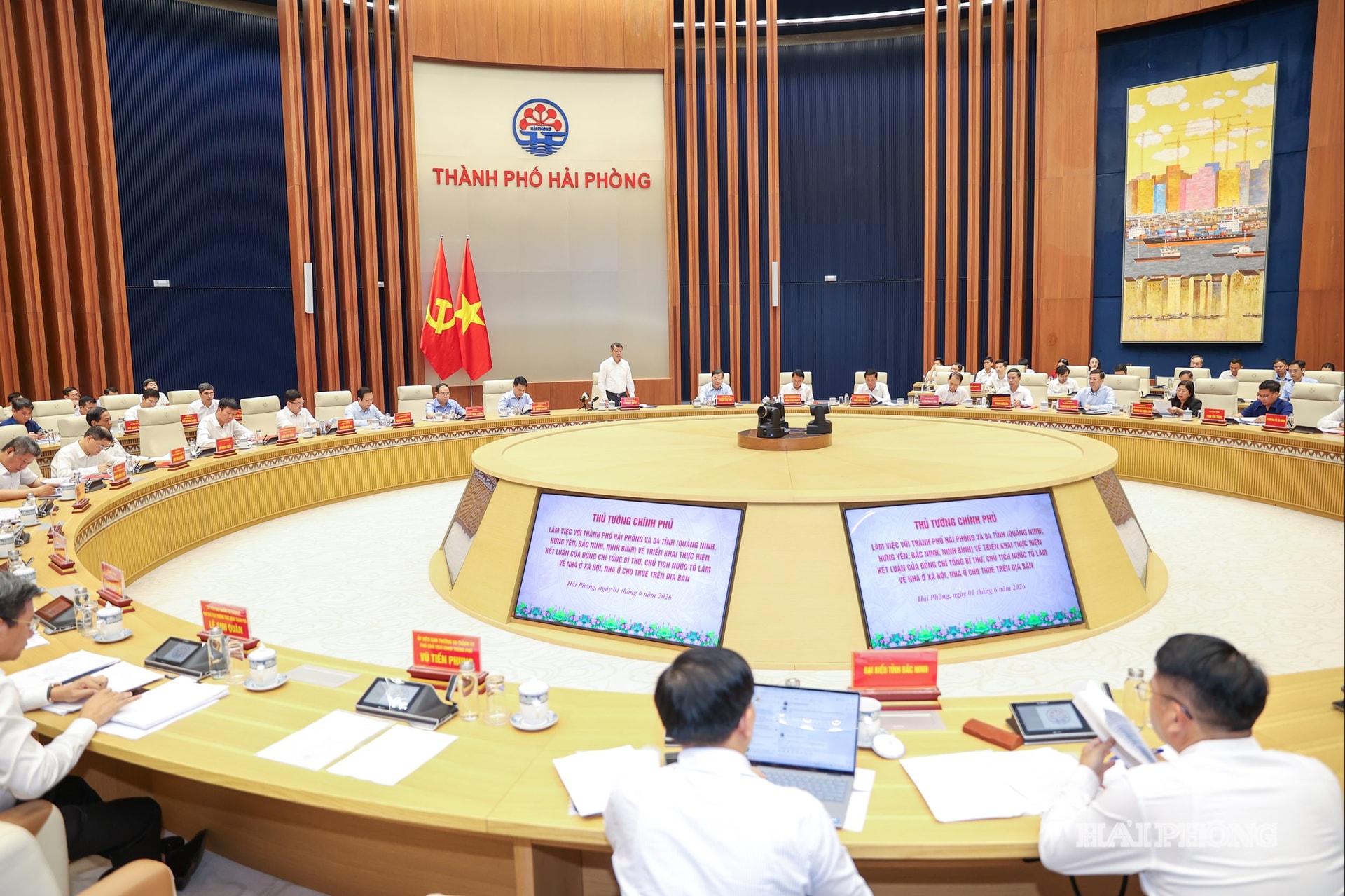
On the afternoon of June 1, at the City Convention and Performance Center, Member of the Politburo and Prime Minister Le Minh Hung, chaired a meeting to implement directives issued by General Secretary and State President To Lam regarding rental housing development in Hai Phong City and the provinces of Quang Ninh, Hung Yen, Ninh Binh, and Bac Ninh.
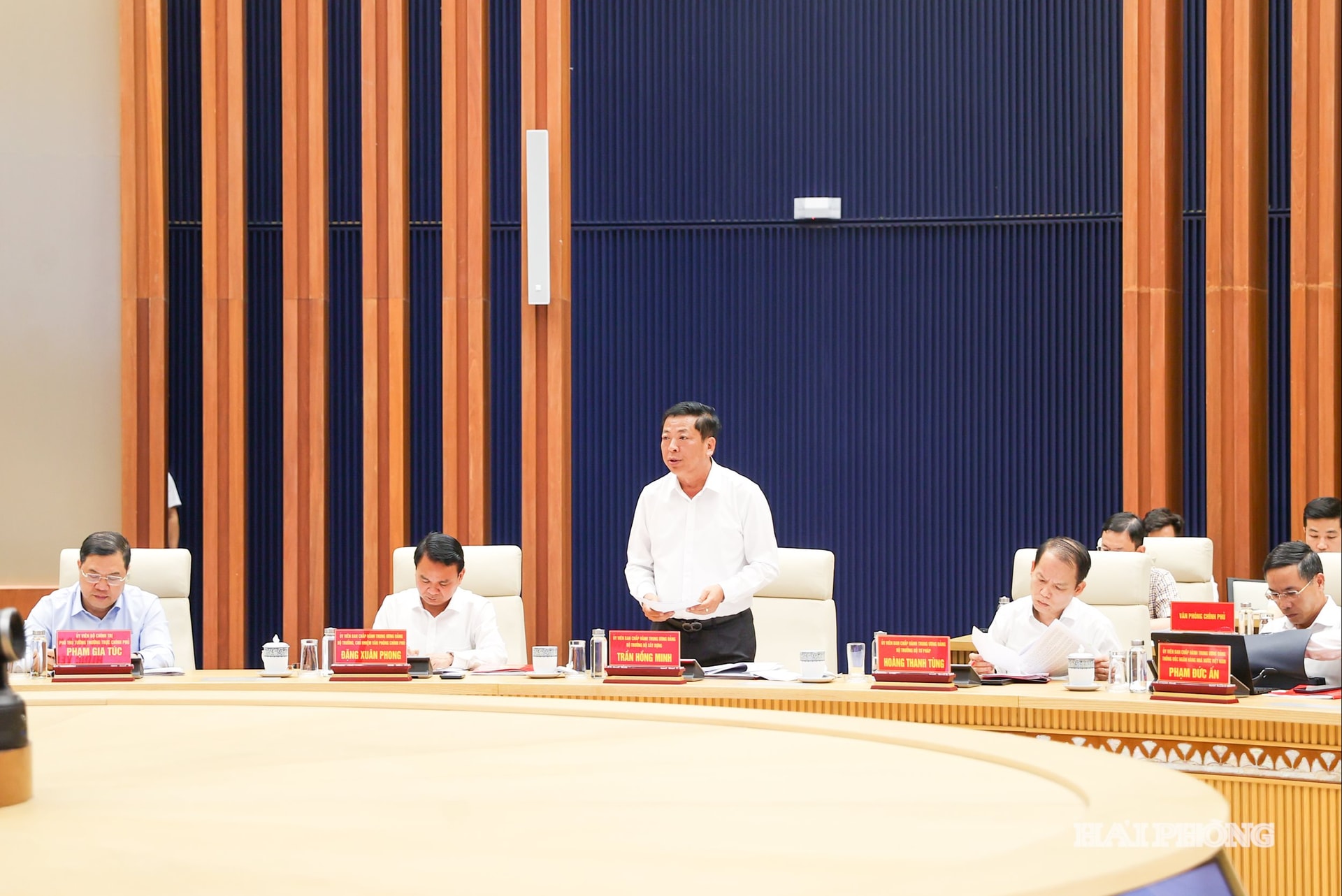
Attending the working session were Mr. Pham Gia Tuc, Member of the Politburo, Secretary of the Party Central Committee, and Standing Deputy Prime Minister; Party Central Committee members Dang Xuan Phong, Minister and Chairman of the Government Office; Mr. Tran Hong Minh, Minister of Construction; Mr. Hoang Thanh Tung, Minister of Justice; Mr. Pham Duc An, Governor of the State Bank of Vietnam; along with representatives of central ministries, agencies, and sectors.
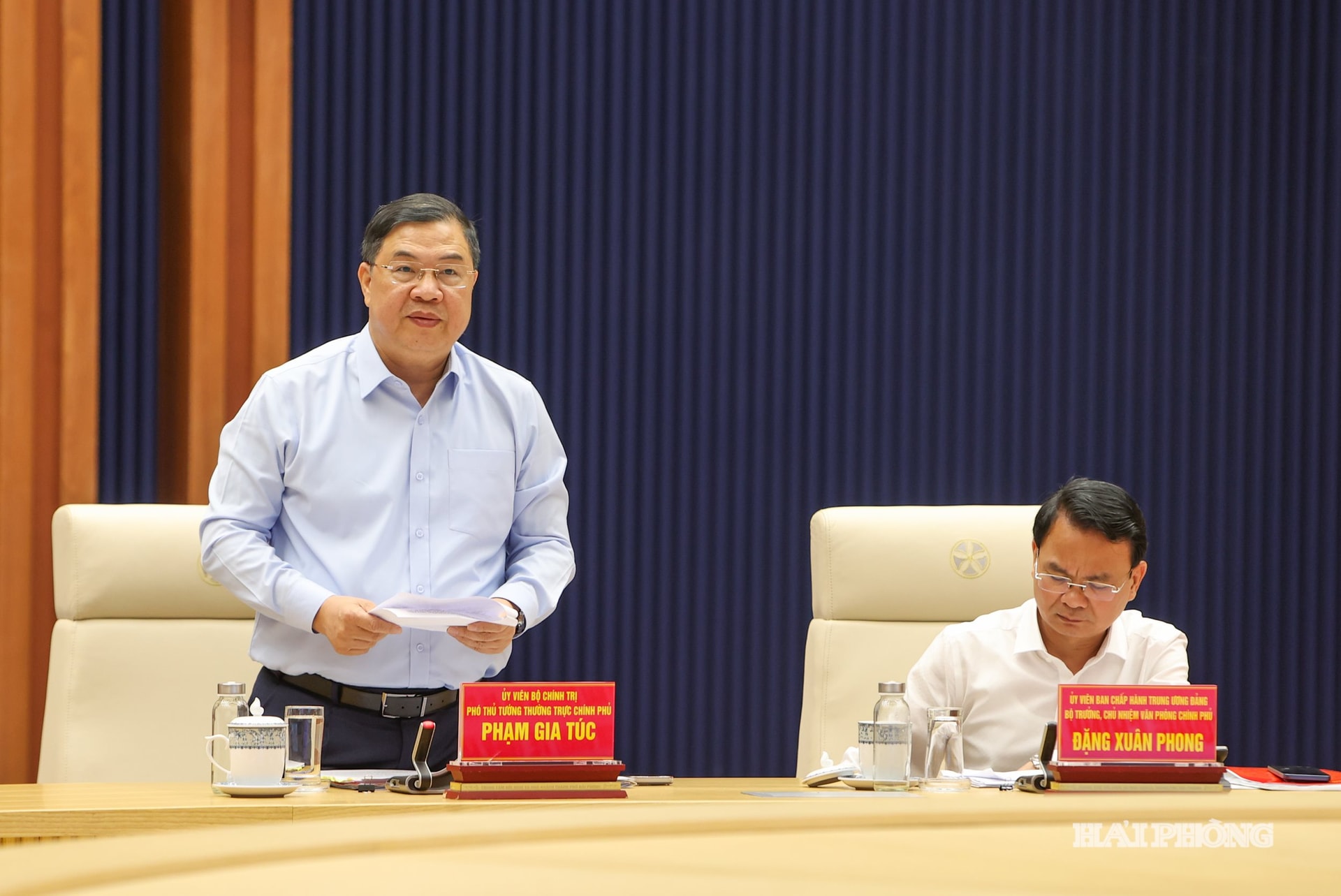
Representing the provinces, attendees included Party Central Committee members Quan Minh Cuong, Secretary of the Quang Ninh Provincial Party Committee and Head of the National Assembly Deputies' Delegation of Quang Ninh Province; Mr. Pham Quang Ngoc, Secretary of the Hung Yen Provincial Party Committee; Mr. Tran Huy Tuan, Secretary of the Ninh Binh Provincial Party Committee; and Mr. Nguyen Hong Thai, Secretary of the Bac Ninh Provincial Party Committee. Also attending were representatives of the Standing Committees of the provincial Party Committees.
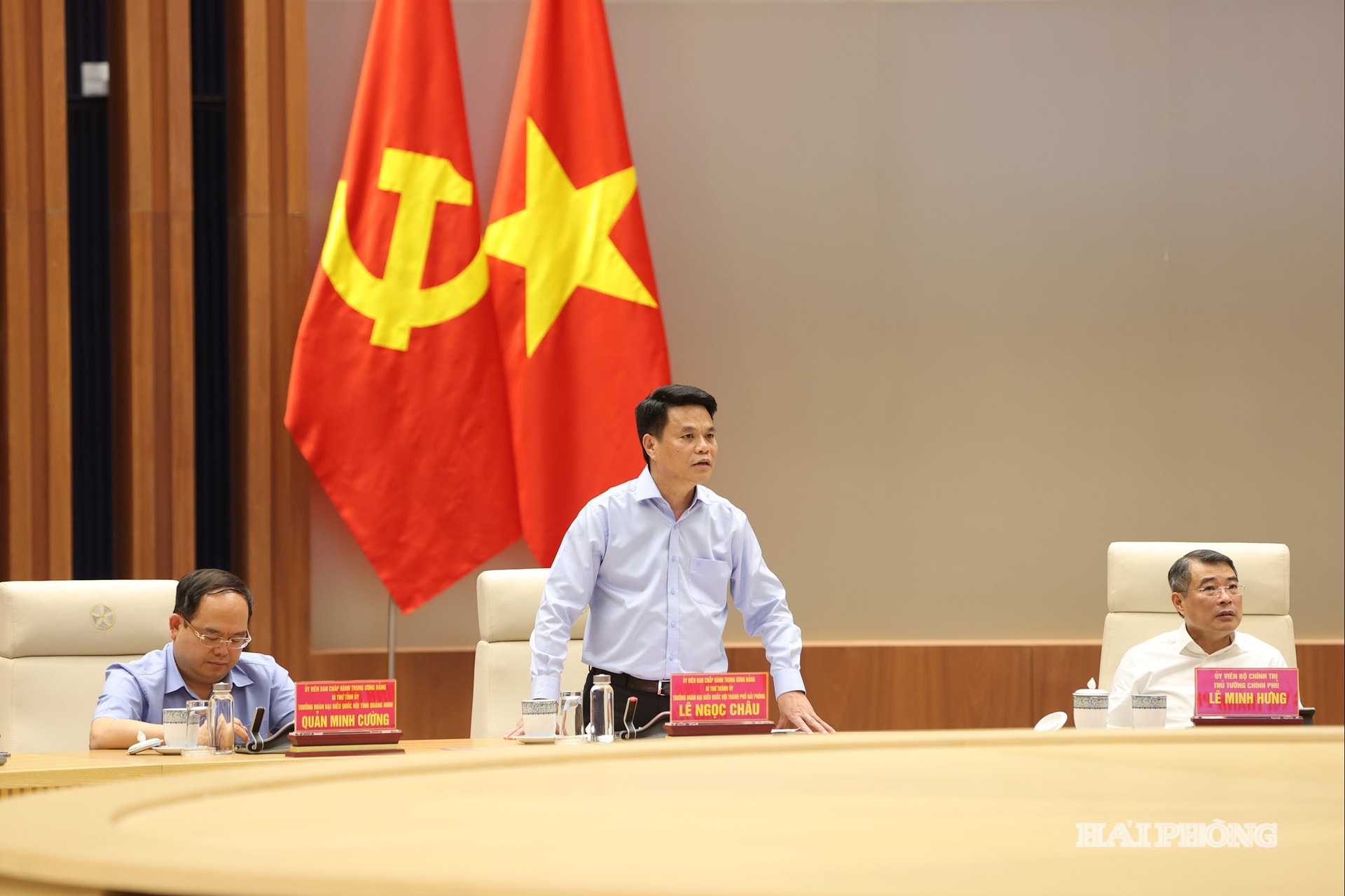
Representing Hai Phong City were Mr. Le Ngoc Chau, member of Party Central Committee, Secretary of the Hai Phong Party Committee and Head of the Hai Phong National Assembly Delegation; Mr. Do Manh Hien, Standing Deputy Secretary of the City Party Committee; Mr. Le Van Hieu, Deputy Secretary of the City Party Committee and Chairman of the City People's Council; Mr. Pham Van Lap, Deputy Secretary of the City Party Committee and Chairman of the Vietnam Fatherland Front Committee of Hai Phong City; members of the Standing Committee of the City Party Committee; and representatives of city departments, agencies, and sectors.
At the working session, Minister of Construction Tran Hong Minh presented a report on the implementation of social housing and rental housing projects in Hai Phong City and the four provinces of Quang Ninh, Hung Yen, Ninh Binh, and Bac Ninh, as well as recommendations and proposals put forward by the localities.
Hai Phong proposes six measures to promote social and rental housing development
Regarding social housing development, Hai Phong City has completed, is implementing, or is preparing to implement 65 projects with a total scale of 80,228 housing units. During the 2021–2025 period, 16,679 units were completed, exceeding the Government-assigned target of 15,400 units. It is projected that by 2030, a total of 54,444 units will be completed, reaching 110% of the Government’s target for the entire 2021–2030 period (49,400 units). The demand for social housing for the armed forces is estimated at approximately 5,421 units.
Regarding the management and development of rental housing stock, there are currently 744 social housing units designated for rent. Of these, 605 units are in operation and leased out, accounting for 81.3%, while applications for the remaining 139 units are under review. Worker accommodation facilities currently provide 1,340 rooms, with an additional 5,693 rooms expected to be completed by the fourth quarter of 2027. Publicly owned housing assets comprise 14,982 units. At the same time, the city is accelerating the development of social housing in conjunction with the renovation and replacement of aging apartment buildings.
To comprehensively remove institutional barriers and unlock socialized investment resources for the development of social housing and long-term rental housing, Hai Phong’s leadership proposed six recommendations to the Prime Minister during the working session. One key proposal is to consider introducing special mechanisms and policies allowing manufacturing enterprises operating in industrial parks and economic zones within the city to use their lawful financial resources to purchase completed social housing units and provide them as rental accommodation for their workers and employees.
.jpeg)
The city also proposed the introduction of comprehensive support mechanisms for both project developers and residents with housing needs. In addition, it recommended reviewing and amending housing legislation to require developers of social housing projects to allocate at least 30% of the total social housing floor area within each project for rental purposes. This would establish a clear legal framework and ensure a stable supply of long-term rental housing. The city further proposed allowing local authorities, based on their specific conditions, to provide additional interest rate support for social housing buyers through interest rate subsidies funded by city budgets and implemented via policy banks.
Hai Phong also requested permission to use state budget funds to support site clearance and land acquisition costs for old apartment renovation and reconstruction projects. This measure would enhance project feasibility and create stronger incentives for investors to participate in the redevelopment of aging residential buildings.
To attract and retain high-quality human resources, the city proposed that the Government consider introducing mechanisms to support the development of affordable commercial housing for long-term rental. This solution would help create a stock of quality rental housing that is not subject to the apartment size restrictions applied to social housing, while also broadening eligibility for tenants.
The city aims to commence construction of at least one rental housing project in June
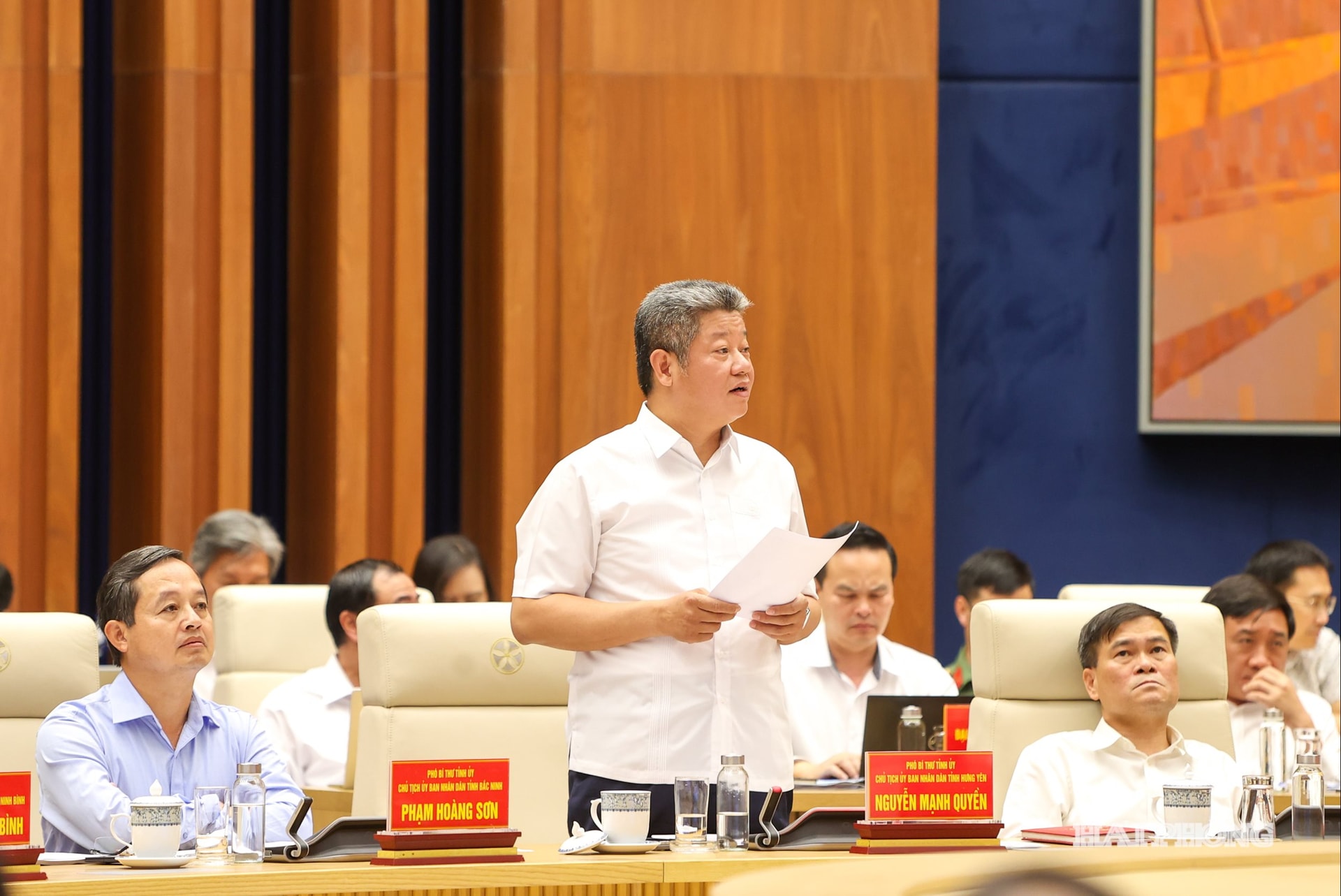
During the meeting, leaders of Hai Phong City and the provinces of Quang Ninh, Bac Ninh, Ninh Binh, and Hung Yen discussed the implementation of social housing and rental housing projects in their localities. They also put forward proposals and recommendations regarding mechanisms and policies for rental housing development, preferential financing and credit sources, housing funds, and amendments to the 2023 Housing Law related to social housing.
After hearing remarks from Standing Deputy Prime Minister Pham Gia Tuc and representatives of central ministries, agencies, and sectors, Prime Minister Le Minh Hung delivered the concluding address. He highly appreciated the efforts of Hai Phong City and the provinces of Quang Ninh, Bac Ninh, Ninh Binh, and Hung Yen in implementing the directives of Party General Secretary and President To Lam on the development of rental housing.
According to the Prime Minister, demand for rental housing in Hai Phong and the four provinces is extremely high. These localities are among the country’s fastest-growing economic centers, home to numerous economic zones, industrial parks, and industrial clusters, and serve as key industrial hubs of northern Vietnam and the nation as a whole. However, the supply of housing available for rent and long-term lease remains mismatched with actual demand. The housing market is heavily weighted toward commercial housing and homes for sale, while the supply of long-term rental housing affordable to ordinary citizens remains limited.
In addition, a portion of publicly owned housing assets is being used inefficiently, resulting in waste, while existing mechanisms and policies have yet to provide sufficient incentives to attract private-sector investment in long-term rental housing.
Prime Minister Le Minh Hung emphasized the need for a fundamental shift in housing market development strategy—from focusing primarily on commercial housing to simultaneously developing both commercial housing and rental housing. In this approach, rental housing should be recognized as a long-term strategic segment serving a broad range of citizens, particularly workers, laborers, civil servants, public employees, and members of the armed forces, all of whom have substantial demand for reasonably priced rental accommodation.
The Prime Minister stressed that while the State does not subsidize housing, it should not leave the market entirely to self-regulate. Instead, the State plays a facilitating role through planning, legal frameworks, financial and credit policies, and land policies to guide and promote the healthy development of the rental housing market. At the same time, businesses and social resources should be mobilized to participate in investment with reasonable returns, while ensuring that citizens have access to stable, long-term, safe, and affordable housing.
The Prime Minister emphasized that the development of rental housing in the five localities must be integrated into overall urban planning, land-use planning, public transportation development, industrial park development, and labor market strategies. Priority should be given to developing rental housing in major urban centers, industrial parks, and key economic corridors with synchronized infrastructure and convenient living and transportation conditions for residents.
At the same time, he stressed the importance of mobilizing diverse sources of capital and resources. While state funding plays a crucial role, development efforts should not rely solely on the state budget. Greater focus should be placed on unlocking private-sector capital and long-term financing from investment funds and credit institutions. State resources should be utilized effectively to guide the market and create momentum for further development.
Regarding tasks for the coming period, Prime Minister Le Minh Hung requested that Hai Phong City and the four provinces urgently review all land-use plans, urban development plans, as well as underutilized public land and housing assets in order to allocate resources for rental housing development.
The development of rental housing projects should be closely linked to the planning of key economic zones and industrial parks in each locality. The Prime Minister instructed the localities to complete these planning adjustments and reviews within June.
Prime Minister Le Minh Hung requested that, within June, each locality strive to commence construction of at least one rental housing project. During the third and fourth quarters of 2026, larger-scale rental housing projects should be launched.
At the same time, localities are required to develop comprehensive plans for the investment, construction, and operation of rental housing projects and report the results to the Prime Minister in July 2026. They should also proactively propose mechanisms for mobilizing social resources and formulate investment and operational models for rental housing linked to appropriate land allocation and land lease policies.
For the Ministry of Construction, the Prime Minister assigned responsibility for reviewing and proposing new mechanisms and policies; assessing rental housing demand for different target groups; and developing a nationwide “supply-demand” map to serve as a basis for planning and resource allocation. The Ministry is also tasked with coordinating with ministries, agencies, and local authorities to study and propose specific national targets for rental housing development, to be submitted to the Prime Minister in July 2026. In addition, the Ministry must review and revise standards and technical regulations for rental housing, particularly fire prevention and firefighting requirements for small- and medium-scale rental housing facilities.
The Ministry of Finance was instructed to urgently issue guidance, within its authority, on accounting mechanisms for monetary contributions related to social housing obligations, measures to preserve capital used for rental housing development, and financial and tax incentives for long-term rental housing projects. These policies should be designed to provide sufficient incentives to attract private investment and long-term investment funds. The work is to be completed by July 2026.
The Prime Minister also requested that the State Bank of Vietnam take the lead in researching and proposing preferential credit policies for investors in long-term rental housing projects, including stable interest rates and loan terms aligned with project payback periods, and submit recommendations to the Prime Minister in July 2026. If necessary, the State Bank should study refinancing mechanisms for commercial banks or flexible credit quota arrangements for banks participating in this sector.
Speaking on behalf of the provincial and municipal leaders, Mr. Le Ngoc Chau, Secretary of the Hai Phong City Party Committee and Head of the Hai Phong National Assembly Delegation, expressed his commitment to fully implementing the directives delivered by Prime Minister Le Minh Hung at the conference. He affirmed that immediately following the meeting, Hai Phong and the other localities would move swiftly to carry out the assigned tasks and strive to commence rental housing projects at the earliest possible time.
Pham Cuong - Le Dung