

Gửi bình luận
For many years, Hai Phong has consistently identified preserving the outstanding universal value of heritage as a guiding principle and a top priority throughout its development process.
.jpg)
World heritage – a source of inspiration for the present and the future
A delegation from Hai Phong, led by Nguyen Minh Hung, Vice Chairman of the city People's Committee, participated in key activities at the 48th session of the UNESCO World Heritage Committee held in Busan, South Korea.
During meetings on the sidelines of the session with the UNESCO Assistant Director-General for Culture, the Director of the World Heritage Center, the International Union for Conservation of Nature (IUCN), the International Council on Monuments and Sites (ICOMOS), and other related organizations, the Vice Chairman affirmed that immediately after heritage inscription, Hai Phong and Quang Ninh proactively implemented the decisions adopted by the World Heritage Committee.
For many years, Hai Phong has consistently identified preserving the outstanding universal value of heritage as a guiding principle and a top priority throughout its development process.
.jpg)
To put this principle into practice, the city has incorporated heritage conservation requirements into its development strategies, plans, and orientations. The orientations were designed around green growth, ecotourism development, a sustainable marine economy, and a balanced approach between conservation and sustainable development.
Strengthening cooperation in heritage protection
The UNESCO World Heritage Committee officially inscribed Ha Long Bay – Cat Ba Archipelago on the World Heritage List in 2023 in Riyadh, Saudi Arabia. It marked the first time that a world heritage property in Vietnam spans two provincial-level localities.
As Vietnam's first interprovincial world heritage, Hai Phong considers close coordination with Quang Ninh to be of special importance. The two localities have maintained a regular coordination mechanism in heritage management and protection, information sharing, joint patrols, tourism monitoring, and the implementation of unified management plans to ensure the integrity of the heritage.
.jpg)
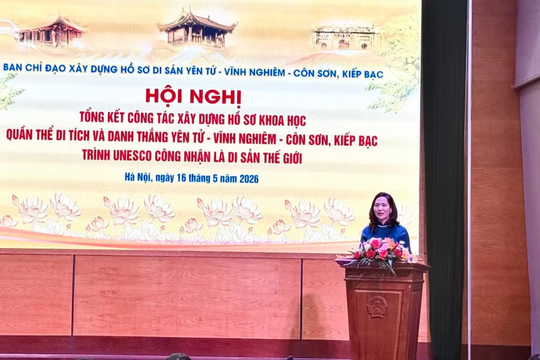
Delegations from Hai Phong and Quang Ninh also held bilateral discussions on the management and conservation of the Yen Tu – Vinh Nghiem – Con Son, Kiep Bac Complex of Monuments and Landscapes, which was recently inscribed as a World Heritage site.
Immediately after the inscription, Hai Phong translated the Government's key directives and UNESCO's recommendations into concrete actions to effectively promote the heritage's values.
At the same time, the city managed the property in accordance with Vietnamese law and the World Heritage Convention, ensuring both the preservation of its outstanding values and their creative, harmonious promotion within the framework of sustainable development.
.jpg)
The city aims to transform traditional values into a strong endogenous resource, contributing to the development of an advanced Vietnamese culture rich in national identity and serving as a driving force for the country's development in the new era.
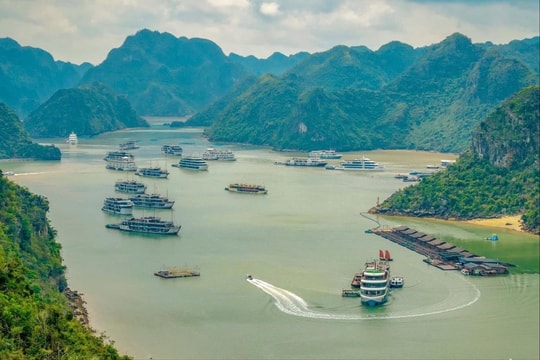
Ha Long Bay – Cat Ba Archipelago was inscribed on the UNESCO World Heritage List for its exceptional natural beauty, featuring vegetation-covered limestone islands, towering limestone peaks rising from the sea, and associated karst formations such as arches and caves.
The property is regarded as a geological museum containing heritage of outstanding universal value and preserving evidence of significant stages in the Earth's history, reflected in its primary forests, bays, and islands.
.jpg)
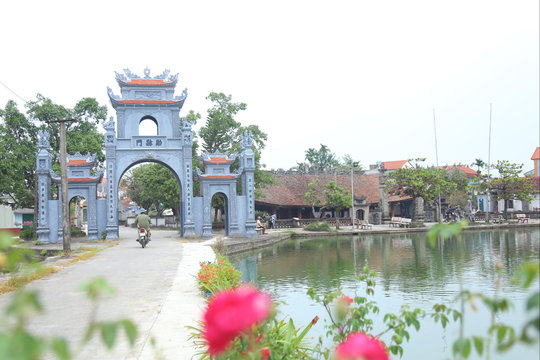
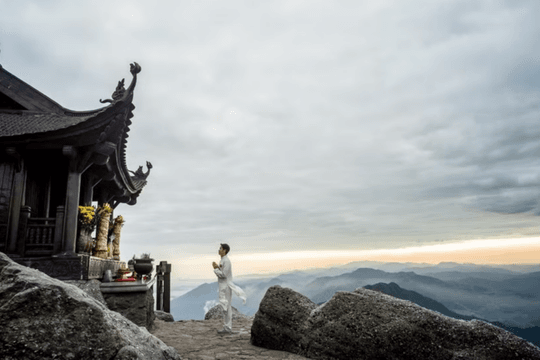
The Yen Tu – Vinh Nghiem – Con Son, Kiep Bac Complex of Monuments and Landscapes forms a continuous and unified heritage space that fully reflects the formation, development, and spread of one of Vietnam's distinctive cultural and spiritual value systems.
The heritage is closely associated with the Truc Lam Zen Buddhist School founded by King-Monk Tran Nhan Tong and embodies a uniquely Vietnamese Buddhist tradition. Within this heritage space, the ideals of peace, tolerance, compassion, and harmony with nature were formed, nurtured, and passed down through the centuries.
TIEN HUY – QUANG HANH