.jpg "Cat Ba gears up for international tourist peak season")


Gửi bình luận
Visitors to Viet Hai Village in Cat Ba Archipelago, Cat Hai Special Zone, Hai Phong City can immerse themselves in nature and reconnect with the memories of island communities.
.jpg)
Traces of a fishing village
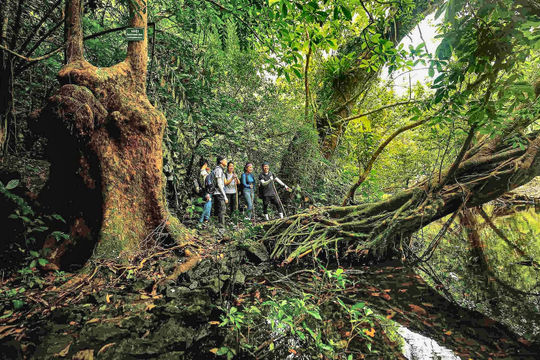
Seen from above, Viet Hai appears as a peaceful green haven surrounded by mountains and forests. To reach the village, visitors must follow narrow paths through old-growth forests or travel by boat across Lan Ha Bay. Its secluded location makes Viet Hai very different from the bustling seaside destination many associate with Cat Ba.
“Viet Hai Commune was officially established in 1948. At that time, there were only a dozen or so houses. Most residents were people who fished offshore and settled here after finding flat land,” Hoang Van Khai, a local resident, recalled.
In the 1960s, following the policies of Hai Phong City and Cat Ba District, later Cat Hai District and now Cat Hai Special Zone, Viet Hai welcomed about 20 additional households who came to the island to develop a new economic zone.
.jpg)
In the early years after its establishment, the rugged terrain made travel and trade with the outside world extremely difficult. Residents relied mainly on nature to sustain their lives. They cultivated rice fields, grew crops, raised livestock and poultry, and also harvested resources from the sea and forest to meet their daily needs. By combining different livelihoods, Viet Hai residents did not depend entirely on the sea.
The combination of fishing culture and agricultural production created the village’s distinctive way of life. In this secluded community, residents maintained close ties, shared hardships, and preserved their common customs.
Reviving a place of memories
.jpg)
Today, Viet Hai is known as a popular tourist destination in Cat Hai Special Zone, thanks to the community-based tourism model that local residents have steadily developed over the years.
Upon entering the village, visitors are greeted by the residents’ warm, genuine smiles. Locals readily share stories of their days at sea, harvest seasons, changes over time, and the period when Viet Hai was almost “inaccessible.”
Hoang The Linh, a long-time tour guide, said: “Around 1993, this place began attracting many visitors, especially international ones. Foreign tourists loved its unspoiled features, such as the well, rice fields, and pristine natural surroundings. Above all, the local people are very honest and friendly when welcoming guests.”
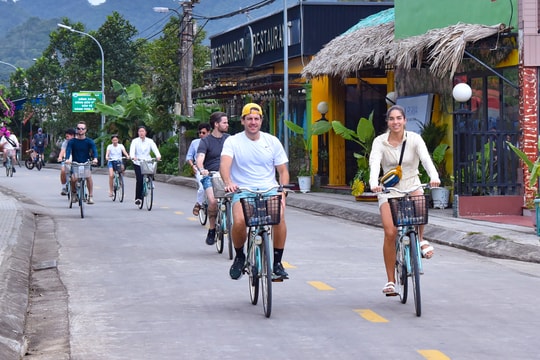
In Viet Hai, visitors can cycle leisurely along village roads, walk amid lush greenery, chat on house porches, or enjoy meals featuring local ingredients. For a community closely connected to both the sea and the land, food is also a way to preserve memories. Ingredients from the sea, gardens, and livestock are all used to create fresh, delicious dishes.
.jpg)
Moved by the warmth of the community, Emma Alice, a visitor from the United Kingdom, said: “Everyone we met was lovely, friendly, and welcoming. Everywhere we went, people greeted us with happy smiles. Everything was beautiful, from the scenery to the experiences. We will definitely recommend this place to our friends and hope to return soon.”
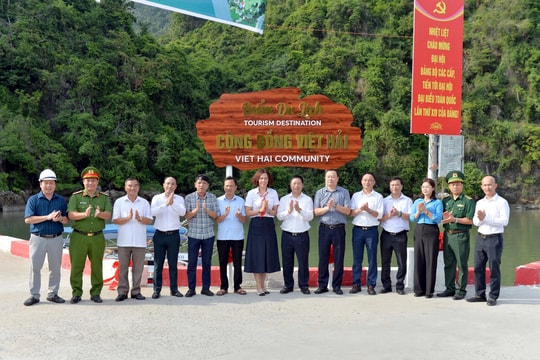
Today, Cat Hai Special Zone aims to develop Viet Hai through a community-based tourism model linked to green transition, promoting the destination while protecting the environment. Residents’ lives have also changed considerably. Families that once relied mainly on farming and fishing now have additional opportunities to welcome visitors and provide accommodation and food services.
As Cat Ba enters a period of rapid tourism development, Viet Hai faces the challenge of modernizing while preserving its identity. To achieve this, local authorities need to recognize the village’s cultural and historical values as precious assets alongside its forest and marine resources. They should also continue collecting and documenting stories from different generations and help residents pass down folk knowledge, traditional crafts, and local cuisine.
NHA PHUONG