.jpg "Hai Phong plans to rebuild ageing apartment blocks")

Gửi bình luận
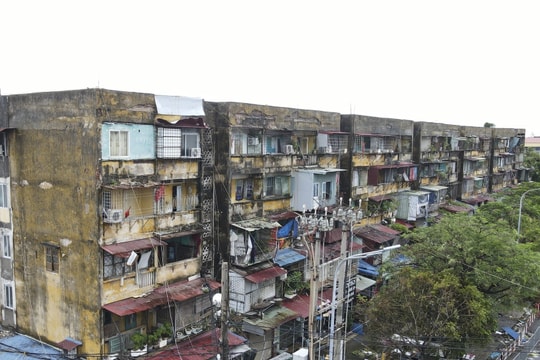
Hai Phong City has approved a policy to renovate and rebuild 177 old apartment buildings, the majority of which were constructed between 1960 and 1990.
.jpg)
On the afternoon of July 15, Mr. Le Ngoc Chau, Member of the Party Central Committee, Secretary of the Hai Phong Party Committee, and Head of the Hai Phong National Assembly Delegation, chaired a meeting of the Standing Committee of the Hai Phong Party Committee to discuss and provide opinions on several policy mechanisms.
Also attending the meeting were Mr. Do Manh Hien, Standing Deputy Secretary of the City Party Committee; Mr. Do Thanh Trung, Deputy Secretary of the City Party Committee and Chairman of the Hai Phong People's Committee; Mr. Pham Van Lap, Deputy Secretary of the City Party Committee and Chairman of the Vietnam Fatherland Front Committee of Hai Phong; members of the Standing Committee and the City Party Committee, as well as representatives of relevant departments, agencies, and local authorities.
At the meeting, the Standing Committee reviewed and discussed a draft resolution approving a proposal to relocate residents in conjunction with urban renewal and the renovation and reconstruction of 177 old apartment buildings across the city.
According to a report presented by the Party Committee of the Hai Phong People's Committee, a recent review found that the city has 177 old apartment buildings, most of which were constructed between 1960 and 1990. Among them, 66 buildings have been classified as Grade D (dangerous structures), affecting 9,193 households.
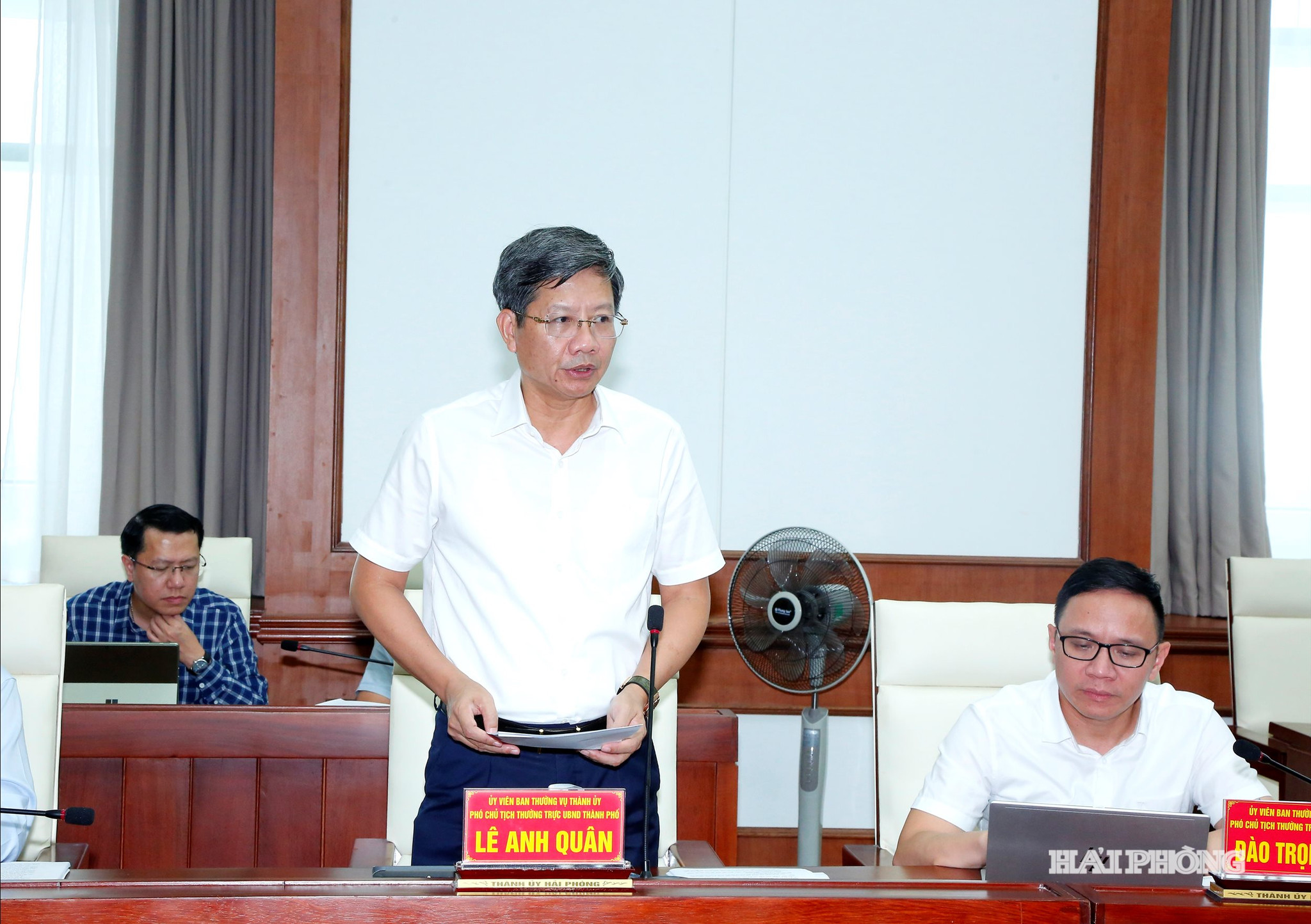
The proposal outlines an implementation roadmap for the periods 2026–2028, 2028–2030, with a long-term orientation through 2035, ensuring that implementation is aligned with the city's financial capacity. A key feature of the proposal is the diversification of funding sources by combining public investment with private-sector participation.
To address housing challenges for residents following relocation, the proposal introduces a mechanism to develop a local housing fund, creating a stock of publicly owned rental housing. It also includes policies to reduce rental costs, provide rent exemptions and reductions, and offer credit support for people with meritorious service, policy beneficiaries, and low-income households, ensuring that affected residents have stable accommodation throughout the implementation of the project.
Concluding the discussion, Mr. Le Ngoc Chau, Secretary of the Hai Phong Party Committee, stated that the Standing Committee of the City Party Committee had, in principle, agreed with the proposal. He noted that it was developed to implement Directive No. 34 of the Party Central Committee Secretariat on social housing development in the new context, incorporate the conclusions of General Secretary To Lam on housing development, and align with the policies of the Hai Phong Party Committee as well as current laws on housing, construction, and land management.
The Standing Committee assigned the Party Committee of the Hai Phong People's Committee to incorporate all comments, finalize the proposal, and submit it to the Hai Phong Party Committee for review before it is presented to the Hai Phong People's Council for approval. The Propaganda and Mass Mobilization Department of the City Party Committee, together with local media agencies, was tasked with strengthening public communication efforts to build public consensus and facilitate the effective implementation of the proposal once approved.
At the same meeting, the Standing Committee also reached broad agreement on submitting a draft resolution to the Hai Phong People's Council on naming roads, streets, and public facilities.
The draft resolution proposes names for 98 public locations, including 33 roads, 62 streets, and three public facilities. The naming process complies with legal authority, procedures, and regulations, while also reflecting the administrative restructuring and merger of localities.
The proposed resolution on naming roads, streets, and public facilities is intended to support the city's socio-economic development and the expansion of urban transport infrastructure, while promoting Hai Phong's historical and cultural heritage and fostering public consensus.
.jpg)
The Standing Committee of the Hai Phong Party Committee broadly agreed on the policy of submitting a proposal to the Hai Phong People's Council for the issuance of a resolution on naming roads, streets, and public facilities.
Secretary of the City Party Committee Le Ngoc Chau emphasized that the selection of names of historical figures and notable individuals must ensure that they are outstanding representatives with significant contributions to the country or the locality. For geographical names, priority should be given to places with historical and cultural value that have been used consistently over time and are recognized by the community.
The Party Committee of the Hai Phong People's Committee was assigned to direct relevant agencies to incorporate comments, finalize the documents, and submit them to the People's Council for consideration at the regular mid-year session in 2026.
The Standing Committee of the City Party Committee also discussed the policy of submitting to the People's Council a resolution stipulating land rental fee exemptions and reductions for socialized service facilities and non-profit projects in the city.
The development of this resolution aims to unify land incentive policies following the merger of Hai Phong City and Hai Duong Province, while establishing a consistent legal framework to encourage investment and mobilize resources for socialized sectors.
According to the draft, the city proposes full exemption from land rental fees throughout the entire lease period for socialization projects located in Cat Hai Special Zone and Bach Long Vi Special Zone (excluding certain central residential areas in Cat Hai), projects in investment-incentive sectors implemented in commune-level areas, and non-profit projects eligible for investment incentives.
The draft also proposes a 20-year land rental fee exemption for other socialization facilities that do not fall into the above categories. In addition, it introduces the highest level of incentives for multi-level education complexes that include university-level training, aiming to attract investment in the education sector.
After hearing the presentation of the draft resolution by leaders of the Party Committee of the Hai Phong People's Committee and receiving comments on the proposal, Secretary of the Hai Phong Party Committee Le Ngoc Chau stated that the Standing Committee had basically agreed with the policy.
He emphasized that this is an important policy to mobilize social resources for investment in education, healthcare, culture, sports, and non-profit activities, thereby promoting the city's potential and advantages and contributing to socio-economic development.
The development of the policy must comply with legal regulations while ensuring a balanced approach with the city's budget revenues from land rental fees. The Party Committee of the Hai Phong People's Committee was tasked with incorporating feedback from the meeting, finalizing the documents, and completing all required procedures to submit the proposal to the Hai Phong People's Council for consideration and approval at the regular mid-year session in 2026.
Le Hiep - Do Hien