


Gửi bình luận
Hai Phong took the lead in Vietnam in the 2025 FTA Index while its exports in the first eight months of 2026 hit USD 42.2 billion, requiring better support for businesses in making effective use of FTAs.
Proactively improving capacity to meet requirements
Vietnam is a party to 17 free trade agreements (FTAs) that are in force. FTAs create opportunities for goods to access markets at preferential tariff rates, but to benefit from them, businesses must meet rules of origin as well as quality, technical, labor and environmental requirements.
With more than 3,200 businesses directly engaged in import-export activities and more than 1,800 businesses producing goods for export, effective implementation of FTAs has a direct impact on Hai Phong's production and business activities.
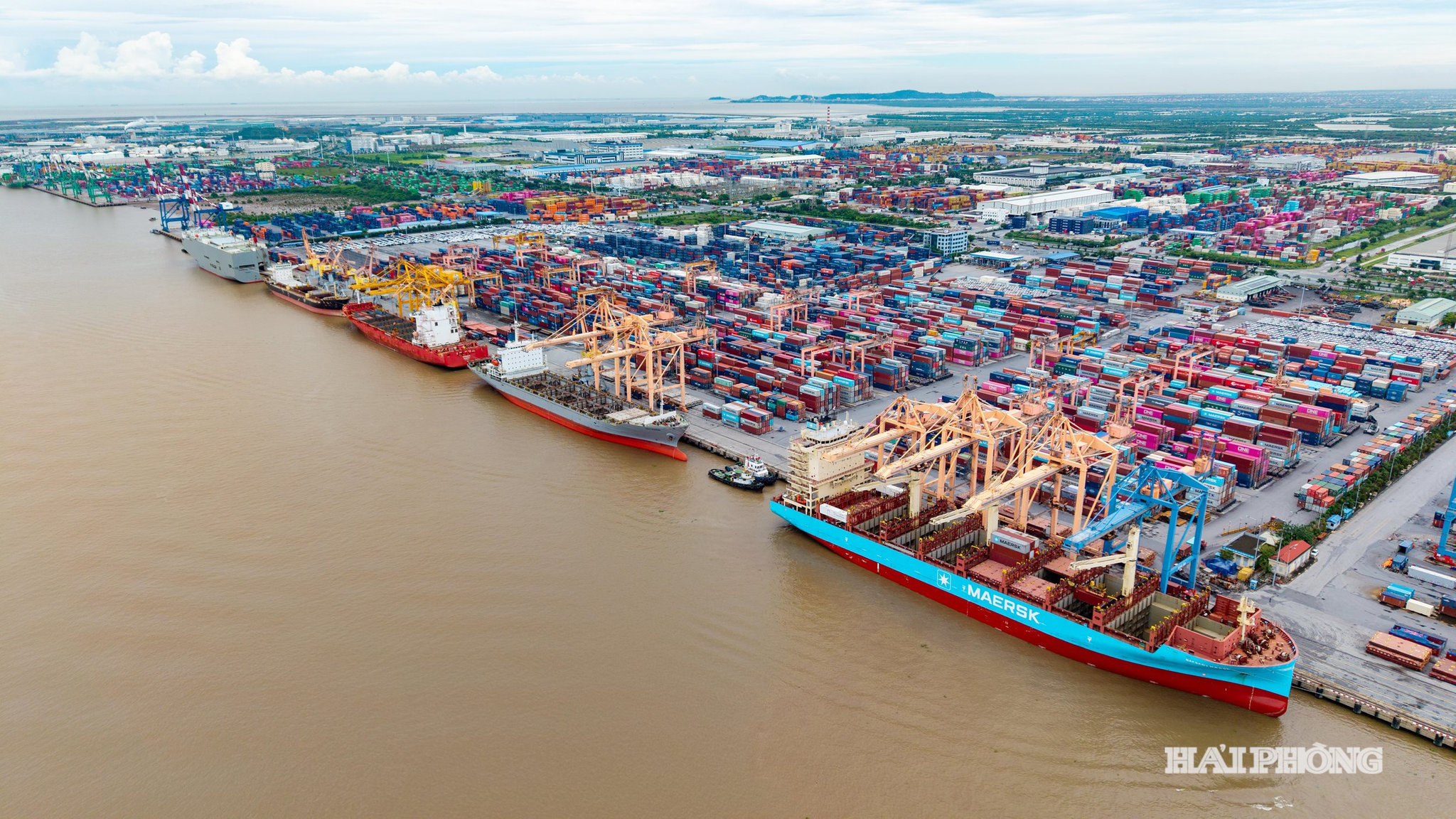
In 2025, the city's total import-export turnover hit USD 91.72 billion, with exports reaching USD 50.14 billion, up 8.5% from 2024. In the first eight months of 2026, exports amounted to USD 42.2 billion, an increase of 14.6% year on year, equivalent to 81.2% of the annual target and exceeding the projected scenario. Imports reached USD 31.1 billion, a rise of 18.56%.
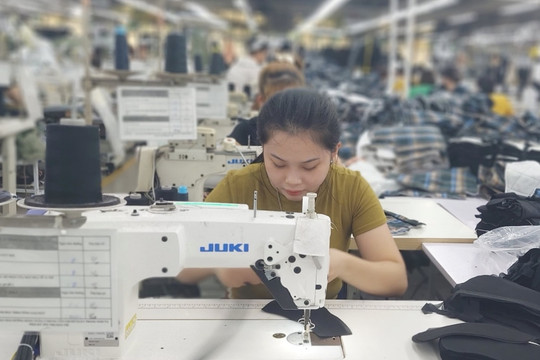
According to Do Nam Hai, Deputy General Director of May Hai JSC, whose products are mostly exported to the EU and the US, FTAs help businesses expand markets and maintain production and jobs for thousands of workers. However, tariff preferences are only a necessary condition; enterprises must continue to innovate technology, standardize processes and meet the standards of each market.
In practice, the ability to make effective use of FTAs first depends on businesses' capacity. Trade promotion helps them seek partners, while tariff preferences help reduce costs, but to maintain markets, enterprises must still ensure product quality, material sources and supply capacity.
Support tailored to businesses’ needs
.jpg)
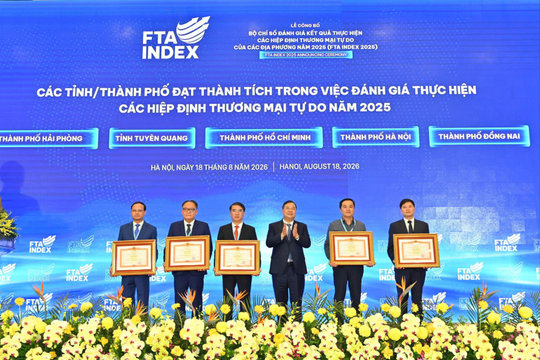
According to the 2025 FTA Index results, Hai Phong scored 35.62 out of 40 points, ranking first among 34 provinces and cities nationwide and being the only locality rated “Excellent”, while the national average was 21.66.
The city ranked first in two of the four component indicators, scoring 9.85 points for access to information and 9.4 points for enforcement of FTA-related legal regulations. The results show improvements in information provision, administrative reform and support for enterprises in complying with import-export regulations.
Since August 2025, Hai Phong has issued certificates of origin (C/Os) under the “five on-site” model at the City Public Administration Service Center. Businesses can have their applications received, assessed, approved, stamped and returned at a single point of contact, reducing the time required to complete the procedure by about 70%. Since the beginning of 2026, the city has issued about 150,000 sets of C/Os for exported goods, with a total value of about USD 7 billion.
On June 1, 2026, the Customs Sub-Department of Region III was also selected to pilot a centralized customs clearance model, helping standardize application processing procedures, shorten customs clearance time, reduce compliance costs and improve transparency and stability in import-export activities.
However, FTA implementation does not stop at quickly processing C/Os and import-export procedures. Businesses also need guidance on rules of origin, documentation for materials, technical standards and risks in import markets.
Relevant agencies need to strengthen early warnings about trade defense, policy changes, environmental standards and emissions regulations, helping enterprises promptly adjust materials, production processes and export documentation.
Speaking at the ceremony announcing the 2025 FTA Index organized by the Ministry of Industry and Trade in late August, Hoang Minh Cuong, Vice Chairman of the Hai Phong People's Committee, emphasized that Hai Phong views the FTA Index as a tool for governance and reform, rather than pursuing rankings.
According to the Vice Chairman, tariff preferences are an opportunity, but product quality, digital capacity and supply chain management determine businesses' ability to develop. Therefore, the effectiveness of FTA implementation needs to be reflected in Hai Phong enterprises’ ability to expand markets, increase localization rates and enhance their competitiveness.
LE HIEP