
Gửi bình luận
Vietnam’s aviation sector is stepping up a roadmap to adopt sustainable aviation fuel (SAF), shift to greener equipment and optimize operations, as it gradually cuts greenhouse gas emissions in line with national targets.
The Civil Aviation Authority of Vietnam has issued a directive to its agencies to strengthen energy-saving measures and accelerate the energy transition.
In line with Politburo Resolution No. 70-NQ/TW dated Aug. 20, 2025 on ensuring national energy security to 2030, with a vision to 2045, the authority has asked airport authorities to encourage airport operators, air navigation service providers and airlines to proactively draw up plans to convert ground vehicles to electric and green-energy alternatives, following a roadmap set out in Prime Minister Decision No. 876/QD-TTg dated July 22, 2022.
Under the plan, in the 2027–2030 period, agencies will study the use of alternative fuels to partly supplement conventional aviation fuel, while completing databases on energy use and fuel consumption across aviation enterprises.
From 2035, at least 10% of fuel used on some short-haul flights is targeted to be sustainable fuel. All newly invested vehicles will be required to run on electricity or green energy.
By 2040, all vehicles will shift to electricity or green energy, except for specialized equipment where alternatives are not yet feasible. Looking further ahead, from 2050, the sector aims to use 100% green energy and SAF for aircraft, minimizing greenhouse gas emissions, with remaining emissions offset to achieve net-zero.
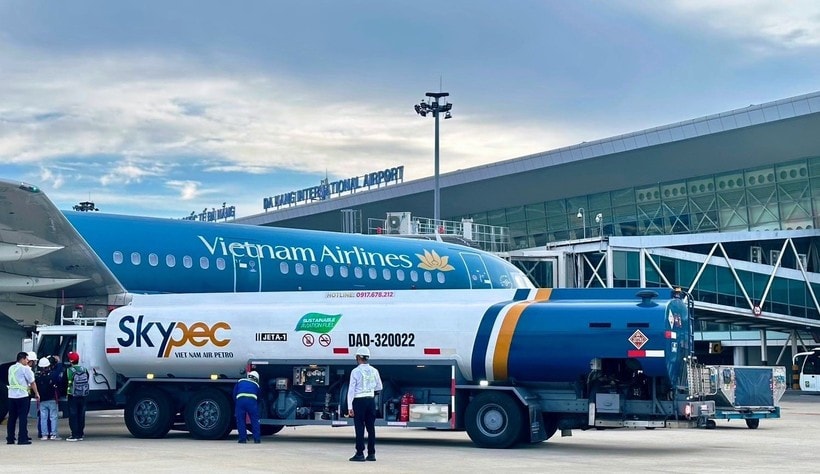
As part of this roadmap, Vietnam Airlines has become the first Vietnamese carrier to use SAF on flights departing from Europe. Since Jan. 1, 2025, all its flights from European airports have used SAF at a minimum blend of 2%, expected to rise to 6% by 2030, 20% by 2035 and 70% by 2050.
The airline has also introduced SAF on several domestic routes, underlining its commitment to cutting emissions and promoting green aviation in Vietnam. According to Dinh Van Tuan, deputy chief executive of Vietnam Airlines, SAF can cut up to 80% of greenhouse gas emissions over its lifecycle, marking a key step towards net-zero by 2050.