


Gửi bình luận
The number of elderly people continuing to work after retirement is increasing in Vietnam, not only to supplement their income but also to maintain an active lifestyle and stay connected with everyday life.
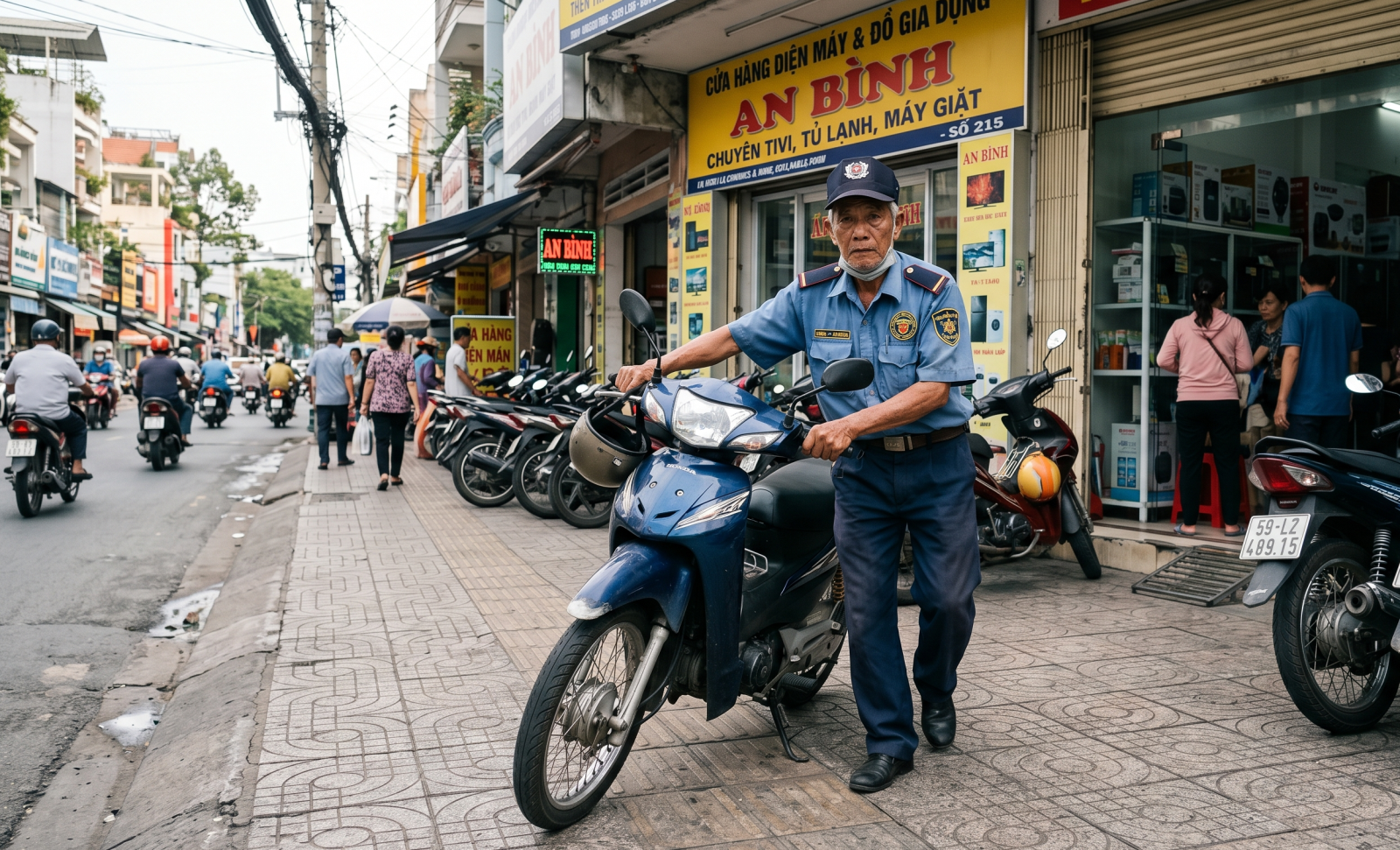
Mr. Nguyen Xuan Hue from Khanh Hoa Province received his retirement decision at the age of 60, but he hardly had any period of truly stopping work. Instead of choosing a leisurely retired life, he began working in newspaper distribution because he realized he was still in good health and wanted to maintain a busy daily routine.
Every early morning, while many people were still asleep, he would already be at post offices and newspaper agencies to collect newspapers before personally delivering them to customers, including agencies, businesses, and individual subscribers. He continued this work for many years until his health gradually declined and the print newspaper market changed significantly.
When he was no longer physically able to deliver newspapers himself, Mr. Hue shifted to finding customers from home and hired younger workers to handle deliveries on his behalf. Although profits decreased, the job still provided him with an additional income of around VND 3–5 million per month alongside his pension of more than VND 7 million.
Mr. Nguyen Xuan Hue shared that, at retirement age, work is not simply about earning money but also helps him stay mentally sharp, maintain joy in life, and keep an active daily rhythm. Only when he turned 79, as his health weakened and his family encouraged him to rest, did he finally stop the work that had accompanied him for nearly two decades after retirement.
Mr. Hue’s story partly reflects a growing reality in Vietnam, where more elderly people continue working instead of fully retiring. It is no longer unusual to see grey-haired ride-hailing drivers or senior experts still working in offices.
According to the report “Redefining Retirement: Retirement Diversity in Asia” conducted by Sun Life Asia, up to 70% of survey respondents in Vietnam said they had already continued working or planned to continue working after retirement age. The phenomenon of “retired but still working” is therefore no longer an isolated case but an increasingly visible social trend.
The survey found that the motivation for elderly people to keep working is not solely financial. Among those planning to extend their working years, 52% wanted to maintain a sense of purpose in daily life, 48% wished to continue social interaction, and 39% viewed work as a way to stimulate intellectual activity.
However, financial factors remain the biggest reason. Up to 60% of respondents said they needed additional income to cover living expenses after retirement. This pressure is even greater in the context of many Vietnamese families still maintaining financial responsibilities toward children or relatives.
The survey also showed that nearly 89% of respondents expected to continue financially supporting their families even after retirement. As a result, many have had to lower expectations for retirement travel or postpone plans for true rest and relaxation.
Besides economic factors, health is also a key condition determining whether people can extend their working years. About 45% of those continuing to work said they were able to do so thanks to good physical health, while 44% said mental sharpness helped them maintain their jobs longer. On the other hand, unexpected illnesses often force many people to stop working earlier than planned.

The trend of working beyond retirement age is driven not only by personal needs but also by changes in social security policies. During the 2025–2026 period, the labor market has begun to feel the impact of the 2024 Law on Social Insurance, which took effect on July 1, 2025.
One of the notable changes is the reduction of the minimum social insurance contribution period required to receive a pension, from 20 years to 15 years. At the same time, the roadmap for increasing retirement age under the 2019 Labor Code and Decree No. 135/2020 continues to be implemented. From 2026, the retirement age under normal working conditions will be 61 years and 6 months for men and 57 years for women.
According to social security experts, reducing the contribution requirement is considered a humane adjustment aimed at expanding pension system coverage. However, the principle of “contribution-based benefits” also creates significant pressure. With only 15 years of social insurance contributions, the starting pension level is around 40% for men and 45% for women, making it difficult to fully meet real living expenses.
Reports from employment service centers under Departments of Home Affairs in many localities show that the number of workers over 60 seeking part-time or flexible jobs is increasing. This clearly reflects the pressure to maintain income during retirement years.
In this context, the issue of personal financial preparation for old age is becoming increasingly urgent. A Sun Life survey found that 14% of respondents had never made a retirement plan, while 26% only began preparing within two years before leaving work.
Only around 24% of elderly respondents said they felt confident about their financial situation in retirement. Among those already retired, 21% experienced difficulties because their spending exceeded expectations, and only 9% believed their retirement life matched their original expectations.
Ms. Lay Hoon Tan, Chief Executive Officer of Sun Life Vietnam, said expectations for a more proactive and fulfilling retirement lifestyle are increasing, but in reality many people still lack adequate financial preparation. According to her, early financial planning along with long-term savings and protection solutions can help individuals become more proactive against risks and build a solid financial foundation for old age.
As more people believe retirement should be a personal choice rather than a mandatory point to stop working, the challenge lies not only in social welfare policies but also in each individual’s ability to proactively prepare for post-retirement life.
Hai Phong News