
Gửi bình luận
School health care helps promote students' physical and mental well-being, enabling them to study and participate in physical activities effectively.
Prioritizing health from early childhood
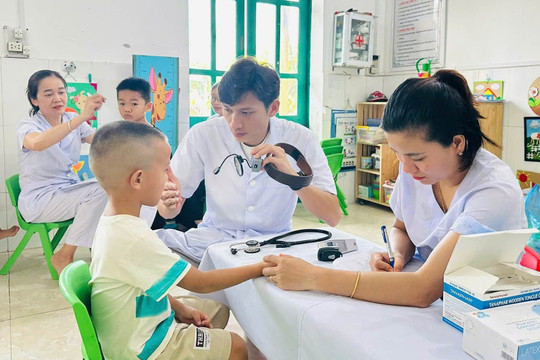
At An Phuong Kindergarten in Ha Tay Commune, nearly 500 children have underwent health checkups in an organized and orderly environment. They received examinations and monitoring of basic health indicators to assess their physical condition, nutritional status and any signs of abnormalities. The results provide the school and parents with information about each child's health, enabling them to adopt appropriate care and nutrition plans.
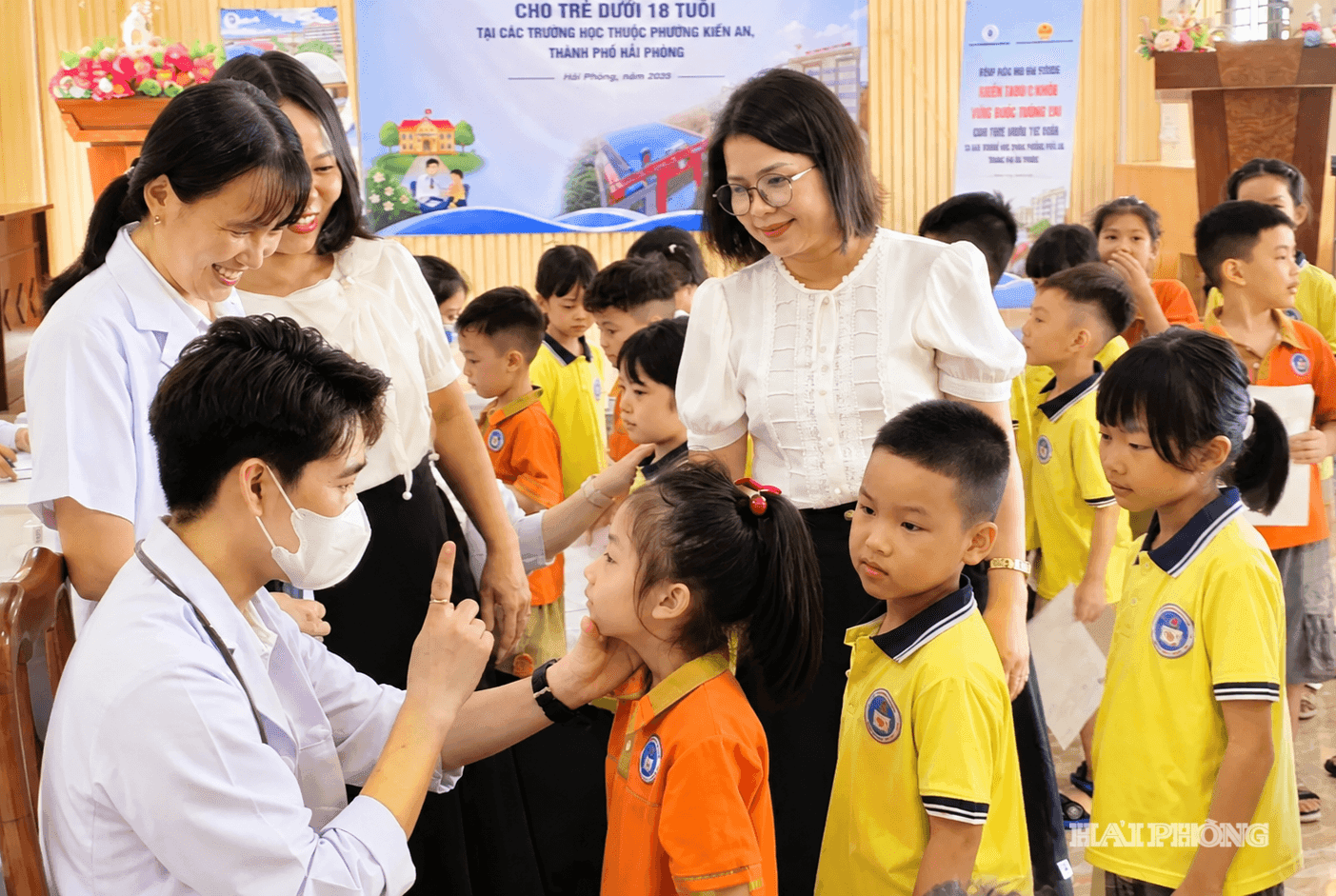
Beyond An Phuong Kindergarten, many educational institutions across the city have partnered with the health sector to organize medical examinations and screenings for students, with increasingly specialized services.
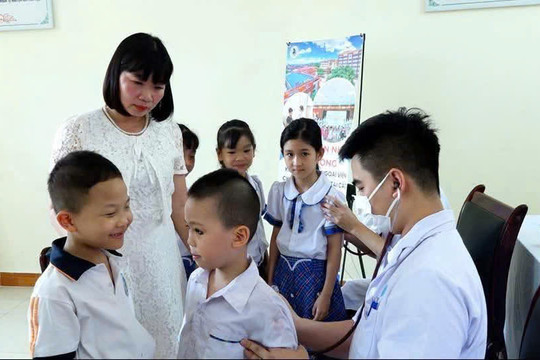
Recently, Hai Duong Children's Hospital organized a voluntary medical examination and treatment program for 450 children at Lien Hong Kindergarten in Thach Khoi Ward. In addition to general examinations and assessments of physical condition and nutrition, the children received ear, nose and throat examinations, surgical consultations and screening for neurodevelopmental conditions such as speech delays, autism spectrum disorder and attention-deficit/hyperactivity disorder (ADHD). Parents also received nutritional advice and guidance on health care, while children requiring further monitoring or intervention were referred for specialized examinations.
Over the past time, Hai Phong has implemented school health care and school-based medical programs in coordination with grassroots health services, gradually establishing regular health care activities in educational institutions. To date, 100% of public schools have had medical rooms, essential medicine cabinets and clean water for daily use. All students have received health checkups, nutritional assessments and electronic health record management. More than 90% of schools have established school counseling teams, an increase of 12 percentage points compared with the previous school year.
These activities demonstrate that school health care goes beyond routine medical examinations to focus on early detection, monitoring and support in addressing health issues at the grassroots level. With coordination among schools, families and health facilities, detected abnormalities can be monitored and addressed promptly, minimizing their impact on children's development.
Comprehensive care for both physical and mental health
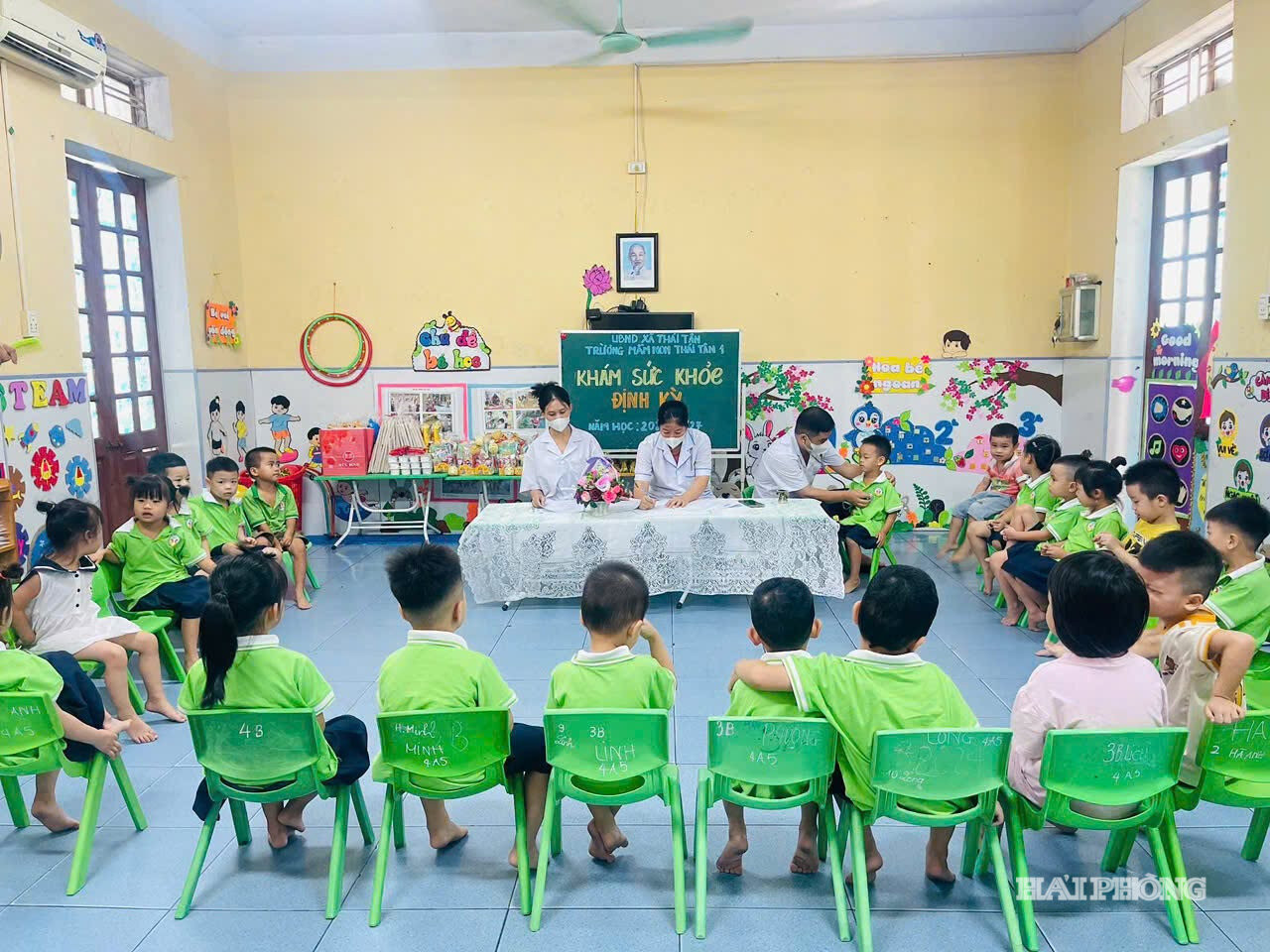
On June 1, 2026, the Prime Minister issued Decision No. 973/QD-TTg approving the School Health Program for 2026 – 2035. To implement the program, the Hai Phong People's Committee has developed an action plan aimed at strengthening the protection, care and management of the health of children, trainees and students and, at the same time, creating a safe and healthy educational environment.
By 2030, the city aims for 100% of educational institutions to have dedicated medical rooms equipped with essential medicines and medical equipment. All children and students are expected to have their nutritional status monitored and receive periodic health checkups or disease screenings at least once per school year.
The city also aims for all educational institutions to provide communication and education on health care, nutrition and mental health. Health insurance coverage among learners is targeted to exceed 98%.
According to Do Duy Hung, Deputy Director of the Department of Education and Training, Hai Phong has 1,608 educational institutions with more than 1 million students. To implement the program, the department is focusing on reviewing and supplementing educational content on nutrition, physical activity, mental health, disease prevention and control, school-related health conditions and first-aid skills, tailored to each educational level. It is also directing educational institutions to improve psychological counseling, life-skills education, and measures to prevent school violence and cyberbullying.
From health checkups at kindergartens to counseling, screening and health management activities at different educational levels, school health care is being maintained regularly, with follow-up monitoring and support after examinations. When physical health is safeguarded, mental well-being receives due attention and abnormalities are promptly detected, students are better equipped to study, practice and develop harmoniously in terms of physical fitness, intellect and character.
NGOC HAN