.jpeg "Speeding up Hai Phong Climate Adaptation Development Project")


Gửi bình luận
Hai Phong is a coastal area directly impacted by climate change.
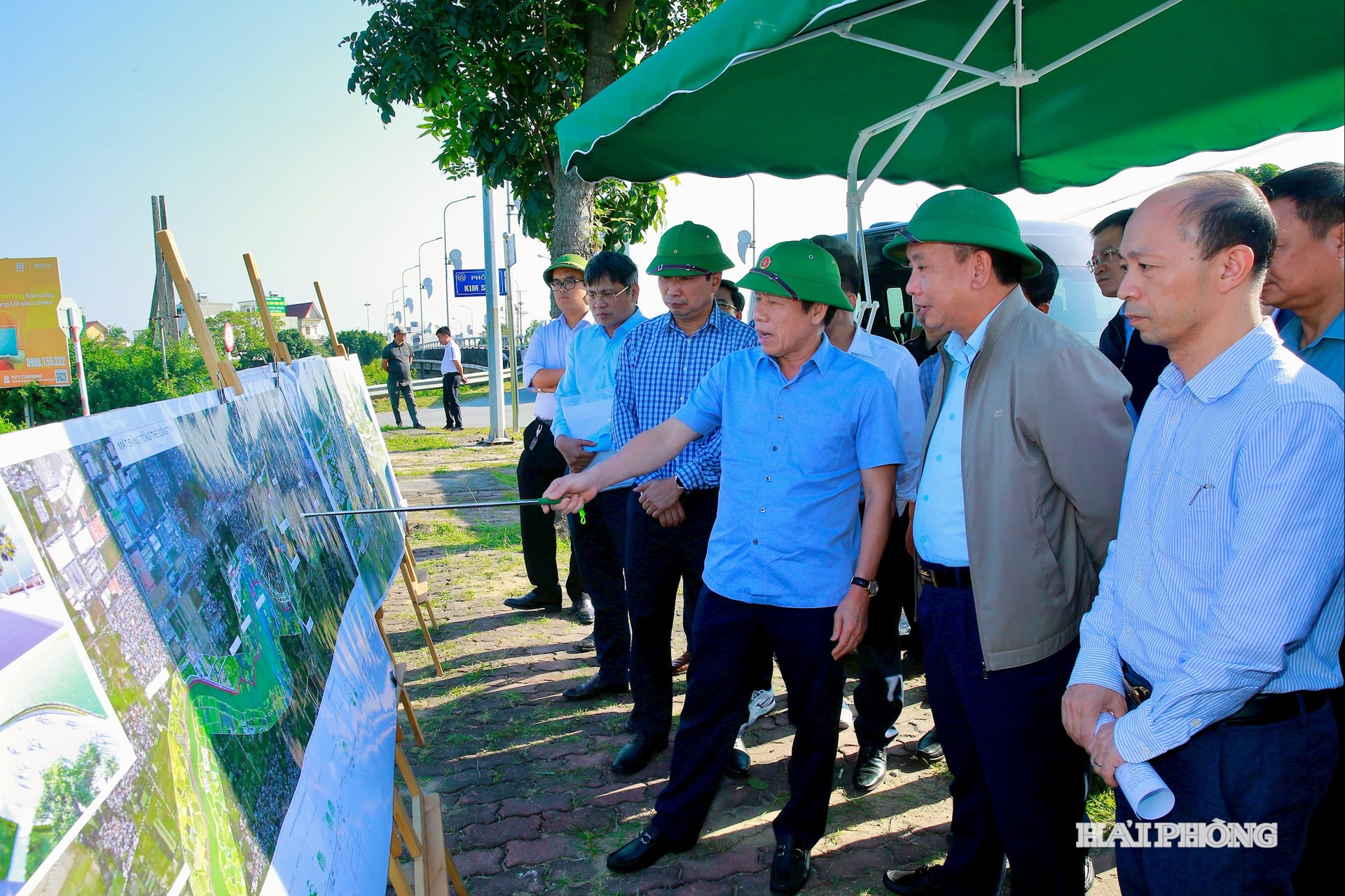
Over the past half month, Le Tien Chau, Member of the Party Central Committee, Secretary of the Hai Phong Party Committee, and Head of the city Delegation of National Assembly Deputies, has directly inspected the progress of the Hai Phong Development Project for Climate Change Adaptation; the construction of the Sat river embankment from Cay to Cat bridges (Kim Son river); and the renovation and upgrading of the right dyke of the Thai Binh river from km9+600 to km48+752. These are projects related to the city’s disaster prevention and climate change adaptation efforts.
In the context of increasingly extreme and unpredictable climate change, and the consequences caused by storms and heavy rains over the past time, the city leadership’s regular inspections and review of disaster prevention infrastructure are timely and necessary, conveying a strong message from the head of the city Party organization about strengthening the Party’s leadership in prevention, response, and recovery from natural disasters.
In recent years, alongside investment in transport infrastructure, Hai Phong has allocated appropriate resources to develop and improve its dyke and irrigation systems. This has been clearly demonstrated through the “test” of Typhoon No. 3 (Yagi) in 2024 and subsequent storms and heavy rains in 2025.
Natural disasters require the city, its departments, sectors, localities, and forces to remain alert and avoid complacency since climate change is increasing the intensity and frequency of extreme weather events, especially storms and floods, causing severe damage to lives, economy, and infrastructure.
Hai Phong is a coastal area directly impacted by climate change. After the merger with Hai Duong province, Hai Phong became the locality with the largest dyke system in the Red River Delta, with 43 dyke lines totaling 789.2 km in length, 175.6 km of embankments, and 662 sluices.
Across the city, especially in the eastern area, highly sensitive to storms and rainfall, more than 5 km of critical dykes remain at high risk of unsafety and nearly 60 km of unstable dykes need reinforcement. Urban flooding in both the east and west has become increasingly severe during heavy rains, while saltwater intrusion continues to negatively affect agricultural production and daily life.
The investment in works and projects in this field is essential and must be accelerated.
For the Hai Phong Development Project for Climate Change Adaptation, the project approval process needs to be expedited in January 2026, and negotiations for an ODA loan agreement should be completed in June 2026. Component 3 of the project will begin construction in the first quarter and be completed before the 2026 stormy season.
For the Sat river embankment project and the upgrading of the right dyke of the Thai Binh river, relevant agencies must urgently complete necessary procedures, submit an investment proposal in the first quarter of 2026, and strive to begin construction within the year.
The city’s proactive approach to disaster prevention and climate change adaptation through concrete projects and works reflects a strategic, fundamental, and long-term vision aimed at minimizing damage. Solutions such as undergrounding the power system in the central area, investing in water supply and drainage, improving urban transport, and expanding green spaces not only address immediate challenges but also ensure long-term safety and sustainability for Hai Phong’s development.
PHAM CUONG