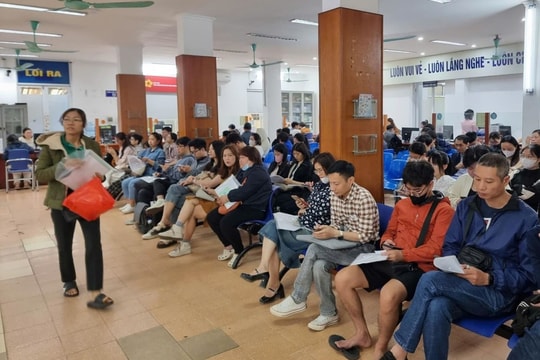
.jpg "Hai Phong boosts efforts to expand social insurance coverage")


Gửi bình luận
The concept of the ‘silver economy’ is gaining prominence as a key trend linked to rapid global population aging.

Indispensable trend
A United Nations report indicates the world currently has about 760 million people aged 65 and above, projected to reach 1.6 billion by 2050. This sharp rise in the elderly population has spurred specific consumer demands, fueling silver economy growth and its increasing economic share.
The silver economy covers core sectors like healthcare, entertainment services, elderly housing, finance-banking, labor-employment, education-training, technology, transportation, and nutrition. Geriatric medical services, long-term care, smart devices, and specialized nutritional products are among the fastest growing industries.
The silver economy comprises two main areas. First, elderly individuals' direct economic participation via experience, knowledge, and financial resources. Second, service sector development for seniors, spanning healthcare, spiritual well-being, products, and assistive technologies.
Beyond economic benefits like job creation, market expansion, and GDP contributions, the silver economy carries deep social value by enhancing elderly quality of life, alleviating social security pressures, and ensuring societal stability. In nations like Japan, Germany, France, and China, it is affirmed as a major new growth engine with expanding market scales.
In Vietnam, population aging accelerates swiftly. The number of people aged 65 and above is expected to rise to nearly 18 million by 2030, up almost 4 million from 2024. This brings challenges and opportunities, intense social security strains alongside impetus for innovative, rapid, sustainable growth models.
Taking advantages of potential effectively

Experts see population aging as not just a challenge but a ‘golden opportunity’ for new economic sectors. As Vietnam advances growth model shifts toward knowledge, green, and digital economies, silver economy policy research and planning gains vital importance for social security, sustainable growth, and elevating national standing in the new era.
A national silver economy strategy must integrate into the broader economy, linking it to social security consolidation. In which, the State plays the role of orientation, developing mechanisms and policies as well as creating a favorable environment, while businesses and economic sectors proactively invest in and develop products and services according to market needs.
With suitable strategies and solutions, the silver economy promises to emerge as a new economic pillar, boosting elderly well-being while fueling sustainable growth momentum in the new situation.
Hai Phong News