


Gửi bình luận
Hai Phong is implementing a coordinated range of policies to support livelihoods, provide vocational training and create jobs, helping poor households increase their incomes and achieve sustainable poverty reduction.
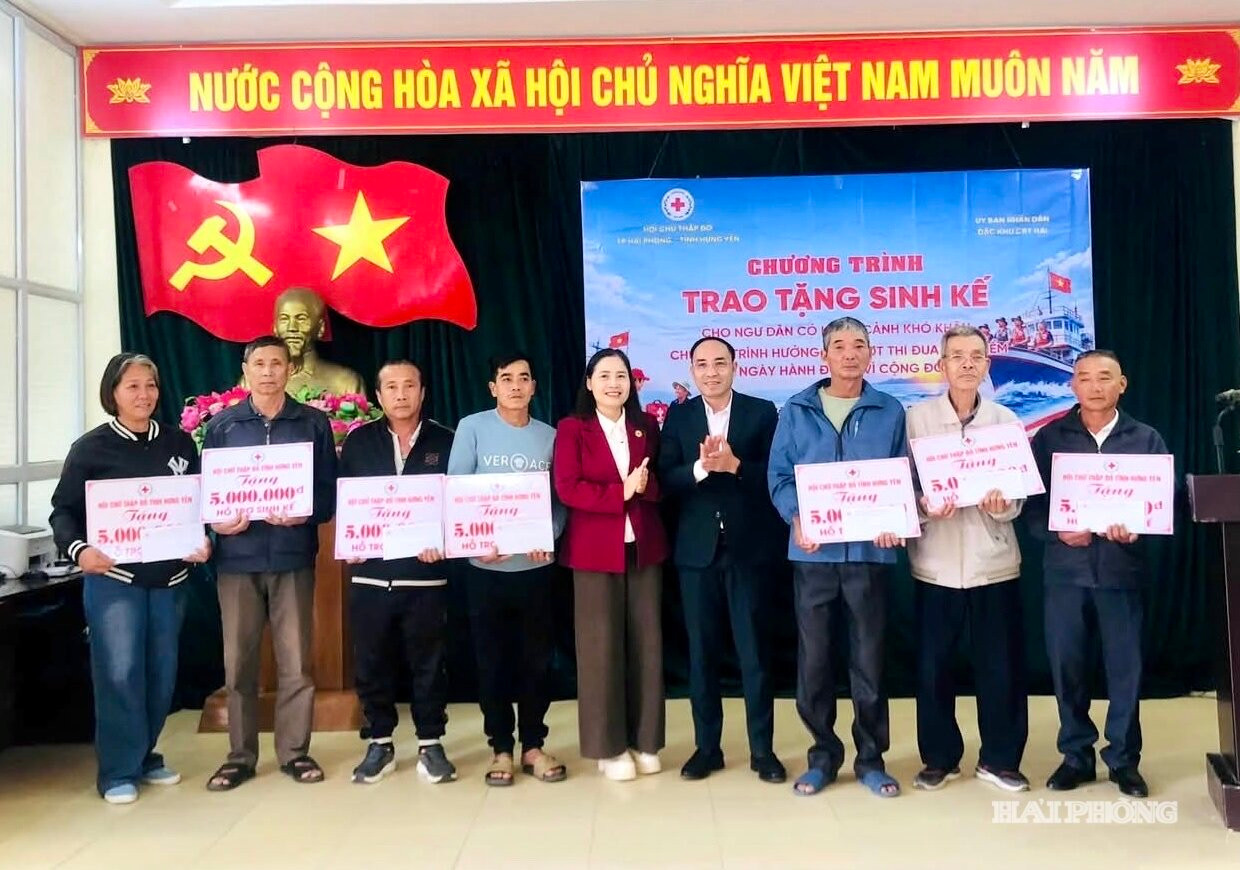
On November 11, the Hai Phong Red Cross Society, in coordination with the Hung Yen Red Cross Society, held a program to provide livelihood support to 20 disadvantaged fishermen in Cat Hai Special Zone. Each fisherman received VND 5 million in assistance. The program was part of the 2022–2027 initiative entitled "Safety for Poor and Disadvantaged Fishermen", helping spread humanitarian values throughout the community.
According to the Vietnam Fatherland Front Committee of Hai Phong City, by the end of September 2026, a total of 1,674 poor households had identified their needs and proposed forms of assistance. A review of the causes of poverty found that 517 households had no or insufficient agricultural land, 503 lacked capital for production and business activities, and 422 had no or insufficient production tools and equipment, among other difficulties.
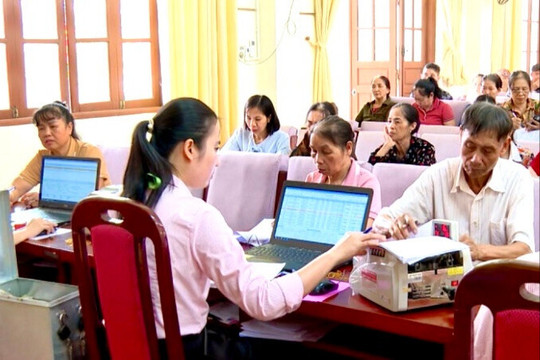
Despite his physical limitations, Mr. Pham Van Quyen, a resident of Vinh Hai Commune, has always been determined to overcome hardship. Through the Hai Phong Association of Victims of Agent Orange/Dioxin, he gained access to a preferential loan of VND 10 million. "With this money, my family will buy more livestock and expand production, hoping to overcome our current difficulties caused by a lack of capital," Mr. Quyen said.
To achieve sustainable and substantive poverty reduction, financial assistance and donations of production equipment alone are not enough. More importantly, solutions are needed to help people establish stable livelihoods, develop production skills and gradually increase their incomes.
Mr. Nguyen Cong Duc, Chairman of the Vietnam Fatherland Front Committee of Tan Ky Commune, said the commune currently has 20 poor households. To help them improve their living conditions, local socio-political organizations have implemented a range of practical initiatives. These include the Commune Veterans Association presenting savings passbooks, while the Women's Union and Youth Union have helped residents access funding through savings and loan groups, organized technical training sessions and provided guidance on agricultural production development.
In 2026, the commune's Vietnam Fatherland Front Committee aims to implement the "Community Welfare" model in all 12 out of 12 villages, mobilizing local residents and production and business establishments to support vocational training and job creation for members of poor and near-poor households.
Alongside direct livelihood support, the city has introduced a range of mechanisms and policies to help residents maintain stable living conditions after escaping poverty.
Under Resolution No. 04/2026 of the Hai Phong City People's Council, monthly income support is provided to certain members of poor and near-poor households, as well as households that have moved out of poverty or near-poverty, during the 2026–2030 period. In 2026, eligible residents living in communes and special zones will receive VND 1.5 million per person per month. This amount will increase to VND 2.2 million per person per month from 2027 to 2030.
Resolution No. 29/2026 of the City People's Council, which provides support for training in 14 occupations during the 2026–2030 period, creates more opportunities for workers, including those from poor and near-poor households, to acquire vocational skills and transition to new jobs.
In 2026, the city is implementing employment support policies under Decree No. 338/2025. Under the policy, workers can access loans of up to VND 200 million to create jobs and receive vocational training tuition support of up to VND 4 million per person per course. Production and business establishments are eligible for loans of up to VND 10 billion, capped at VND 200 million per worker.
According to Mr. Dinh Minh Tuan, Deputy Director of the Department of Education and Training, in September and October 2026, 23 vocational training courses for rural workers were conducted in communes including Nguyen Giap, Yet Kieu, Nam An Phu and Gia Phuc, as well as Kien Minh, with more than 800 participants.

The training courses help workers from disadvantaged families gain access to new production techniques, modern farming practices, processing technologies, safe livestock farming methods and non-agricultural vocational skills. This helps improve productivity and product quality while enhancing their ability to adapt to labour market demands.
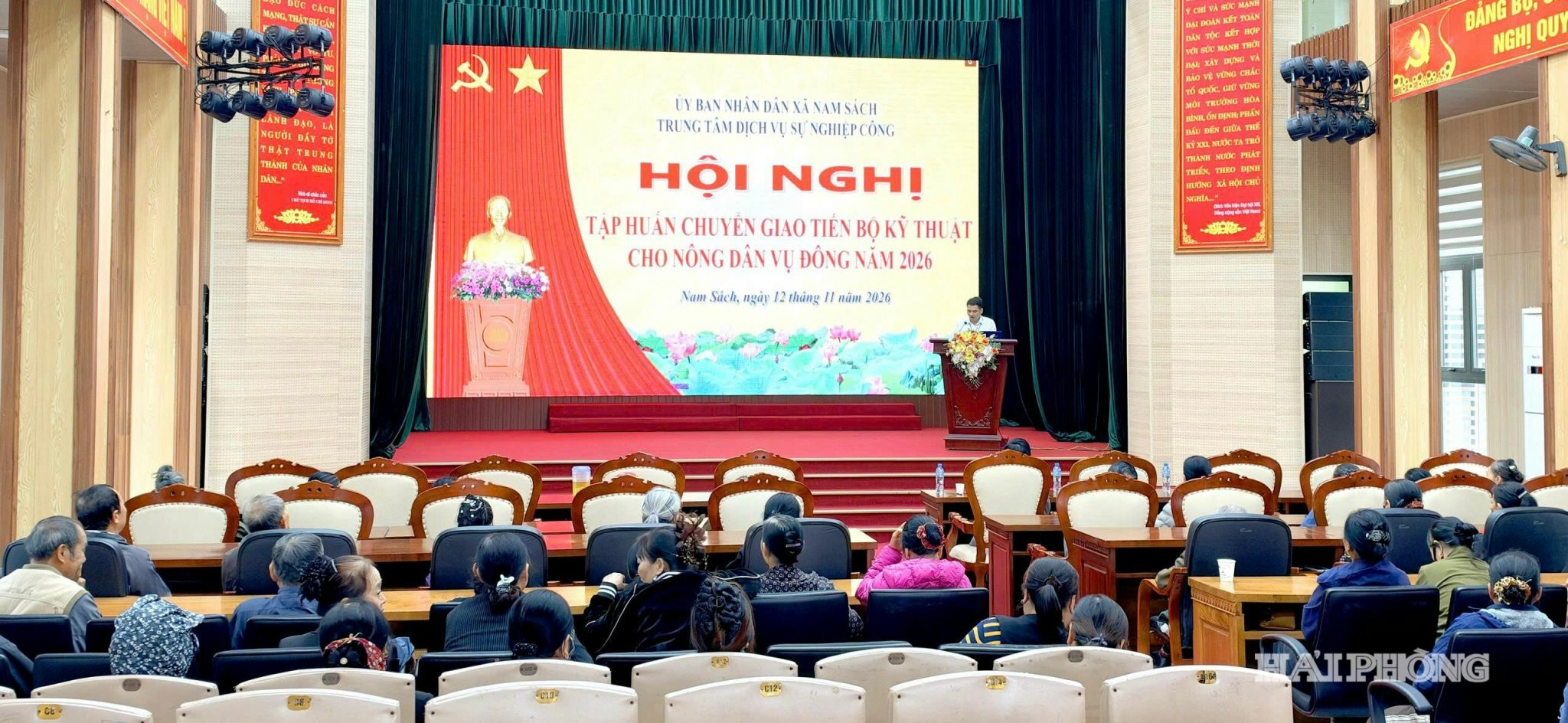
From 2027, the national multidimensional poverty standards will be raised. According to Mr. Nguyen Duc Anh, Vice Chairman of the Nam Do Son Ward People's Committee, the ward has organised training sessions on reviewing poor and near-poor households in 2026 and for the 2027–2030 period. Participants included officials from specialised departments and neighbourhood group leaders.
The training focused on new documents governing the National Target Programme for Sustainable Poverty Reduction and support policies for poor and near-poor households. This will help ensure that the review process is accurate, open, transparent and reaches the right beneficiaries, providing a basis for developing appropriate support measures and improving the effectiveness of local poverty reduction efforts.
Following the launch of the emulation campaign “For the Poor – Leaving No One Behind”, the Vietnam Fatherland Front Committee of Hai Phong City has mobilised resources from various sources and encouraged the participation of its member organisations to complete the review and classification of households. Priority is being given to households with the potential to escape poverty immediately after receiving support for housing, employment, livelihoods, capital and other urgent needs during 2026.
Mr. Bui Van Bac, Vice Chairman of the Vietnam Fatherland Front Committee of Hai Phong City, emphasised that in 2027, the city-level Fatherland Front Committee would focus on addressing difficulties and bottlenecks in poverty reduction efforts, while expanding models in which local authorities, businesses, organisations and individuals join hands to support poor households.
Huy Dai