-41a3c26edc0545a9c0e0d50b8919a692.jpg "Container throughput at Vietnam's seaports maintains strong growth momentum")

Gửi bình luận
Hai Phong’s seaport sector posted strong growth in early 2026, with new shipping routes launched and deep-sea shipping activity on the rise.
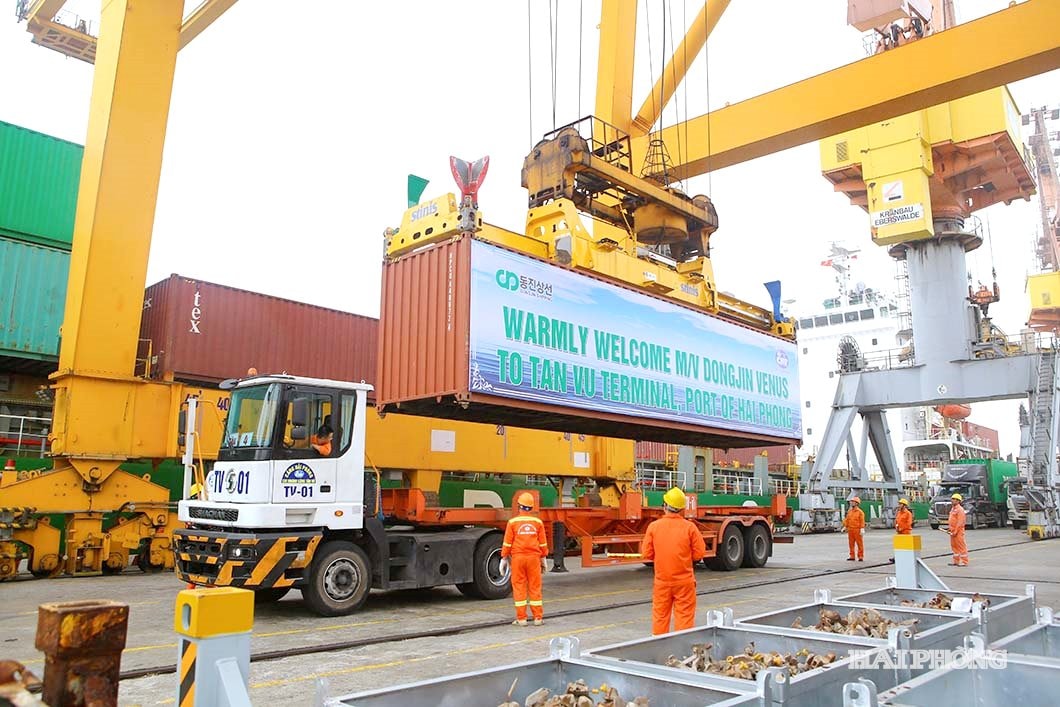
In late March, Hai Phong Port JSC welcomed the vessel Dongjin Venus at its Tan Vu terminal, marking the launch of a new container service linking Hai Phong with Northeast Asia.
The route Incheon - Qingdao - Hai Phong - Shekou - Xiamen - Incheon provides direct links between Vietnam, South Korea and China.
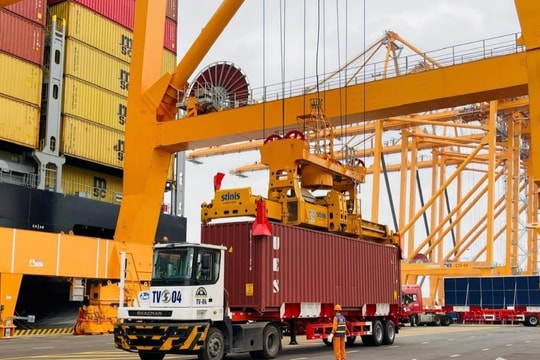
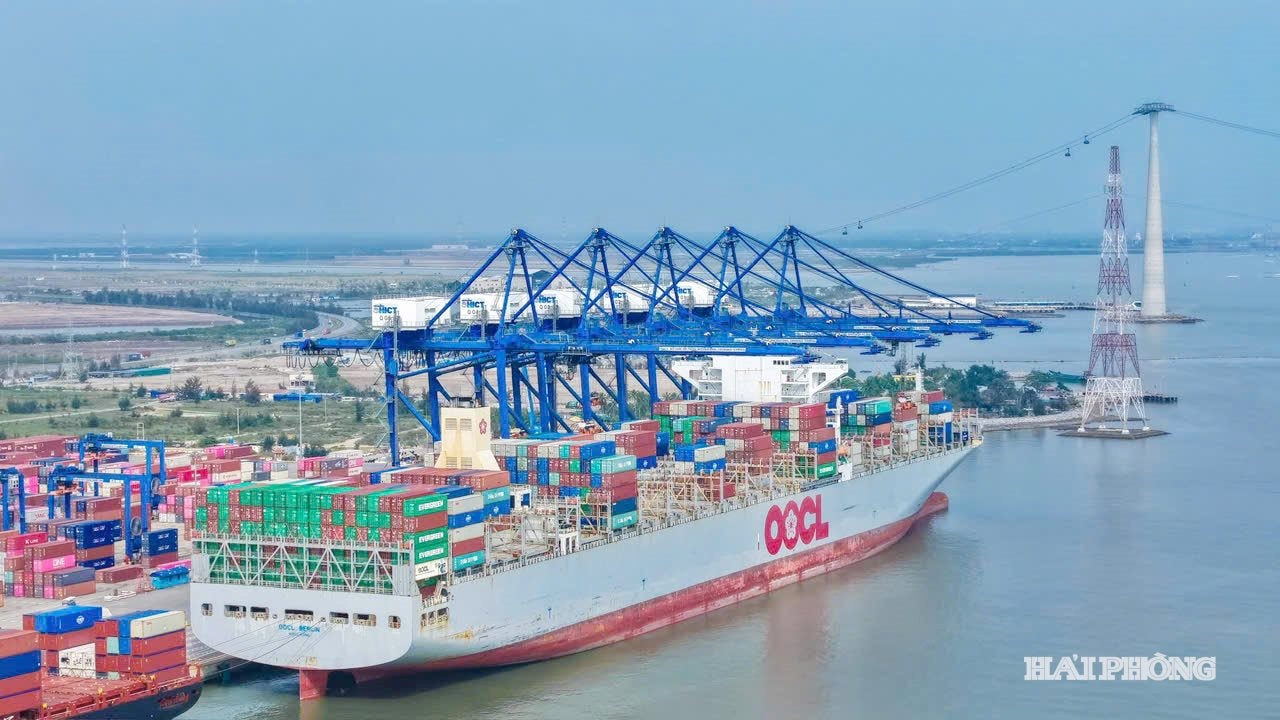
Earlier, on March 16, Tan Cang Hai Phong International Container Terminal, or TC-HICT, received the OOCL Berlin at its Lach Huyen deep-water port. The vessel, measuring 366.4 meters in length, has a maximum capacity of 13,208 TEUs.
It was the first call under OOCL’s PCC1 service, marking an expansion of international shipping services in northern Vietnam.
The PCC1 route directly links Hai Phong with Ningbo, Shanghai, Busan, Long Beach, Ningbo, Yangpu and back to Hai Phong.
The call underscored TC-HICT’s ability to handle mega container vessels and reinforced Hai Phong’s role as northern Vietnam’s key international gateway port.
According to the Hai Phong Maritime Administration, the port handled more than 10,000 vessel calls in the first quarter of 2026, despite disruptions to global shipping and logistics caused by conflict in the Middle East.
Total cargo throughput reached more than 28.3 million tons, up 6.4% from a year earlier.
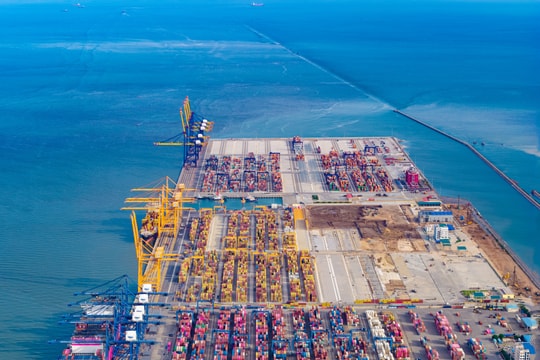
Cargo volumes at the Lach Huyen deep-water port continued to rise sharply.
Major global shipping lines, including Maersk, MSC, CMA CGM, Hapag-Lloyd, ONE and ZIM, currently operate 30 services linking Hai Phong with markets across Asia, Europe and the Americas.
This has further cemented Hai Phong’s position as a key node in global maritime trade.
Rising cargo throughput at Hai Phong’s ports both reflects and supports broader economic growth and investment attraction.
The city has therefore prioritized planning, expansion and modernization of its port infrastructure to strengthen investment, support industrial production and lay the groundwork for double-digit growth.
Bui Nguyen Khoi, director of the Hai Phong Maritime Administration, said the development of Lach Huyen deep-water port has led to a sharp increase in calls by larger vessels.
With six deep-water berths at Lach Huyen already in operation, Hai Phong’s port system is set for further expansion.
Construction of Berths 7 and 8 at Lach Huyen is expected to begin in May 2026 in celebration of 71st anniversary of Hai Phong’s liberation.
Meanwhile, a proposed mega port and logistics hub in Nam Do Son by Vingroup, designed to handle vessels of up to 200,000 deadweight tons, is expected to create a new driver for the city’s maritime sector.
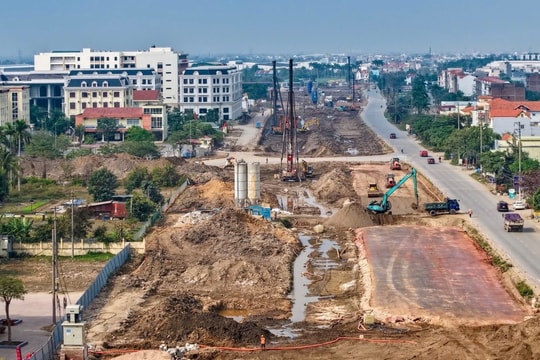
To support rapid port development, Hai Phong is accelerating investment in transport infrastructure.
The city aims to complete the Tan Vu–Hung Dao–Bui Vien section of Ring Road 2, along with the expansion of Bui Vien Road linking to National Highway 10, by 2027.
The project will serve as a critical transport corridor connecting Hai Phong’s ports with northern provinces and cities.
The Lao Cai–Hanoi–Hai Phong railway has already broken ground, while a new road linking Gia Binh Airport and Lach Huyen Port is also planned.
Together, these projects will form an integrated logistics corridor stretching from international border gates and airports to deep-water ports.
They are expected to shorten transit times, reduce logistics costs, enhance competitiveness, attract investment, expand production, and make an important contribution to Hai Phong’s goal of achieving double-digit growth, while supporting national economic expansion.
Hai Phong News