.jpg "Tram Gian pagoda woodblocks recognized as national treasure")

Gửi bình luận
The national treasure 'Sung Thien Tu Bi' at Dau Pagoda in Truong Tan Commune, Hai Phong, was erected in 1331 during the Tran Dynasty. It stands out for its large inscription of the character 'Phat' (Buddha) and its exceptional historical, cultural, and artistic values.
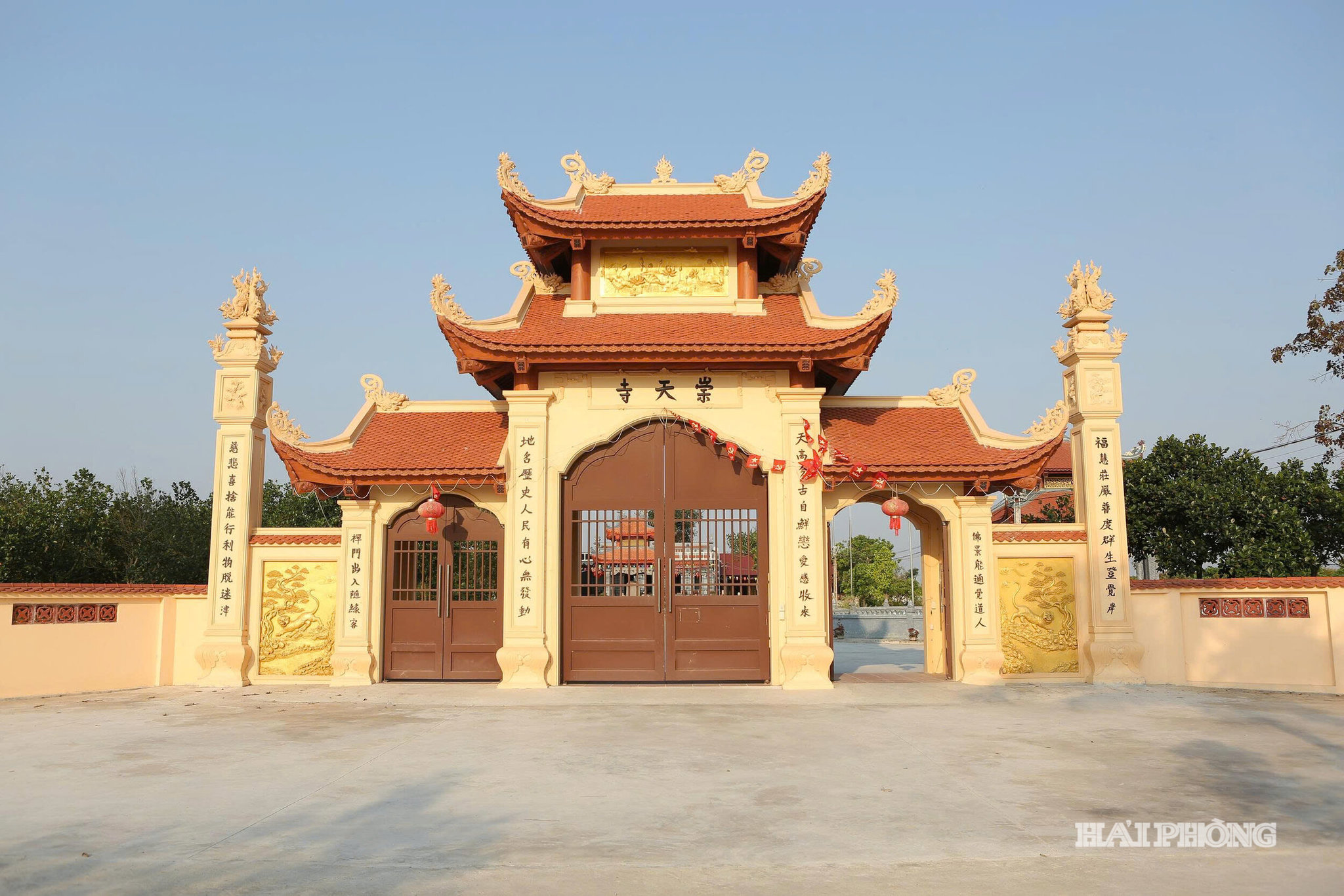
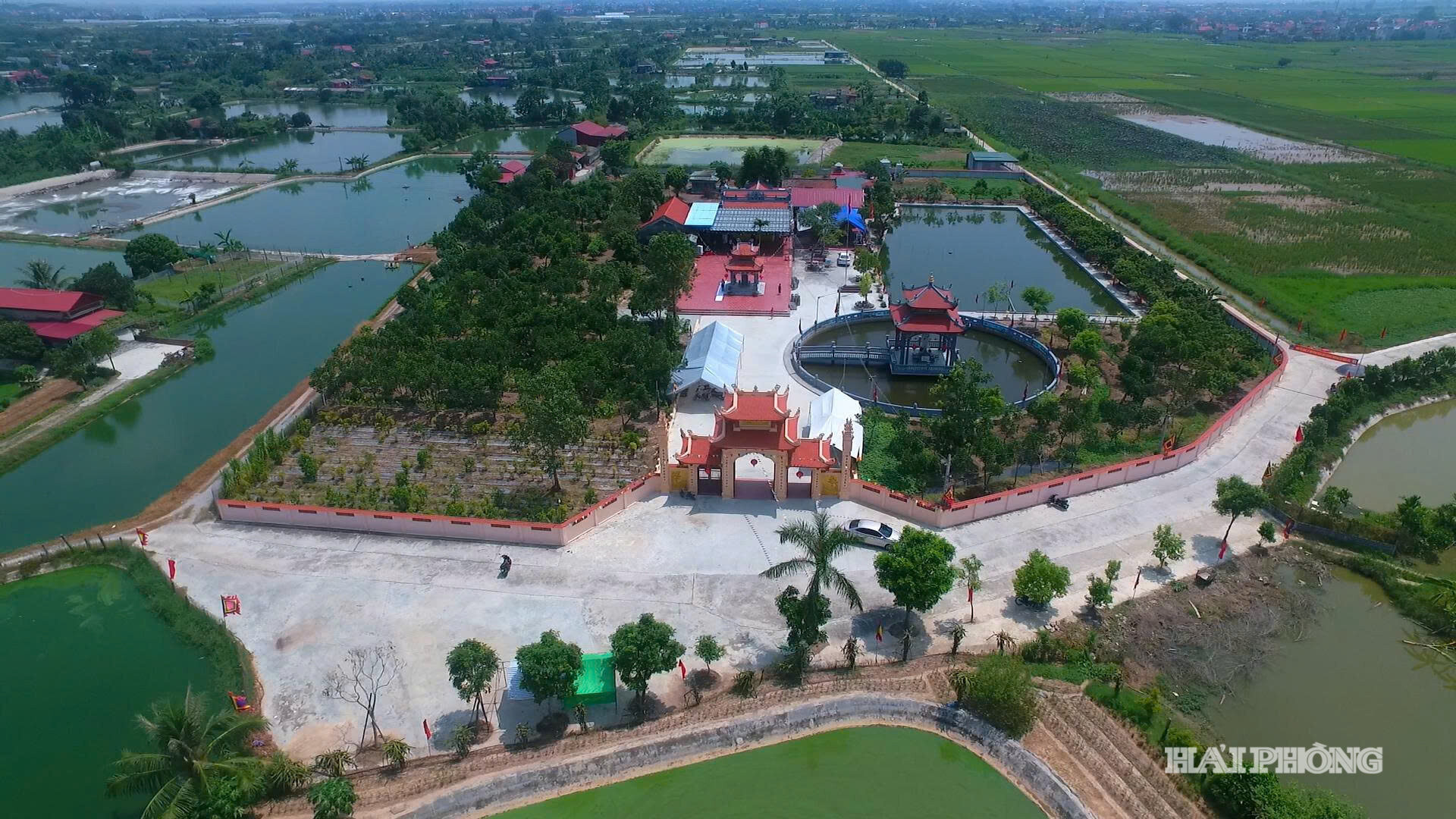
Dau Pagoda (Sung Thien Temple) is situated amid the rural landscape of Thi Duc Village, Truong Tan Commune, Hai Phong City, surrounded by rice fields and the winding Han River. The “Sung Thien Tu Bi” preserved here is one of the relic’s objects of exceptional historical, cultural, and artistic value.
The stele is made of green stone, approximately 1.5 meters high, nearly 90 centimeters wide, and 20 centimeters thick. It rests on the back of a stone turtle. The upper section of the stele is arched, while the main body is rectangular.
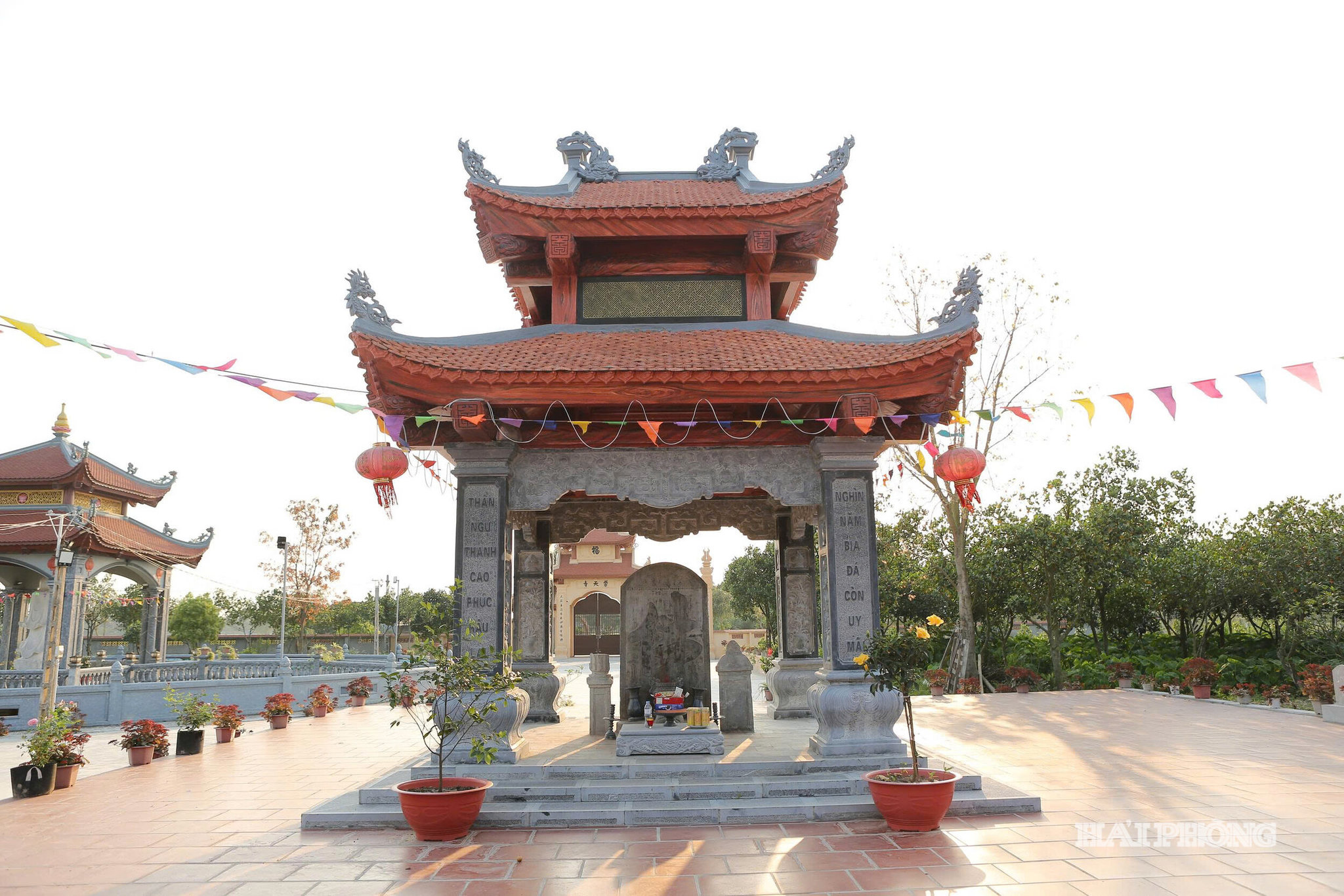
The front face of the stele features a large inscription of the character “Phat.” The back is engraved with three Chinese characters, “Sung Thien Tu,” followed below by the names of people who donated farmland and money to fund the restoration of the pagoda.
The stele’s upper border features a design of two dragons facing a moon, with a lotus flower in the center. Both sides of the stele are decorated with dragon motifs and swirling cloud patterns, while the base features water-wave motifs.
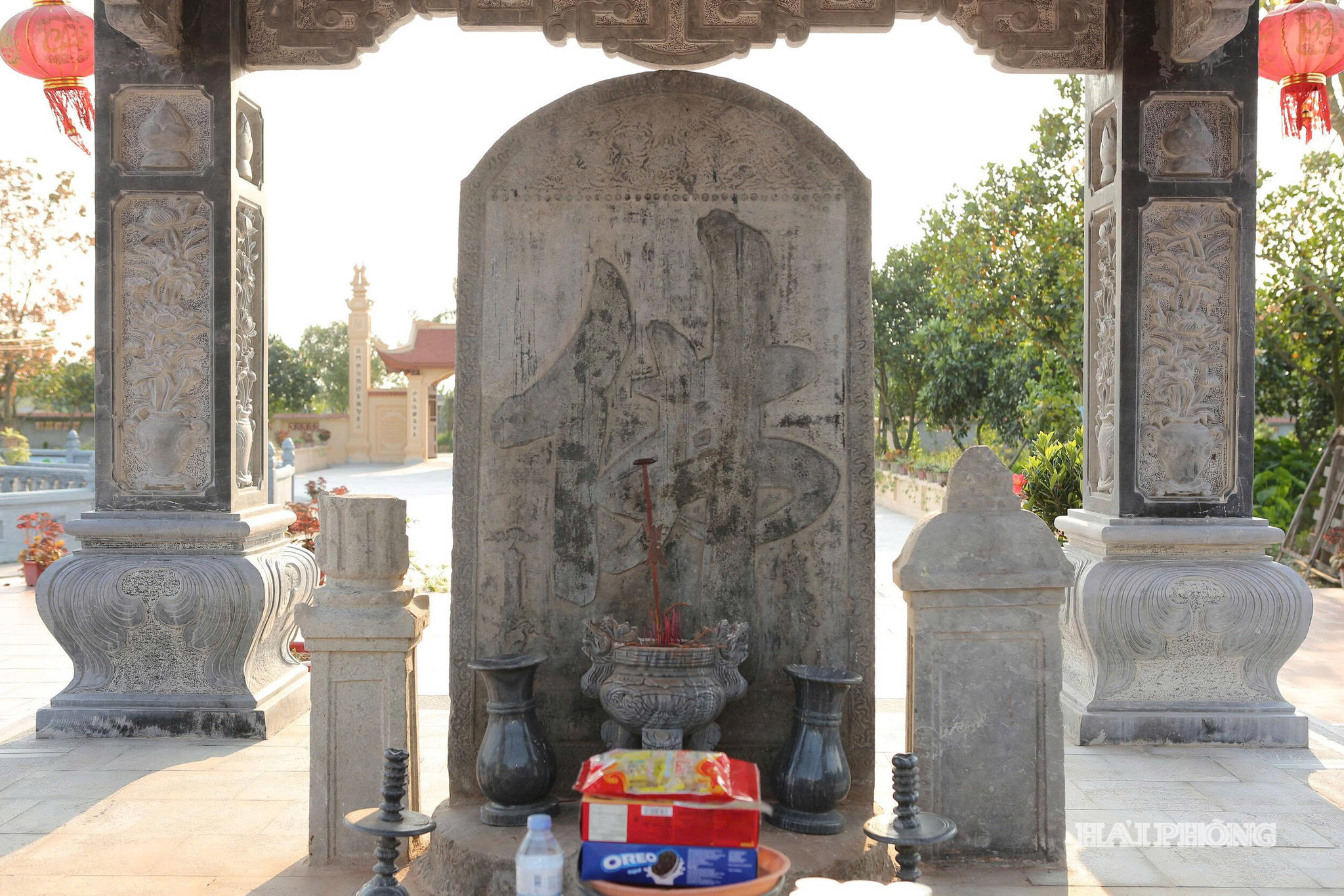
On the front face of the stele, beneath the character “Phat,” there are also images of standing cranes, each with a burning candle on its head, and a demon-like figure carrying an incense burner on its head. The stele is supported by a stone turtle with its head slightly raised, round eyes, a prominent nose, and a wide mouth, creating a harmonious combination of the stele inscription and the art of stone carving.
According to historical records, the stele was erected in 1331, during the third year of the Khai Huu reign under the Tran Dynasty. The inscription contains approximately 1,180 characters and was composed by the monk Hue Van, who practiced at the pagoda. This was a period when Buddhism exerted a profound influence on social life. The information preserved on the stele provides valuable material for studying the spiritual life of the Vietnamese people during the Tran Dynasty.
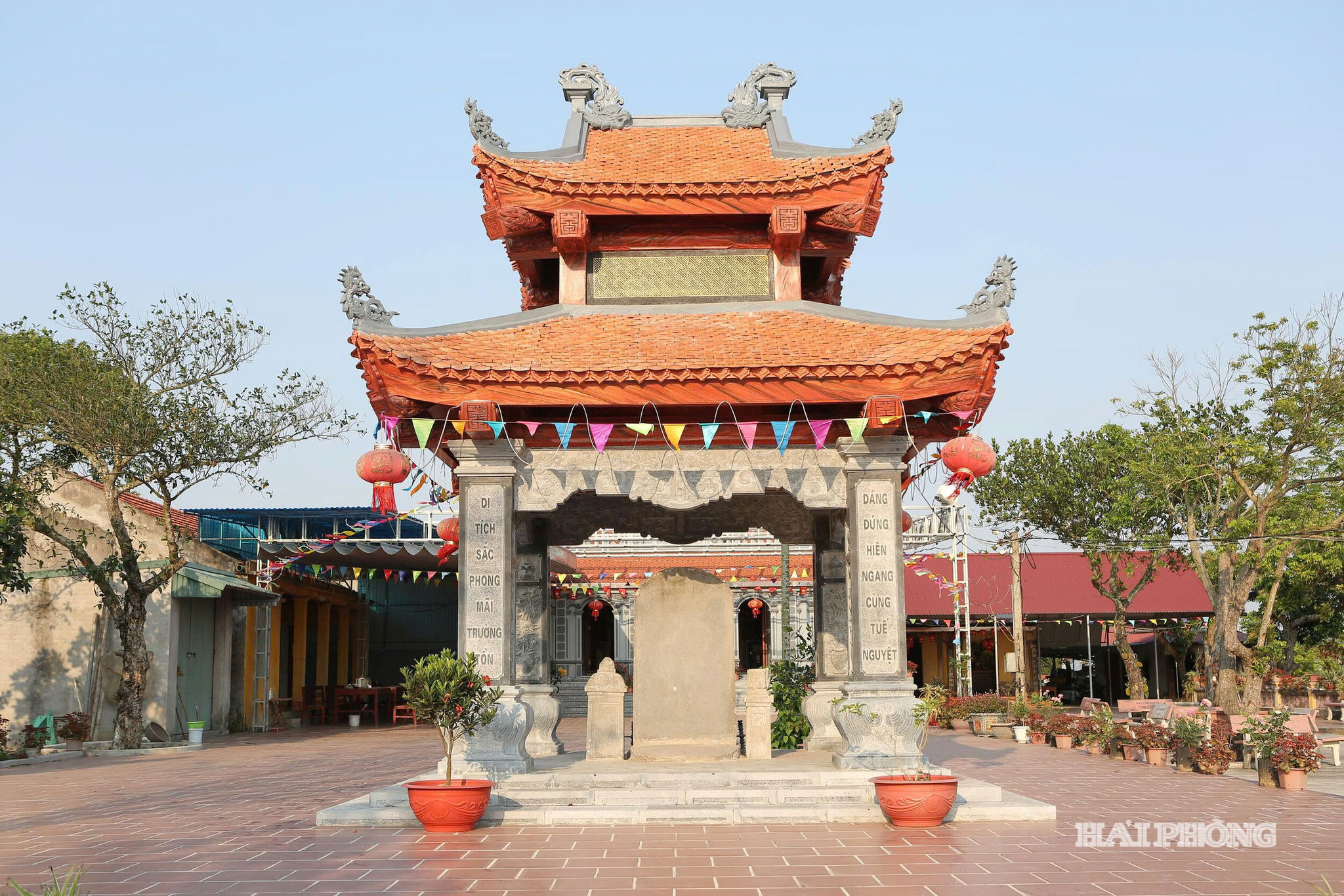
The “Sung Thien Tu Bi” provides valuable information about place names and community life during the Tran Dynasty. The names of villages, communes, and other localities recorded on the stele give researchers additional evidence for studying the formation and development of residential communities in the area.
The inscription also mentions local people donating farmland and money to the pagoda. This provides researchers with further insights into land ownership, customs, traditions, and community regulations concerning the preservation of the sanctity of places of worship.
The stele reflects the relationship between the pagoda and the surrounding community, as local residents contributed farmland and money to maintain and restore the place of worship.
The influence of Buddhism during the Tran Dynasty is also clearly reflected in the inscription. This was a period when Buddhism became deeply integrated into Vietnamese life, influencing thought, culture, literature, and the arts.
According to researchers specializing in Han-Nom studies, the character “Phat” and the main text on the stele are rendered in seal script and semi-cursive script. The strokes are carefully structured yet retain a sense of freedom and fluidity, creating the distinctive beauty of a calligraphic work carved in stone.
From the inscriptions to the decorative motifs, from dragons and lotus flowers to the stone turtle, every detail is arranged in a balanced composition. The delicate and diverse carving techniques demonstrate the aesthetic sensibilities and craftsmanship of the people of the past.
In June 2018, a dossier seeking recognition of the stele as a national treasure was prepared following research, appraisal, and translation of the stele's inscription. On December 24, 2018, the Prime Minister issued Decision No. 1821, recognizing 22 artifacts and groups of artifacts as national treasures in the seventh designation, including the “Sung Thien Tu Bi.”
Dau Pagoda is a historic relic bearing intertwined influences of Buddhism and the worship of deities. The pagoda was built during the reign of King Ly Anh Tong, in 1118, and is dedicated to Princess Tien Dung, who, according to tradition, is believed to have spiritually assisted the Trung Sisters in fighting the Eastern Han forces.
According to legend, the pagoda came to be known as Dau Pagoda after the Han River once carried a large raft made of mulberry wood ashore. Local people considered this a good omen, so they retrieved the wood and carved it into a statue, giving the pagoda the name Dau Pagoda.
In the past, the pagoda had more than 100 bays. Today, the relic site retains a five-bay front hall and a three-bay rear sanctuary, along with a collection of 12 red-lacquered and gilded wooden statues and an intricately carved shrine dedicated to Princess Tien Dung. The pagoda also bears witness to several revolutionary events during the period from 1945 to 1953.
With its historical, architectural, and cultural values, Dau Pagoda was recognized as a national-level relic in 1992. The pagoda's traditional festival is held annually from the 8th to the 10th day of the eighth lunar month, featuring a palanquin procession and various traditional folk games.
For nearly 700 years, the national treasure “Sung Thien Tu Bi” at Dau Pagoda has preserved many traces of the life, beliefs, and culture of people in the past. The inscriptions, decorative motifs, place names, and personal names carved on the stele constitute valuable historical sources, helping people today gain a deeper understanding of the region and social life during the Tran Dynasty.
PHUONG LINH - QUANG TIEP