
Gửi bình luận
Green manufacturing has become an inevitable trend, enabling businesses to strengthen their competitiveness, meet the demands of international integration, and achieve sustainable development in the new era.
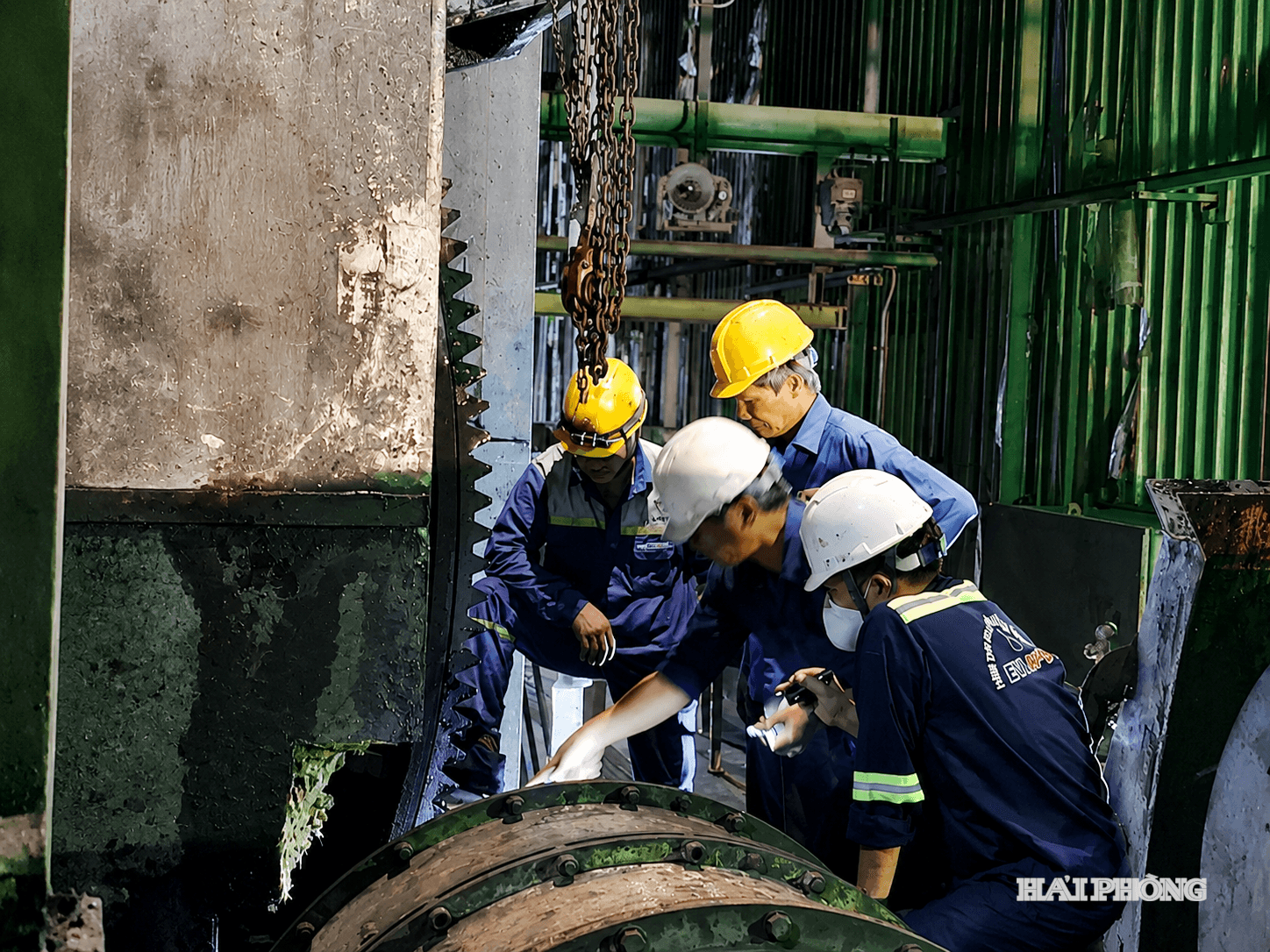
In response to increasingly stringent emission standards, Pha Lai Thermal Power JSC (Chi Linh Ward) is implementing a project to upgrade the flue gas treatment system for Production Line 2. The project aims to comply with regulations on sulfur dioxide (SO₂), nitrogen oxides (NOₓ), and particulate emissions from boiler exhaust while enhancing the reliability and sustainability of plant operations.
The company has also continued to strengthen the management and utilization of fly ash and bottom ash by cooperating with partners in the construction materials industry, thereby increasing the recycling rate of industrial waste in line with the principles of the circular economy.
In addition to its flue gas treatment system, the plant maintains strict operation of other environmental protection facilities. Automatic emissions and wastewater monitoring systems have been installed and connected online with environmental authorities, enabling real-time monitoring of environmental indicators.
For wastewater treatment, the plant operates a closed-loop system. After being treated to meet regulatory standards, most of the water is reused for internal operations, including flue gas desulfurization and ash transportation, thereby minimizing wastewater discharge into the environment.
Alongside the power industry, steel production is also among the most energy-intensive sectors. At Hoa Phat Hai Duong Steel JSC (Pham Su Manh Ward), energy conservation and emission reduction are regarded as top priorities. With an annual steel output of approximately 2.5 million tonnes, the company consumes substantial amounts of electricity and fuel, requiring comprehensive measures to improve energy efficiency.
The company has adopted clean coke production technology with heat recovery, allowing waste heat generated during production to be reused. It has also invested in systems that recover and recycle excess heat and process gases from coke-making and steelmaking operations, reducing energy consumption while minimizing environmental emissions.
In addition to utilizing energy generated during production, the company has gradually replaced outdated equipment with more energy-efficient alternatives, including high-efficiency motors, variable frequency drives, and upgraded ventilation systems.
The company also regularly sends managers and engineers to visit steel plants overseas to learn about the latest environmental protection practices and energy-efficient technologies. These efforts not only reduce production costs but also enable the company to meet increasingly stringent environmental standards in both domestic and international markets.
Green manufacturing is no longer limited to heavy industry. Many export-oriented manufacturers are also proactively adopting sustainable production practices to meet the requirements of international partners.
At Thai Anh Investment Trading Services JSC (Dong Hai Ward), resource conservation, energy efficiency, and environmental protection have been integrated into multiple stages of the production process.
The company has increased its use of recycled fabrics to reduce the consumption of virgin materials while meeting customers' requirements for product traceability and environmental responsibility.
Ms. Nguyen Thi Thanh Binh, Director of Thai Anh Investment Trading Services JSC, said that customers in Europe and the United States are now concerned not only with clean production but also with green manufacturing. The company has reviewed its entire lighting and power system, installed energy-efficient LED lighting, and adopted direct-drive sewing machines, each of which consumes around 30% less electricity than conventional machines.
The technologies applied in the washing and finishing stages ensure product quality while eliminating wastewater discharge, an important factor in meeting the environmental standards of many major export markets.
According to Mr. Nguyen Cong Han, Deputy Director of the Department of Industry and Trade, green manufacturing is steadily becoming an essential requirement for businesses as international economic integration continues to deepen.
Many markets now regard environmental standards, energy efficiency, and emission reduction as key criteria when selecting suppliers and products.
To adapt to this trend, businesses need to continue investing in technological innovation, improving resource efficiency, developing environmentally friendly materials, and expanding the application of digital technologies in management and production.
Proactively complying with green standards not only enables enterprises to meet market requirements but also strengthens their competitiveness and supports sustainable development.
The positive transformation within the business community demonstrates that green manufacturing is no longer merely a trend—it has become an indispensable requirement for long-term development.
Investing in advanced technologies, conserving energy, using resources efficiently, and reducing emissions not only contributes to environmental protection but also helps businesses enhance their competitiveness and meet the increasingly demanding standards of both domestic and international markets.
Huyen Trang