
Gửi bình luận
A great city requires long-term vision and broad thinking. Every citizen of Hai Phong, with an open mindset and a generous spirit, must be ready to embrace new ideas and opportunities.
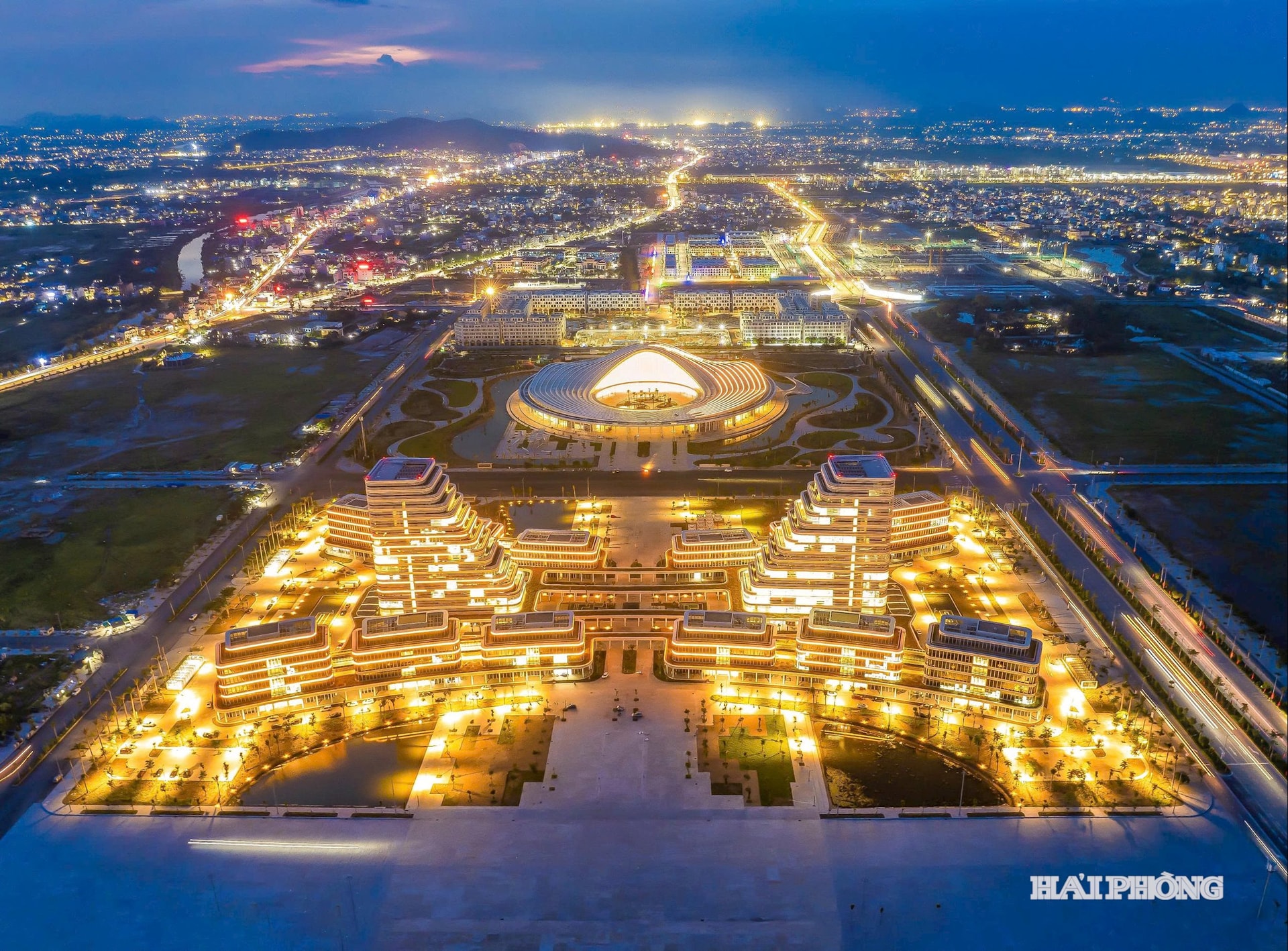
Today, Hai Phong is broader in administrative boundaries, larger in population, and carries greater expectations in terms of vision, organization, governance, and development goals. Among its ambitions is the target of becoming, by 2030, a modern, civilized, ecological, and livable port and industrial city of regional standing in Southeast Asia.
Such transformation inevitably brings adjustments to the daily lives of its citizens. For many, these changes have been felt in very practical ways over recent months: longer commutes, extended travel times, and the need to rearrange daily routines. Not a few officials and public employees have had to change their place of residence or adjust family members’ jobs to meet new work requirements following the consolidation of agencies and units.
These changes are inevitable. As a city grows, spaces for work, living, and connection can no longer remain confined within familiar boundaries. More importantly, change is not merely about geographical distance. Working in a new environment, interacting with new colleagues, and adopting new working methods also create opportunities for learning, sharing, and bonding. When everyone shares a common goal of advancing the city’s development, differences gradually give way to solidarity, responsibility, and mutual respect.
Shortly after the new city apparatus came into operation, at the conference announcing decisions on organizational restructuring held on July 2, 2025, Party Secretary Le Tien Chau emphasized: “Without unity, we lose everything.” In the context of reorganizing both governance structures and development space, unity is not merely an organizational requirement but a prerequisite for policies and decisions to take root in reality. When each collective and each individual places the common interest above personal concerns, shares responsibility, and moves forward together, even major changes can be resolved through consensus.
The recent fireworks display also fits within this broader process of change. The decision to organize the fireworks at the Political–Administrative Center instead of at long-familiar venues prompted some public hesitation. This is entirely understandable, as urban spaces hold not only functional value but also memories, emotions, and long-established routines.
However, as the city enters a new stage of development, reorganizing focal public spaces becomes necessary. This is not about denying or replacing old values, but about complementing them with new centers aligned with an expanded urban structure. Relocating the fireworks display reflects a long-term vision for reorganizing public space.
Hai Phong today can be likened to a body that has grown larger. Within that body, every citizen is a living cell. When the body changes, each cell must adapt—adjusting habits, expanding perspectives, and learning to coordinate with surrounding cells. If each cell clings only to its old rhythm, the body cannot thrive. But when every cell actively synchronizes, the body becomes healthier and more sustainable.
Preserving urban memories and cherishing spaces is essential. At the same time, the city needs consensus to innovate and meet the demands of a major urban center. These two objectives are not contradictory; they complement one another.
A great city requires long-term vision and broad thinking. Every citizen, with openness and a generous spirit, must be ready to embrace change and new possibilities, joining hands to build a Hai Phong that continues to rise—worthy of its stature as a major city.
Hoang Long