.jpg "FDI drives economic growth")

Gửi bình luận
Resolution No. 10 creates new opportunities for Hai Phong to build a next-generation foreign direct investment (FDI) ecosystem, strengthen its competitive edge, and achieve sustainable development.
On June 8, 2026, the Politburo issued Resolution No. 10 on the Development of the Foreign-Invested Economy, marking a significant shift in Vietnam's approach to attracting and utilizing international investment. The Resolution recognizes the foreign-invested sector as an integral component of the national economy—not only as a source of medium- and long-term capital for development but also as a channel for advanced technology transfer, modern management practices, human resource development, and market expansion.
The Resolution also calls for a fundamental transformation in investment strategy: from focusing primarily on attracting capital to building a national strategic investment platform; from attracting investment based on administrative boundaries to developing industry clusters, value chains, and innovation ecosystems; and from emphasizing investment volume to prioritizing quality, efficiency, technology transfer, supply chain integration, and value creation as the key criteria for attracting and utilizing foreign direct investment (FDI).
This represents more than a policy adjustment—it is a change in development philosophy. Success in attracting FDI will no longer be measured solely by the number of projects or the scale of registered capital, but by technological sophistication, innovation capacity, linkages with domestic enterprises, knowledge transfer, and the added value generated by the foreign-invested sector for the national economy.
The Resolution's strategic orientation also reflects the evolving landscape of global investment competition. While investment incentives and production costs once constituted the primary advantages of localities, investors today increasingly prioritize institutional quality, infrastructure, human capital, innovation capacity, and integration into global production ecosystems.
Against this backdrop, Hai Phong is well positioned to translate the Resolution's vision into reality. The city possesses significant advantages that can help achieve these objectives while further improving its institutional framework, upgrading infrastructure, and advancing toward becoming Vietnam's leading eco-industrial center.
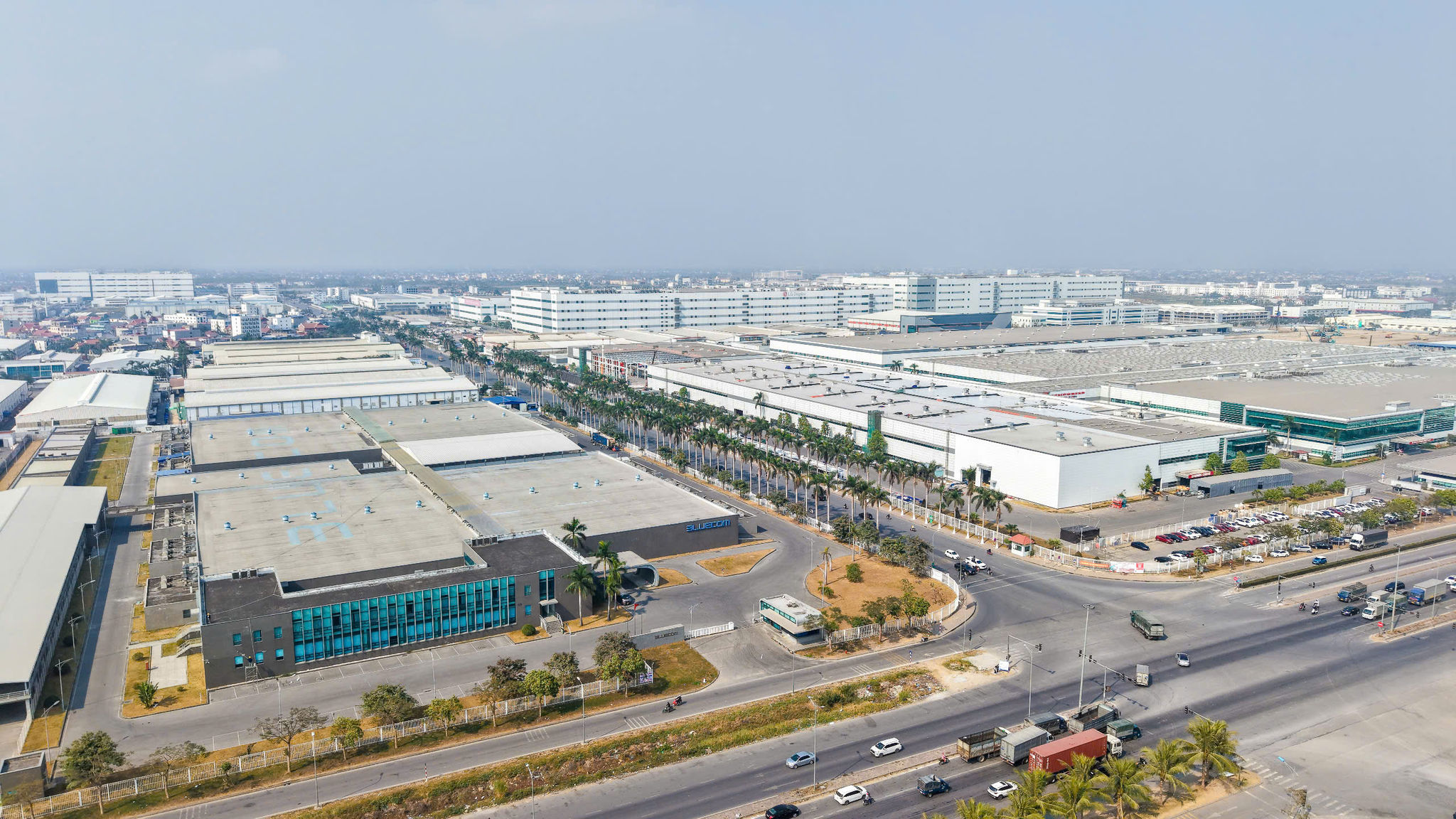
During the first six months of 2026, Hai Phong attracted approximately USD 3.1 billion in FDI, representing a 75% increase compared with the same period in 2025. As of June 2026, the city was home to an estimated 1,868 active FDI projects from 42 countries and territories, with total registered capital of approximately USD 54 billion.
More importantly, the inflow of new investment has improved not only in scale but also in quality. New projects are increasingly concentrated in high-tech industries, electronics, semiconductor manufacturing, logistics, and advanced processing and manufacturing sectors. Many leading multinational corporations continue to expand their operations in the city, strengthening Hai Phong's position within global supply chains. This demonstrates the city's transition from attracting capital alone to attracting technology, expertise, research and development (R&D), and other high value-added activities.
These achievements are the result of a long-term and consistent investment strategy. For many years, Hai Phong has pursued a policy of selective investment attraction, prioritizing environmental sustainability over short-term growth while focusing on high-tech, high-value-added projects that use resources efficiently and generate spillover benefits for domestic enterprises.
Alongside major investments in seaport infrastructure, logistics networks, transport connectivity, and the development of modern industrial parks, the city has continued to accelerate administrative reforms and build a competitive investment ecosystem. Key initiatives include the development of the Hai Phong Specialized Economic Zone, the Southern Hai Phong Coastal Economic Zone, and the Hai Phong Free Trade Zone.
With these foundations already in place and a clear ambition to become a regional center for industry, logistics, and innovation, Hai Phong is well positioned to lead the implementation of the objectives set out in Resolution No. 10.
However, opportunities inevitably come with challenges. The Resolution not only ushers in a new phase of FDI attraction but also places new demands on local governments: transforming external resources into the economy's internal capabilities.
For Hai Phong, this means continuing to invest comprehensively in supporting industries, developing a highly skilled workforce, fostering innovation, and strengthening the competitiveness of domestic enterprises. Only when Vietnamese companies become capable partners of global corporations will more value be retained within the domestic economy, enhancing competitiveness, strengthening economic resilience, and laying the foundation for sustainable growth.
Ultimately, Hai Phong's success will not be measured solely by the billions of dollars it attracts or the number of investment projects it licenses. Rather, it will be judged by its ability to build a modern industrial ecosystem in which foreign-invested enterprises and domestic companies grow together, innovate together, and create greater value together.
This will also serve as the true measure of the city's economic resilience, self-reliance, and long-term sustainability. By achieving this vision, Hai Phong will not only reinforce its attractiveness to international investors but also strengthen its role as a key growth engine for the Red River Delta and Vietnam as a whole, while taking the lead in implementing the strategic vision of Resolution No. 10.
Nguyen Ha
.jpg "Industrial parks and economic zones attract over USD 46 billion in FDI")