.jpg "2025 Vietnam – China Friendship Exchange held in Hai Phong")

Gửi bình luận
The ‘Red Journey’ program gives Hai Phong students and Youth Union officials opportunities to join in exchanges, study and experience culture in China.
Experiences at “red addresses”
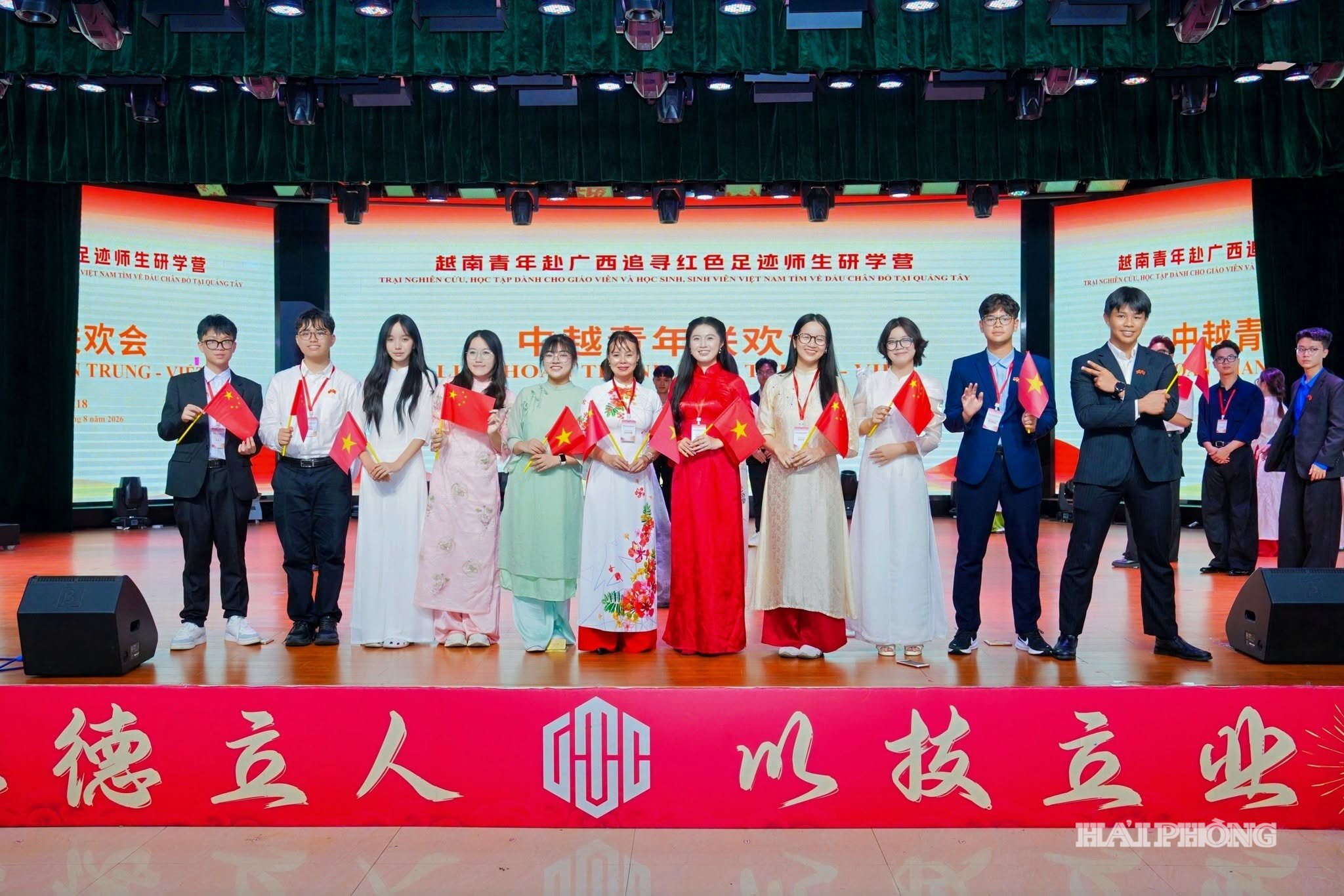
In mid-August 2026, 11 outstanding teachers and students in Hai Phong participated in the 2026 Vietnam-China Teacher-Student Exchange Program in Nanning, Guangxi Zhuang Autonomous Region, China. The program was part of the Vietnamese Youth’s Red Journeys – Research and Study Camp Following Uncle Ho’s Footsteps.
During their days in Nanning, the delegation visited Nanning Yucai School Relic, a “red address” associated with the revolutionary history of Vietnam and President Ho Chi Minh; visited and joined in exchanges with universities; learned about science, technology and artificial intelligence; and experienced local culture.
For many students, this was their first international exchange program. “This is not only an opportunity for me to visit a new land and learn about the country and people of China but also a chance to represent Hai Phong students in exchanges with international friends,” said Pham My, a 12th-grade English-major student at Nguyen Trai Senior High School for the Gifted.
Also in August, Nguyen Van Phuong Tuan, Secretary of the Duong An Commune Youth Union, joined a delegation of 100 Vietnamese youth representatives in the Vietnamese Youth Trace Red Footprints program in Guangxi.
“Through documents, images and stories, I learned more about President Ho Chi Minh’s activities, as well as the years Vietnamese officials and students spent studying and working in Guangxi,” said Tuan.
From historical sites, “Red Journey” activities continue to bring young people closer to science and technology, artificial intelligence, cultural preservation, environmental protection, entrepreneurship and innovation.
A cultural bridge
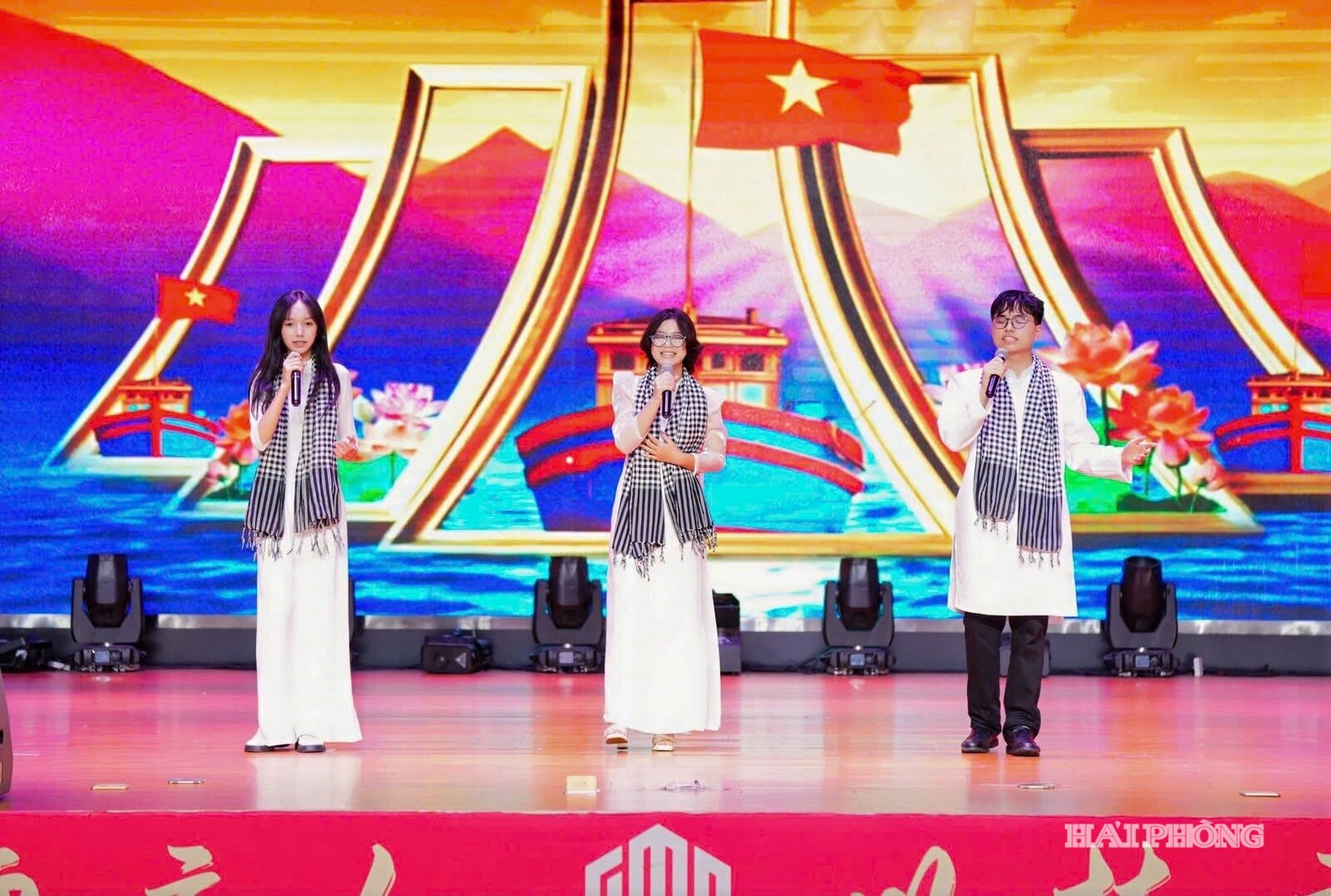
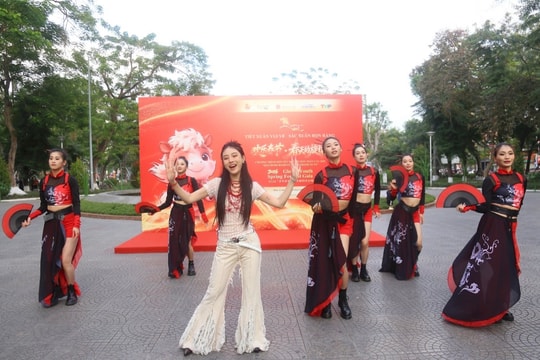
One of the activities that left a strong impression during the Vietnam-China Teacher-Student Exchange Program was the Vietnam-China Youth Arts Festival.
At the exchange event, the performance by the Hai Phong delegation received enthusiastic support from delegates. For the students, it was a special experience to directly introduce Vietnamese culture to international friends.
Arts activities are also a way for young people from the two countries to come closer together. Languages may be different, but music and group activities create an open space for exchange, helping young people connect more easily.
After the trip, many delegates hoped to continue sharing their experiences with friends, colleagues and other young people. Pham My said she would continue studying, improving her foreign language skills, communication skills and ability to work in multicultural environments.
From the perspective of a Youth Union official, Nguyen Van Phuong Tuan said experiences from the program could be selected and appropriately applied in practice. These include innovating the way youth activities are organized, strengthening traditional education, improving knowledge of culture and foreign languages, developing integration skills and applying technology in Youth Union activities.
Returning to their schools, agencies and localities after each trip, students and young officials who participate in international exchange programs gain more experience to reach out and connect with international friends. Through these efforts, they contribute to portraying a dynamic and open-minded younger generation that is ready to learn while always taking pride in their homeland and national culture.
PHUONG LINH