

Gửi bình luận
After enduring countless ups and downs and the vicissitudes of history, the renowned Chu Dau ceramic tradition, once thought to have been lost, has been remarkably revived.
.jpg)
I once spent a long time at the Hoi An Museum of Trade Ceramics in Da Nang, admiring hundreds of Chu Dau artifacts recovered from shipwrecks discovered in the waters off Cu Lao Cham nearly 30 years ago.
As I gazed at the bowls, plates, gourds, lime pots, jars, and other ceramic objects in shades of yellow, eel-skin brown, blue-violet, and green, adorned with intricate decorative motifs, I found myself wondering: 500 to 600 years ago, how did these handcrafted products, created by the skilled artisans of Xu Dong, make their way to the bustling trading port of Hoi An? And how did they travel aboard merchant ships on long maritime voyages to reach distant overseas lands across the world?
.jpg)
“That is the very essence of Chu Dau ceramics. Although the craft was lost for centuries, it has been revived, flourished, and endured thanks to its strong traditions,” artisan Nguyen Van Luu, one of the key figures behind the successful restoration of this ancient ceramic line shared.
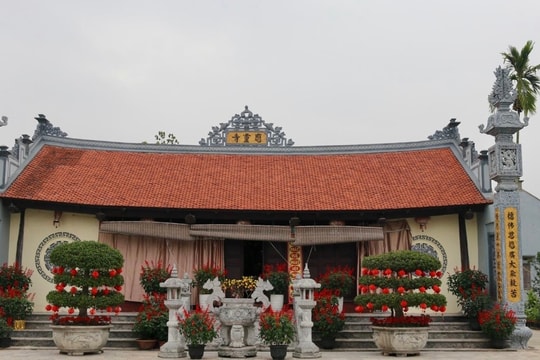
The village of Chu Dau, formerly part of Thai Tan Commune, Nam Sach District, Hai Duong Province, is now located in Thai Tan Commune, Hai Phong. Over hundreds of years of history, Chu Dau ceramics have found their way to many parts of the world. They range from priceless one-of-a-kind artifacts preserved in museums to contemporary products designed to suit modern tastes. Both international and domestic visitors come to Chu Dau—some purchase ceramics as collectibles, while others simply admire them before leaving. Chu Dau ceramics are not merely commodities; they are a cultural legacy.
Few traditional craft villages can clearly identify the founder of their trade. Chu Dau ceramics, however, possess sufficient historical evidence to recognize female artisan Bui Thi Hy as the craft’s founding ancestor. During the recovery of the shipwreck off the coast of Cu Lao Cham in 1997, archaeologists discovered a portrait statue of Bui Thi Hy, which is now displayed at the National Museum of Vietnamese History.
.jpg)
According to the genealogy of the Bui family, Bui Thi Hy (1420–1499) married Dang Sy, a native of Chu Dau village. Together, they later established a pottery workshop whose products were traded far and wide. Evidence of this legacy can be found in the famous blue-and-white ceramic vase currently displayed at the Topkapi Saray Museum in Istanbul, Türkiye. Inscribed on the vase are 13 Chinese characters, translated as: “In the 8th year of the Thai Hoa era (1450), in Nam Sach district, artisan Bui Thi Hy created this piece.”
By the 17th century, Chu Dau pottery had disappeared, only to be rediscovered centuries later through a remarkable coincidence. In 1980, Makato Anabuki, former Secretary of the Japanese Embassy in Vietnam, came across the blue-and-white vase on display at the Topkapi Saray Museum. He subsequently wrote to Ngo Duy Dong, then Secretary of the Hai Duong Provincial Party Committee, requesting that the origin of the artifact be investigated. Following this lead, Vietnamese authorities conducted extensive field research and collected evidence relating to the ancient pottery village.
Around 1990, fishermen off the coast of Quang Nam recovered numerous ceramic artifacts and discovered a sunken ship. In 1997, an excavation was launched by the Vietnam History Museum, the Vietnam Salvage Corporation, and Saga Horizon Company of Malaysia.
The vessel lay at a depth of approximately 80 meters and contained a vast collection of Chu Dau ceramics, providing compelling evidence of the pottery line’s flourishing international trade centuries ago.
Nguyen Van Luu, a native of Chu Dau, once admitted that before becoming involved with pottery, he knew very little about the craft. However, a strong sense of responsibility, along with his love and passion for the land where he was born and raised, continually inspired him to learn more about it. Accompanying him on this journey was Nguyen Huu Thang, former Chairman of the Members’ Council of the Hanoi Trade Corporation (Hapro).
.jpg)
In the early days of the restoration effort, beginning in 2001, when Nguyen Van Luu set out to revive the ancient pottery line, everything was a challenge. From sourcing raw materials, developing clay mixtures, restoring traditional designs and decorative motifs, to mastering glazing and firing techniques, as well as training workers, every aspect had to be rebuilt from the ground up.
Starting as a small workshop, then expanding into a production facility before eventually becoming a company, Chu Dau pottery gradually gained wider recognition and attracted the attention of pottery experts and craftsmen from across the country.
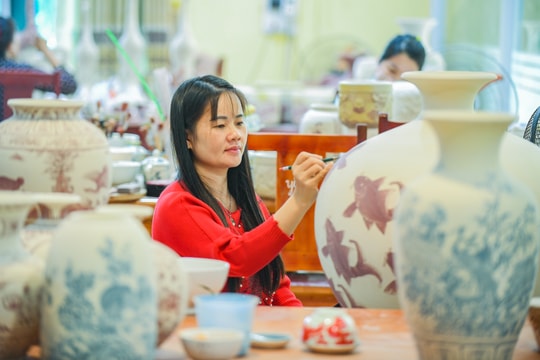
Many of the workers were originally farmers who left their fields to work in the pottery workshops. Under the guidance of master artisans from various regions, they steadily developed their skills and became accomplished craftsmen. Today, they are proficient in every stage of production—from selecting clay sourced from the Chi Linh area and blending additives, to molding, hand-painting intricate motifs, glazing, and finishing the products.
.jpg)
It is impossible to fully recount all the hardships of those early years. Yet, as the saying goes, “Sacred land and sacred fire create precious ceramics.” The first products finally emerged from the kiln. It was a moment of overwhelming joy, as everyone realized that the long-lost ancient Chu Dau pottery tradition was gradually being brought back to life.
Less than three years later, the first shipments of Chu Dau ceramics were exported to Europe. Today, Chu Dau products can be found in approximately 70 countries and territories around the world.
Chu Dau ceramic artifacts are also preserved in 46 renowned museums across 32 countries, reflecting the international recognition and enduring cultural value of this distinguished Vietnamese ceramic heritage.
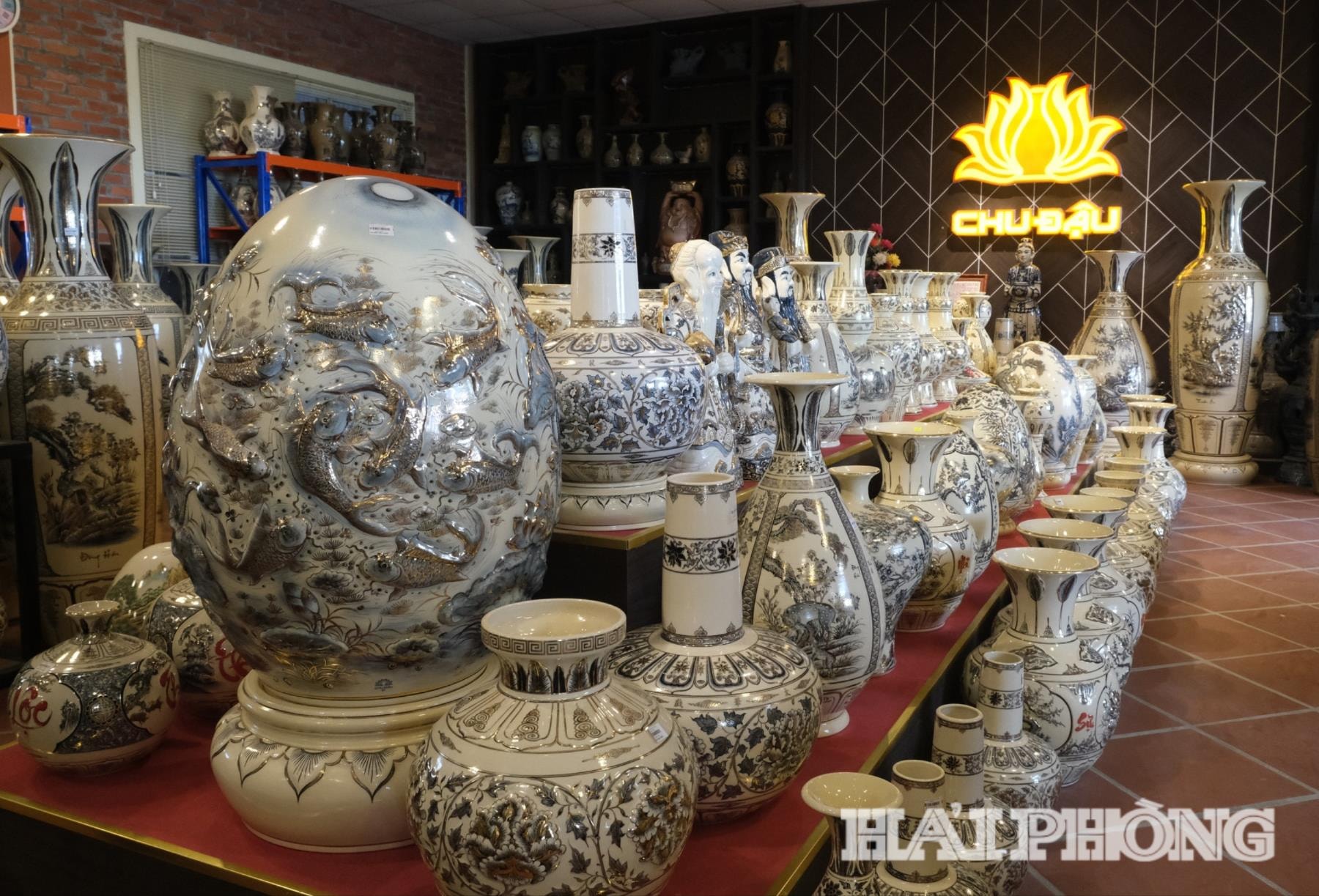
There are currently five ceramic production facilities operating in the Chu Dau area. At Chu Dau Pottery JSC, led by Mr. Nguyen Van Luu, although product designs are continuously renewed, the company remains firmly committed to preserving the essence and identity of the ancient pottery tradition. Its artisans continually strive to achieve the classical standards once associated with Chu Dau ceramics: as thin as paper, as bright as a mirror, as clear as jade, as white as ivory, and as resonant as a bell.
According to Mr. Luu, Chu Dau pottery historically consisted of three main categories: everyday household wares, products for official use, and items made for the royal court. Today, while production is based on faithfully restored historical designs, artisans creatively incorporate contemporary decorative motifs to better suit modern consumer preferences.
The Chu Dau pottery village proudly displays a large ceramic vase bearing a nine-word inscription presented by General Vo Nguyen Giap: “Chu Dau Ceramics – The Quintessence of Vietnamese Culture.”
Mr. Luu has always regarded the General’s inscription not only as a great honor but also as a profound responsibility. For him, it is a reminder that this treasured craft must never be allowed to fade away again, but must instead be carefully preserved and continually promoted for future generations.
Tien Huy