

Gửi bình luận
Amid the pace of modern life, many traditional crafts continue to thrive, demonstrating not only their enduring vitality but also preserving the cultural values and quintessence of Hai Phong’s eastern region.
Legacy of ancient crafts
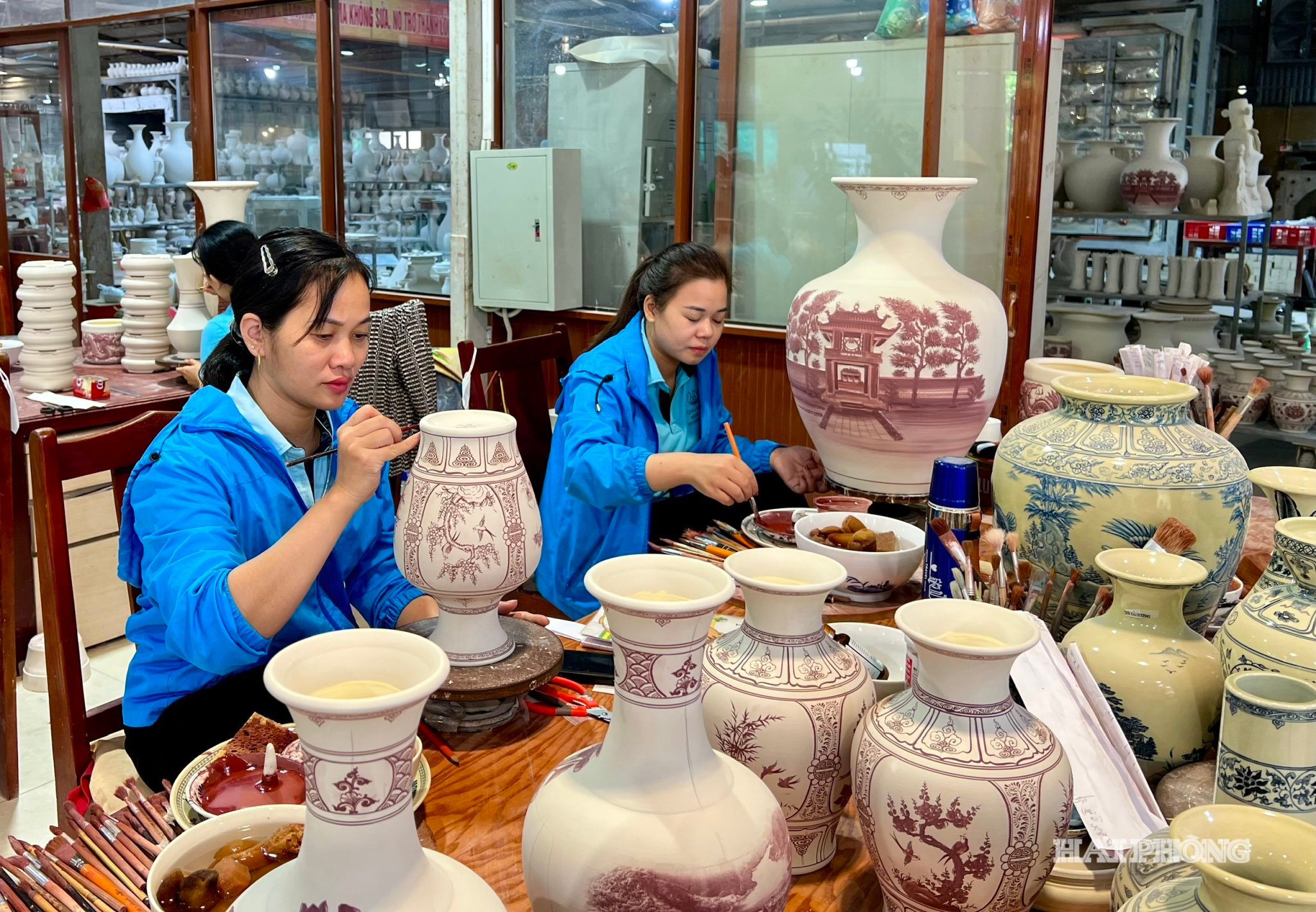
Chu Dau pottery, practiced in Thai Tan Commune, is a renowned traditional craft dating back to around the 112th and 13th centuries and flourishing during the 14th and 15th centuries.
Chu Dau pottery is distinguished by its diverse shapes, characteristic glaze colors, and finely detailed decorative patterns that reflect Vietnam's rich cultural identity. Each piece showcases artisans' skill while reflecting the daily life, customs, and civilization of communities in the Red River Delta.
The appeal of this pottery also lies in its production techniques, particularly its glaze, made entirely from the ash of cai hoa vang glutinous rice husks. Its free-flowing, graceful brushwork further sets Chu Dau pottery apart from many other ceramic lines.
Nguyen Huy Kien, Deputy General Director of Chu Dau Ceramics JSC, said the company continues to dedicate its efforts and passion for traditional culture to preserving and developing this ancient pottery line, with the aim of making Chu Dau pottery a cultural symbol not only of Hai Phong’s eastern region but also of Vietnam as a whole.
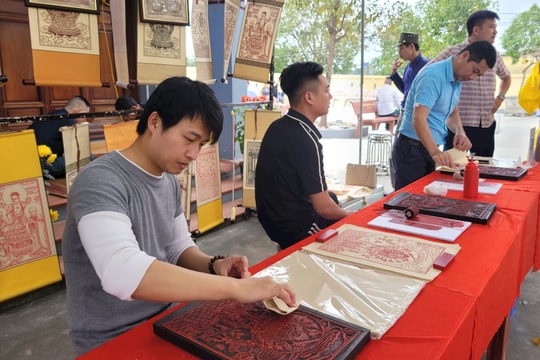
While Chu Dau pottery preserves cultural heritage through its clay, glaze, and decorative motifs, Thanh Lieu woodblock carving and printing in Tan Hung Ward leaves its mark through engraved wooden blocks that embody the knowledge and culture of many generations. With a history spanning nearly 600 years, the craft flourished under the Later Le Dynasty and reached its peak under the Nguyen Dynasty.
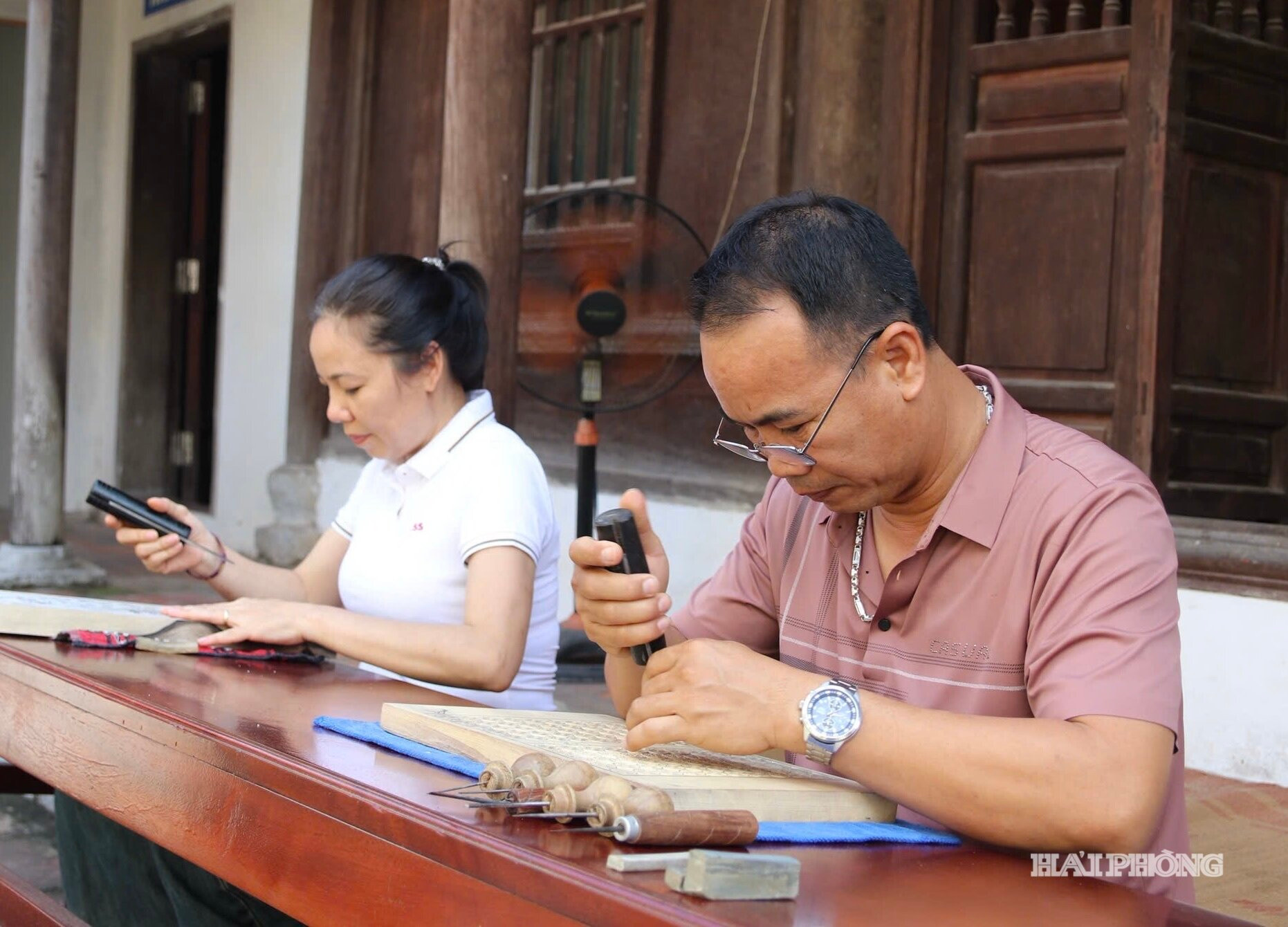
Producing a fine print requires artisans to carry out every stage with great care, from selecting the wood and preparing its surface to carving each letter and image. Every engraved line demands precision and patience. Even a minor mistake can affect the quality of the print. The craft therefore requires not only technical skills but also meticulousness, experience, and dedication.
“There are now only a few people in our village still practicing the craft, but its legacy remains visible in many historical and cultural sites across Vietnam. That is why younger generations like us remain deeply committed to preserving and developing the craft passed down by our ancestors,” said artisan Nguyen Cong Dat.
Passing on quintessence
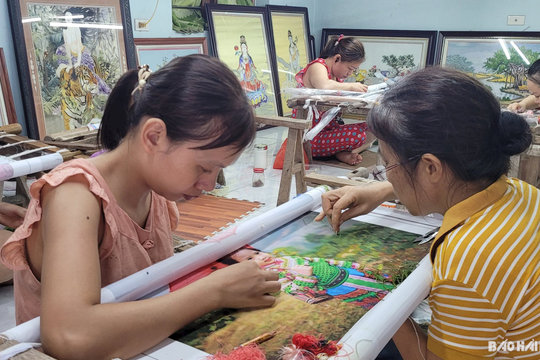
Alongside Chu Dau pottery and Thanh Lieu woodblock carving and printing, Xuan Neo embroidery and lace-making in Dai Son Commune is another long-established handicraft of Hai Phong’s eastern region. The craft was introduced in the early 20th century by Nguyen Van Thuat, who learned embroidery at a shop on O Mon Street, now Pham Hong Thai Street in Hai Duong Ward.
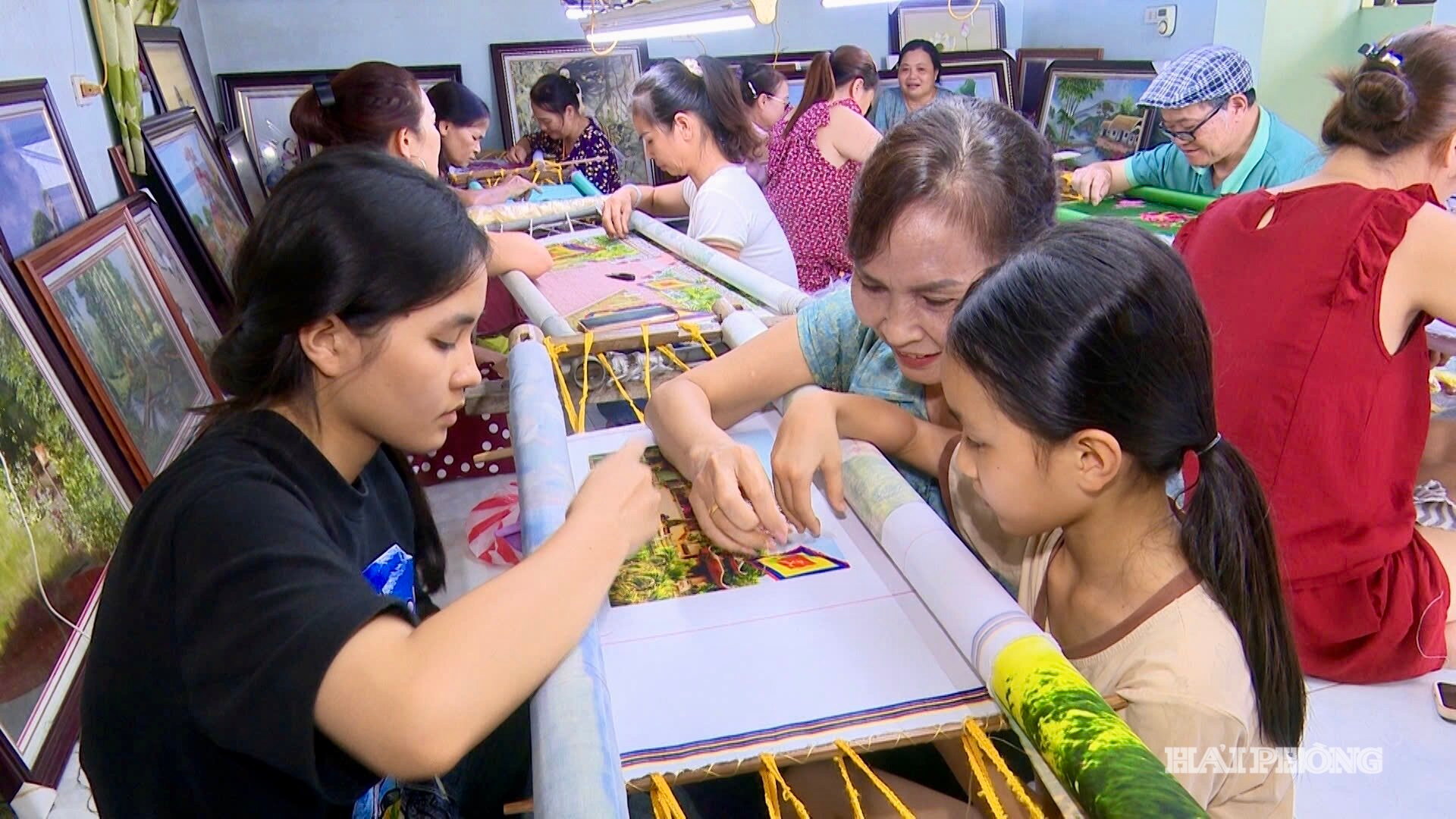
What makes Xuan Neo embroidery distinctive is the combination of traditional handcrafting techniques and artisans' artistic sensibility. Using fabric stretched on frames and colorful threads, artisans create pictures and products featuring a wide range of subjects through every needle and stitch, including the four seasons, foliage, scenic landmarks, and beautiful landscapes of their homeland. Each piece not only demonstrates skillful workmanship but also conveys values, love for one's homeland, and the cultural beauty of the Vietnamese people.
After more than a century, Xuan Neo embroidery and lace-making continues to be preserved and passed down through generations. This is not merely about keeping a handicraft alive but also contributes to safeguarding traditional cultural values.
Chu Dau pottery, Xuan Neo embroidery, and Thanh Lieu woodblock carving and printing are three representative traditional crafts that contribute to affirming Hai Phong's handicraft brand. Each has its own materials, techniques, and history, yet all embody distinctive cultural values, reflecting artisans' skill and creativity as well as the enduring vitality of the traditional crafts.
DUNG CUONG