
Gửi bình luận
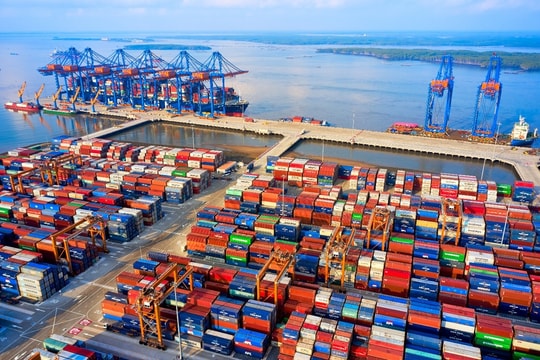
Hai Phong, with its dense river network and access to all five modes of transport, has strong potential for green logistics development.
Hai Phong currently has around 50 port operators and more than 70 port terminals, supported by an extensive inland waterway network linking the Cam, Van Uc, Luoc and Kinh Thay rivers. Together with more than 300 inland ports and cargo yards, the system serves as a major hub for handling and transshipping bulk cargo and containers.
Despite these advantages, more than 70% of cargo moving through Hai Phong’s seaports is still transported by road, according to the Department of Industry and Trade. The heavy reliance on trucking has increased pressure on transport infrastructure, worsened congestion and road deterioration, while also driving up logistics costs and carbon emissions.
Vietnam’s logistics costs account for around 16%-20% of GDP, higher than Thailand (15.5%) and Singapore (8.5%), underscoring the need to improve efficiency and reduce costs.
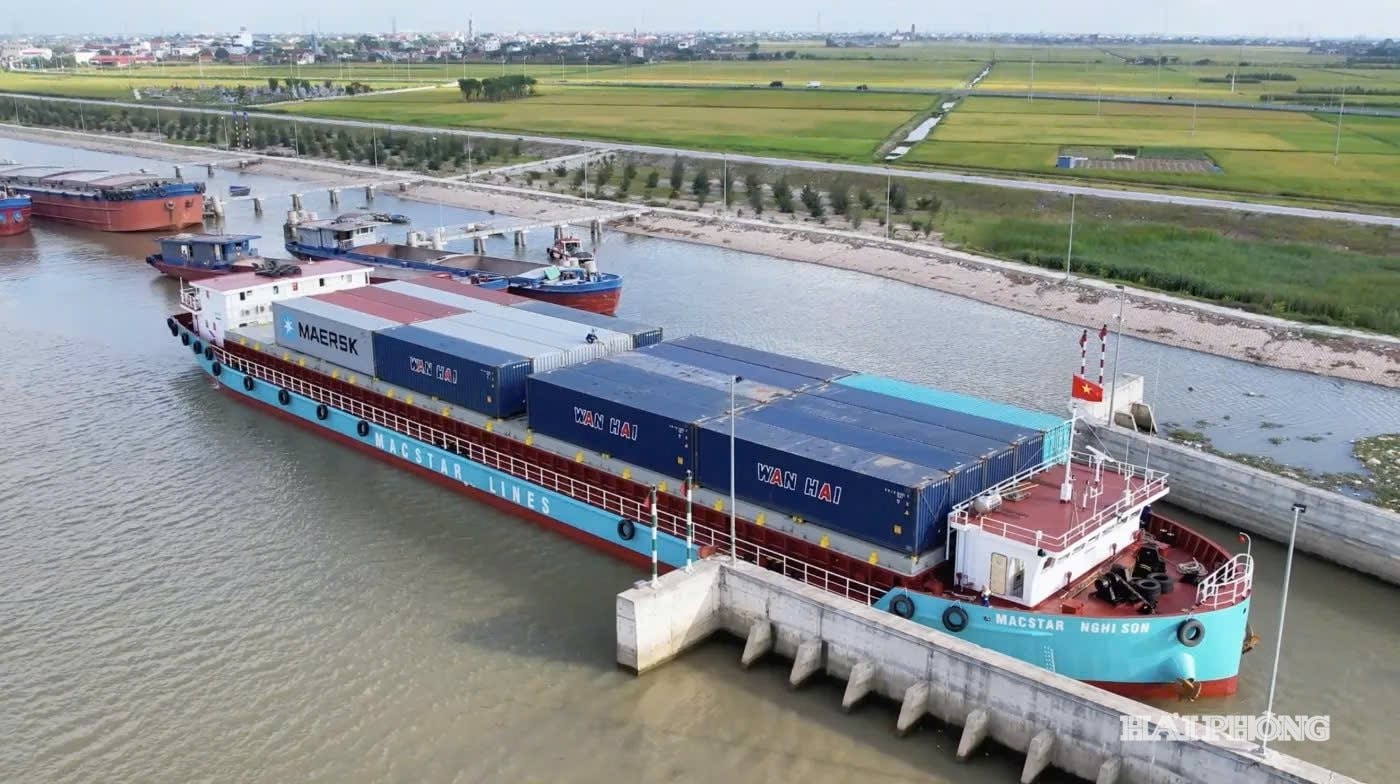
Do Huy Hoang, director of OAE Logistics Company, said shifting cargo transport from roads to waterways was not only an economic choice but also an urgent requirement for green growth. Industry data shows inland waterway transport can cut costs by 20%-25% compared with road transport.
Waterway transport also produces significantly lower emissions. A single coastal cargo vessel can replace hundreds of trucks, reducing 15-20 tons of CO2 emissions on a 200-km journey and cutting emissions by more than 70% compared with road transport.
The Hai Phong Logistics Association said inland waterways can handle large cargo volumes while consuming less energy per unit of freight and significantly reducing greenhouse gas emissions. Better connectivity through inland waterway corridors linking Phu Tho and coastal routes could also improve “door-to-door” logistics services.
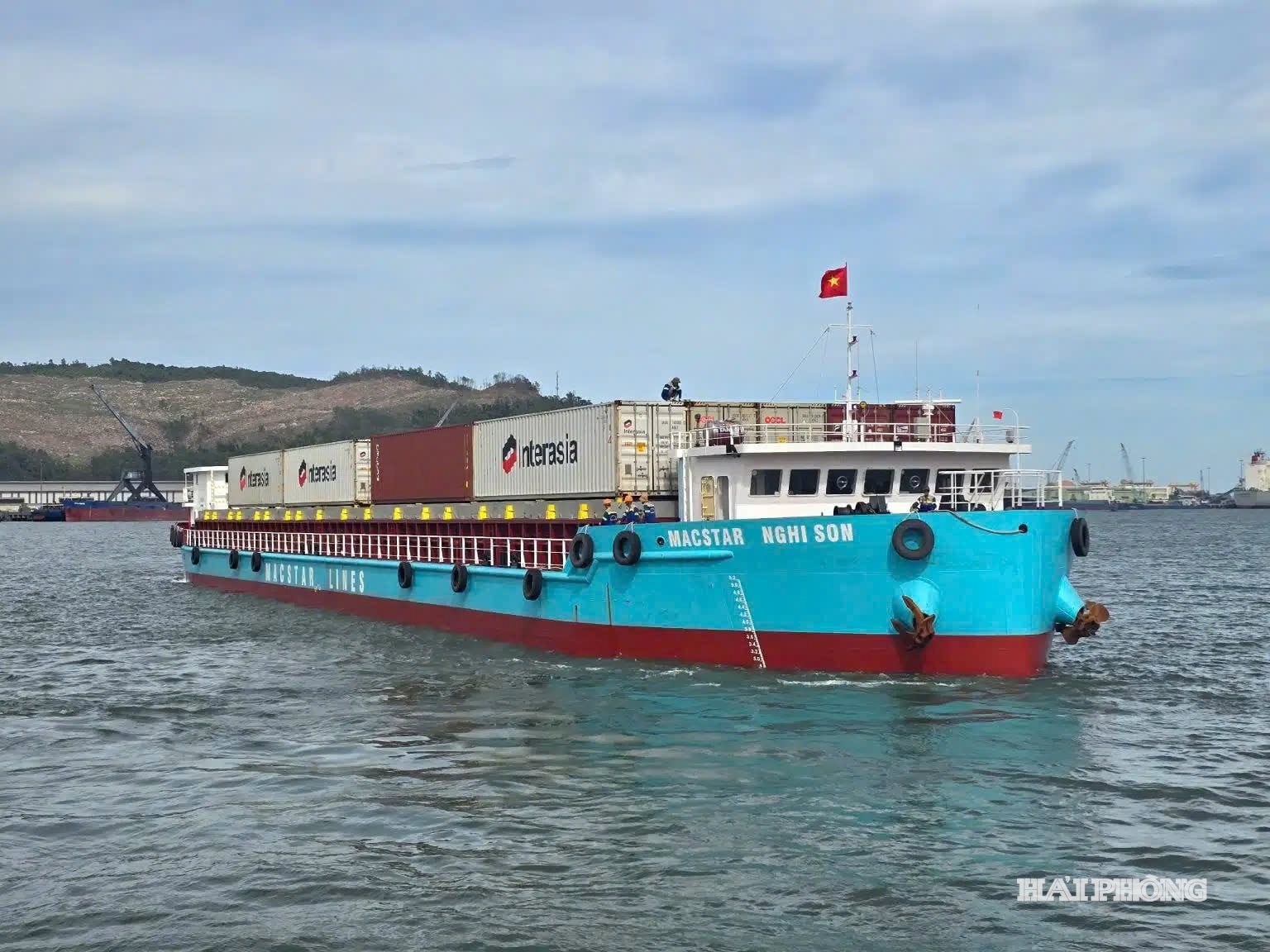
As environmental standards tighten globally, logistics companies in Hai Phong are accelerating efforts to adopt greener operations.
Macstar Group has expanded inland and coastal container shipping routes connecting Hai Phong with Ninh Binh, Thanh Hoa, Ha Tinh and Da Nang.
In March 2026, the company signed a strategic cooperation agreement with Vietnam Maritime University to research and develop battery-powered inland waterway vessels as part of efforts to support net-zero goals.
Despite the progress, the city’s logistics sector still faces major challenges. To support green growth and remove bottlenecks, Hai Phong authorities have rolled out a number of development strategies.
The city plans to allocate between 2,000 and 2,500 hectares of land for modern logistics centers. Under Hai Phong’s seaport development plan for 2021-2030, with a vision to 2050, the city aims to handle between 175.4 million and 215.5 million tons of cargo annually by 2030 through a modern port system.
Le Thi Huong Giang, Deputy Head of the Port Engineering Department at Vietnam Maritime University, said the city should focus on three pillars for logistics development.
On infrastructure, Hai Phong needs to prioritize international-standard railway links connecting ports with the national rail network, while also investing in interconnected inland waterway systems. Authorities should also introduce more flexible policies to attract major domestic and foreign investors into the logistics sector.
For human resources, the city should make better use of its skilled workforce, which accounts for around 20% of the country’s logistics labor force, to strengthen modern supply chain management capacity.
Developing inland waterway transport is not only economically important but also a key part of Hai Phong’s sustainable growth strategy. Combined with future high-speed rail projects such as the Lao Cai-Hanoi-Hai Phong railway, the city could ease pressure on road transport while strengthening its role as an international logistics gateway.
Hai Phong News