
Gửi bình luận
The People’s Committee of Hai Phong is considering a plan to reorganize specialized departments under commune-level People’s Committees.
.jpg)
These include: the Office of the People’s Council and People’s Committee (or the Office of the People’s Committee for Bach Long Vi Special Zone); the Department of Economic Affairs (for communes and special zones) or the Department of Economy, Infrastructure and Urban Affairs (for wards); the Department of Culture and Social Affairs; and the Public Administrative Service Center.
Under Decree No. 370/2025, which amends and supplements several provisions of Decree No. 150/2025 dated June 12, 2025, regarding the organization of specialized agencies under provincial- and commune-level People’s Committees, provincial authorities are authorized to determine the framework and naming of specialized departments at the commune level based on criteria such as administrative classification, population size, natural area, development level, socio-economic conditions, decentralization, delegation of authority, and specific local characteristics.
The regulation stipulates that the average number of organizations — including specialized departments and Public Administrative Service Centers — must not exceed 4.5 per commune-level administrative unit.
Accordingly, Hai Phong may establish up to 56 additional specialized departments.
Based on the regulations and the classification results of commune-level administrative units in the city, the Hai Phong Department of Home Affairs has drafted a plan to reorganize specialized departments at the commune level and sought feedback from departments, agencies, sectors, and local authorities. The proposal is being finalized for submission to the municipal People’s Committee, the Party Committee of the municipal People’s Committee, and subsequently the Standing Board of the City Party Committee in accordance with regulations.
Following the Standing Committee’s opinion, the municipal People’s Committee will officially decide on the framework and names of specialized departments under commune-level authorities.
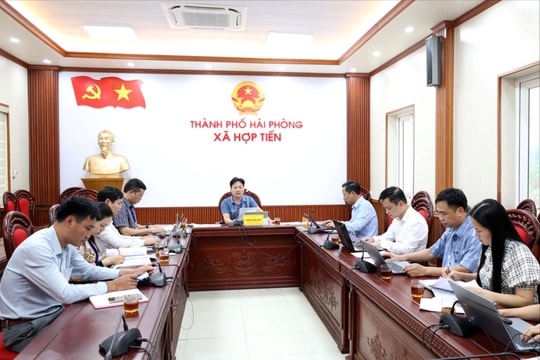
Once approved, commune-, ward-, and special zone-level People’s Committees will carry out procedures to establish or reorganize the departments. Local authorities will develop proposals for submission to People’s Councils at the same level for consideration and approval, while also issuing regulations on the functions, duties, and powers of the newly organized departments.
Considering the separation of specialized departments under Commune-Level People’s Committees
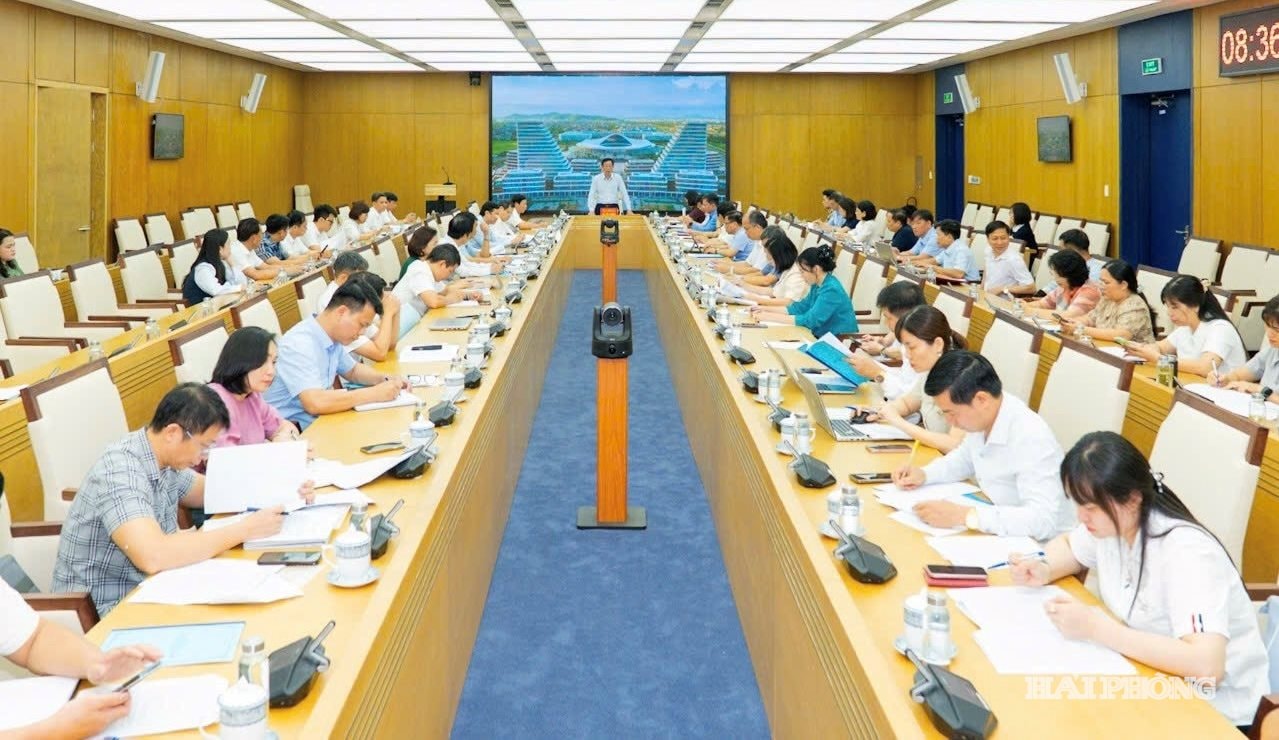
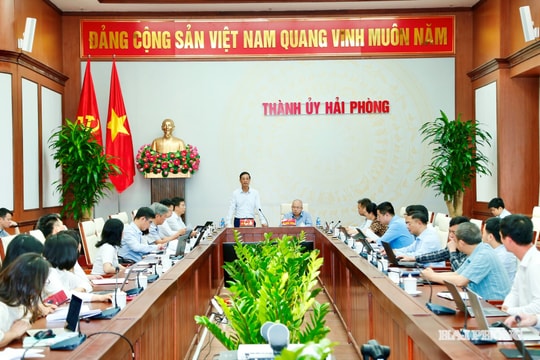
At the meeting, the Hai Phong Department of Home Affairs proposed options to separate the Department of Economic Affairs or the Department of Culture and establish new specialized departments under commune-level People’s Committees in certain localities.
The proposed plans focus on clearly defining state management functions in areas such as economics, urban development, agriculture, environment, science and technology, internal affairs, culture, education, healthcare, and social welfare, while ensuring administrative reform, digital transformation, and improved effectiveness and efficiency of grassroots government operations.
Several localities across the country have already implemented the establishment and reorganization of specialized departments at the commune level.
After hearing reports and feedback, Vice Chairman Vu Tien Phung emphasized that the naming, functions, and responsibilities of specialized departments under commune-level People’s Committees must ensure consistency and smooth management across sectors and administrative levels, from the city to grassroots authorities. He also stressed that the workload among departments should be distributed relatively evenly.
The Department of Home Affairs has been tasked with incorporating feedback from the conference and urgently finalizing the proposal for submission to competent authorities for consideration and decision-making.
According to reports, several provinces and cities nationwide have already begun restructuring their commune-level specialized departments.
For example, Ninh Binh Province separated the Department of Economic Affairs (for communes) or the Department of Economy, Infrastructure and Urban Affairs (for wards) into two departments: the existing economic department and a newly established Department of Agriculture and Environment. The province plans to add departments to a maximum of 64 out of 129 commune-level administrative units, though it has not specified criteria for the allocation.
Meanwhile, Bac Ninh Province adopted a prioritization principle for restructuring, giving preference to Type I administrative units, followed by Type II and III units. Where units are of the same classification, priority is based on factors such as area, population size, socio-economic development, and specific local characteristics.
Under Bac Ninh’s model, the Department of Economic Affairs oversees finance, planning, and industry-trade sectors, while the Department of Construction, Agriculture and Environment manages construction, transport, agriculture, natural resources, and environmental affairs. The province plans to add departments to a maximum of 49 out of 99 commune-level administrative units.
Similarly, Quang Ninh Province applies criteria based on area, population, administrative classification, urban classification, GRDP, state budget revenue, and the number of party organizations and members to determine which localities are eligible for additional specialized departments. Like Ninh Binh and Bac Ninh, Quang Ninh also split the economic department into two separate departments.
Meanwhile, Da Nang is currently implementing procedures to establish and reorganize commune-level specialized departments, while other localities are expected to proceed after completing the classification of commune-level administrative units.
The reorganization of specialized departments under commune-level People’s Committees is expected to further improve the organizational structure of local governments, ensuring it aligns with the scale and workload of administrative units following mergers and the implementation of the two-tier local government model.
Phong Tuyet