

.jpg "Vietnam moves to promote cultural standards in cyberspace")

Gửi bình luận
The 2025 Cybersecurity Law establishes a modern and comprehensive legal framework to protect personal data, enhance cybersecurity, and strengthen citizens’ 'digital resilience' against online threats.
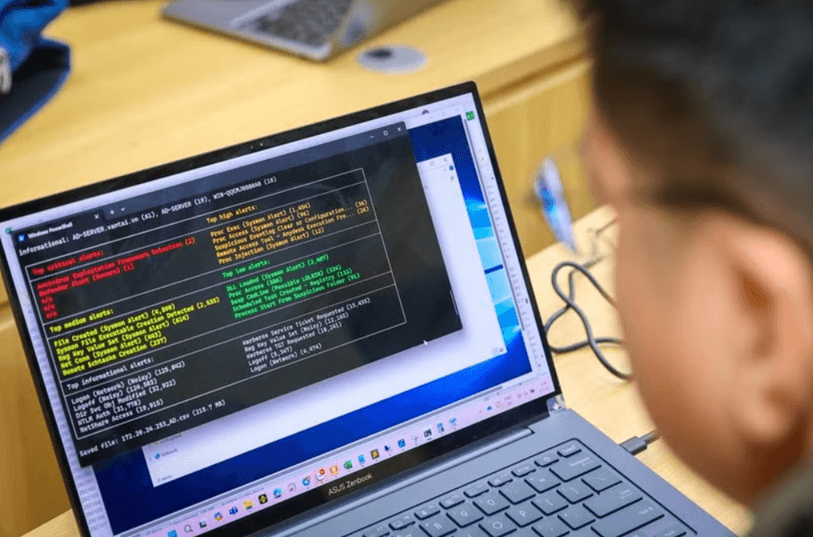
As digital transformation accelerates globally, cyberspace has become an essential environment for state administration, socio-economic development, public service delivery, business operations, and daily life.
Vietnam currently has more than 85 million Internet users, over 127 million active mobile subscriptions, and around 79 million social media accounts. Cyberspace has therefore become not only a driving force for the digital economy but also a strategic domain closely linked to national defense, security, and the protection of human and civil rights.
The passage of the 2025 Cybersecurity Law by the 15th National Assembly, which will take effect on July 1, 2026, is considered a significant step toward completing Vietnam’s legal framework on cybersecurity while demonstrating the country’s determination to build a safe, healthy, and sustainable digital environment.
According to the Department of Cybersecurity and High-Tech Crime Prevention under the Ministry of Public Security, one of the breakthrough aspects of the 2025 Cybersecurity Law is the establishment of a unified, synchronized, and modern legal framework for state management in cybersecurity.
The law gradually standardizes legal concepts, clearly defines regulatory scope, management principles, and coordination mechanisms among agencies and organizations. Notably, the management approach has shifted from “responding to and remedying consequences” to “proactively preventing, early detecting, and stopping threats at an early stage and from afar.”
For the first time, the concept of “data security” has been identified as a core element in cybersecurity policy and legislation. As data increasingly becomes a strategic asset, the law introduces numerous provisions aimed at strengthening the protection of personal data, important data, and core data related to national security.
The law strictly prohibits the illegal collection, trading, or transfer of personal data, while also increasing the responsibilities of digital service providers in protecting user information and ensuring data safety in cyberspace.
In addition, the law establishes rapid response mechanisms for digital platforms. Telecommunications, Internet, and social media service providers are required to handle unlawful content within 24 hours after receiving legitimate requests from competent authorities. In urgent cases involving national security, the processing time must not exceed six hours.
According to experts, these regulations play an important role in improving the prevention and suppression of fake news, online fraud, harmful information, and acts infringing upon the lawful rights and interests of organizations and individuals in cyberspace.
Notably, the law also begins to establish a legal framework for the governance of artificial intelligence and emerging digital technologies. It prohibits the misuse of AI and deepfake technology to falsify images, voices, or fabricate misleading information for illegal purposes.
Authorities believe this demonstrates Vietnam’s proactive legislative mindset in addressing new challenges posed by digital technologies, while reaffirming the principle that technological development must go hand in hand with social responsibility, technological ethics, and the protection of people in the digital environment.

The 2025 Cybersecurity Law continues to affirm Vietnam’s commitment to protecting human rights and civil rights in cyberspace.
The law strictly prohibits the illegal collection, trading, exchange, and use of personal data, while strengthening mechanisms to protect users against fraud, impersonation, defamation, violations of dignity and honor, and infringements upon the lawful rights and interests of organizations and individuals.
According to experts, this marks an important step toward fostering a culture of respecting privacy and protecting personal data in Vietnam.
For children and vulnerable groups, the law requires digital platforms and online service providers to implement appropriate protection measures from the design and operation stages of their systems, while proactively monitoring, detecting, and preventing harmful content that may negatively affect vulnerable users.
Shortly after the National Assembly passed the 2025 Cybersecurity Law, the Prime Minister issued Decision No. 468 on March 23, 2026, approving the Program on “Protecting and Supporting Children in the Digital Environment for the 2026–2030 Period.”
According to assessments, the program demonstrates the Government’s strong commitment to building a safe and healthy online environment for children, while enhancing digital skills, self-protection abilities, and responsible Internet access for young users.
The 2025 Cybersecurity Law also reaffirms that it does not restrict freedom of speech or the lawful right of citizens to access information as guaranteed by the Constitution and laws. Legal measures are only applied against acts that abuse cyberspace to spread false information, commit fraud, or threaten national security and social order.
As cybercrime becomes increasingly transnational, Vietnam’s enactment of the 2025 Cybersecurity Law and its active participation in international cooperation mechanisms are viewed as demonstrating the country’s role as a responsible member of the international community.
Through the 2025 Cybersecurity Law, Vietnam continues to expand international cooperation in investigating and handling cross-border cybercrime, sharing information and early warnings about cybersecurity threats, and coordinating efforts to protect data and the legitimate rights and interests of citizens in cyberspace.
According to experts, effective implementation of the 2025 Cybersecurity Law will require the coordinated participation of the entire political system, the business community, and society as a whole. In particular, enhancing citizens’ “digital resilience” — especially among students, the elderly, and vulnerable groups online — will play a crucial role in the coming years.
Hai Phong News